I thought I understood isolation until I went to Estancia Cristina
I went to Estancia Cristina, a sheep ranch in the back of Patagonia. I learned about Herbert Masters, a man born in the area and who spent most of his 82 years on that isolated ranch surrounded by sheep and mountains of ice.
I was already in El Calafate, which is remote enough: a three-hour flight from Buenos Aires, a small town on Lago Argentino, a lake cut by glaciers near the bottom of the continent. A southern cousin of Alaska.
From there we took a bus for an hour to a dock that is still not a town, and a boat for three hours to the Cristina shore. Huge chunks of a glacier floated in the water as we went by. The wind remained strong and cold against a bright blue sky. Strong wind off glacial ice swept away the warmth the bright sunlight tried to offer.
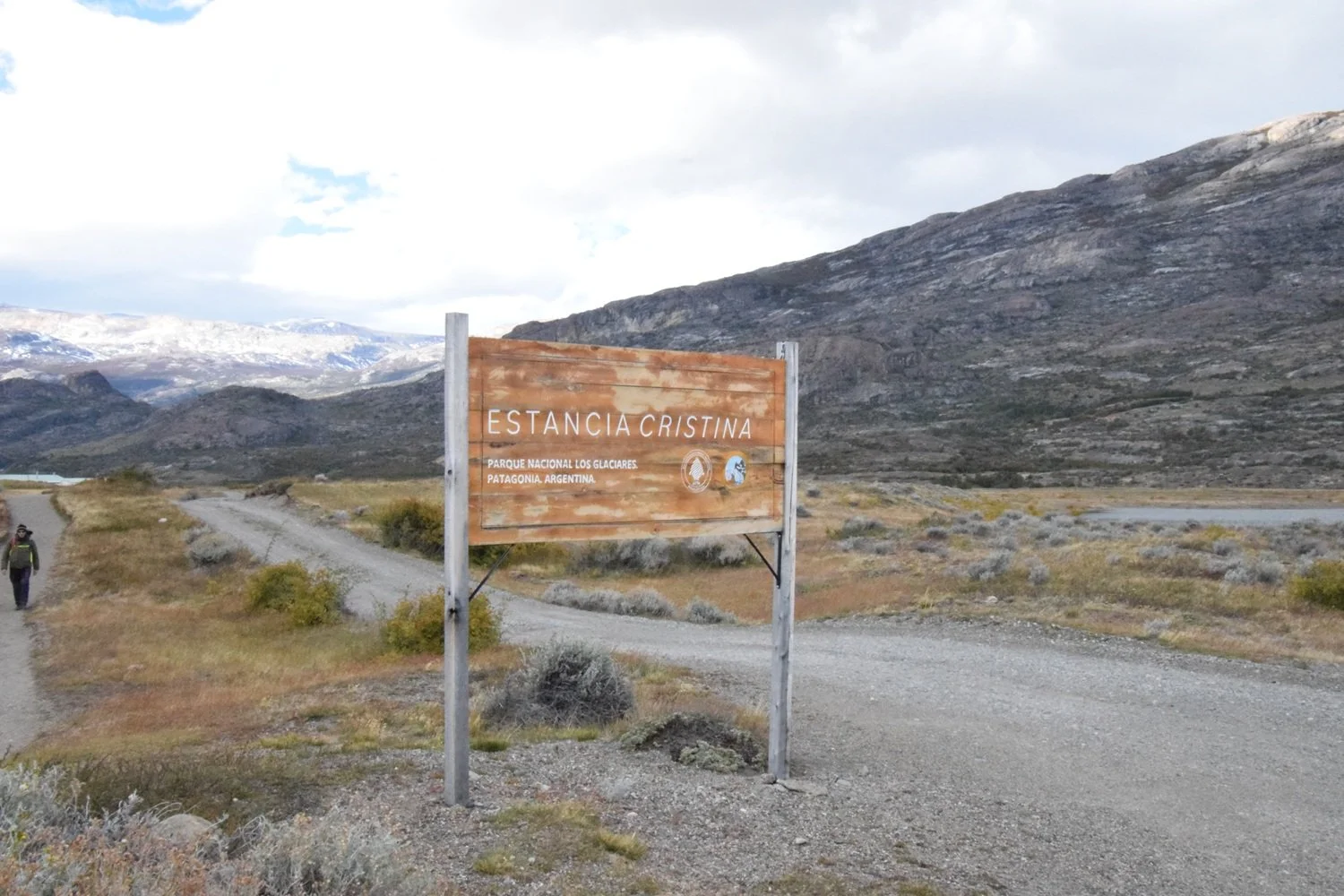
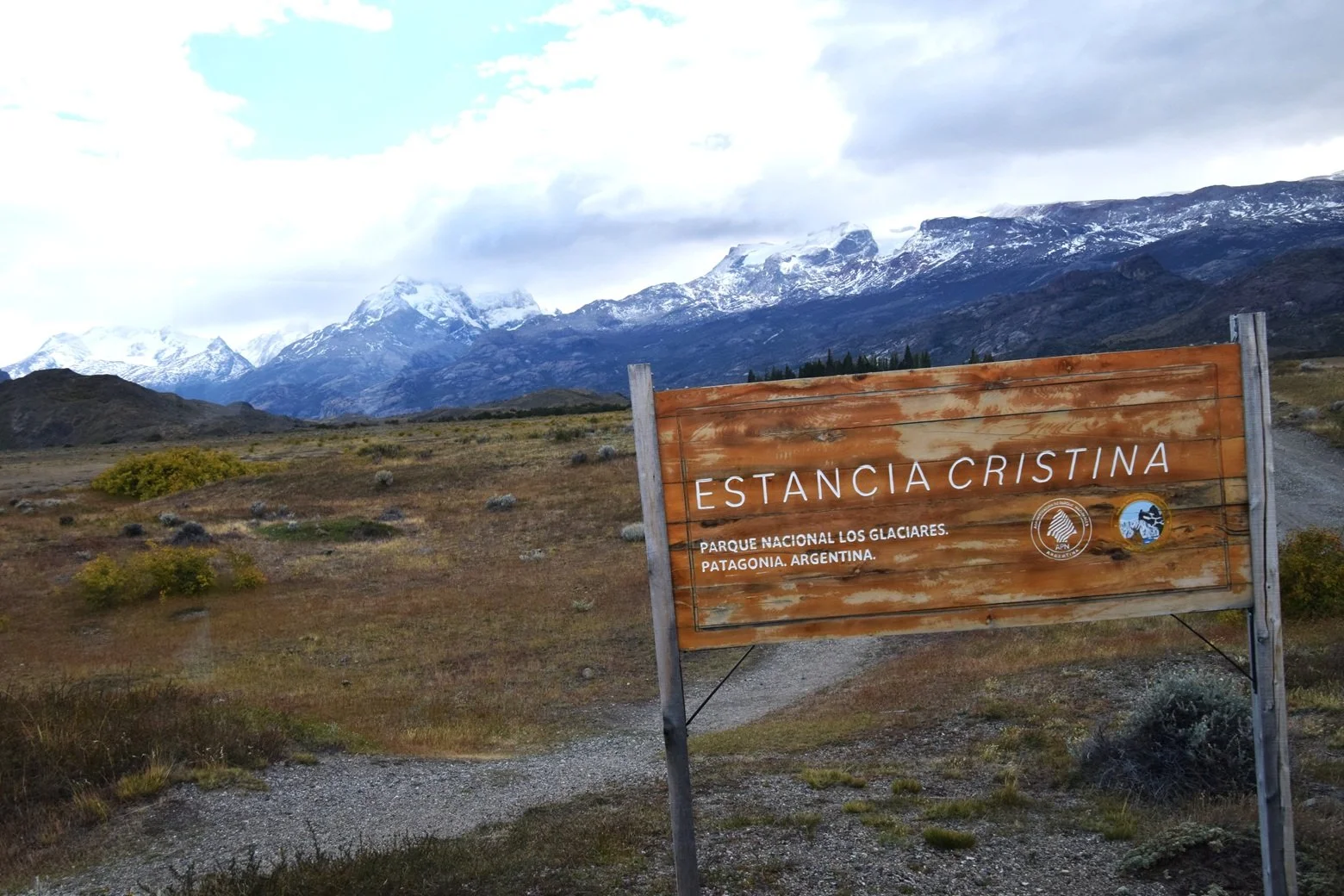
The entrance to the ranch Photos by James Jordan
The story of Herbert Masters showed me what it really means.
I went to Estancia Cristina, a sheep ranch in the back of Patagonia. I learned about Herbert Masters, a man born in the area and who spent most of his 82 years on that isolated ranch surrounded by sheep and mountains of ice.
I was already in El Calafate, which is remote enough: a three-hour flight from Buenos Aires, a small town on Lago Argentino, a lake cut by glaciers near the bottom of the continent. A southern cousin of Alaska.
From there we took a bus for an hour to a dock that is still not a town, and a boat for three hours to the Cristina shore. Huge chunks of a glacier floated in the water as we went by. The wind remained strong and cold against a bright blue sky. Strong wind off glacial ice swept away the warmth the bright sunlight tried to offer.
Percival and Jessie Masters had already spent a decade in Patagonia, working other ranches and learning the trade when they took up the valley in 1914 under a government lease of some fifty thousand acres. They had two children by then.
The three-hour boat ride seemed long, but then I found out that the same crossing was fourteen hours for them, and only when the weather allowed. The landing was a beach, not a village. From there it was two weeks by wagon to the Atlantic. The only way out was the lake. Ice and mountain shut the other three sides.
They could run the boat in summer, and not always then. In winter, the water stayed open, and the route closed. Groceries and letters came with the wool, a few times in the good months, and not at all from autumn to spring.
They lived in tents first, then a stone and mud hut. They eventually built a somewhat larger house. They say it is still there, but I don’t think I saw it.
The sheep shearing shed is now a museum with lots of artifacts and pictures of their lives in this remote area. The smell of wool, dust, and leather still stood strong among equipment that has not been used in 50 years. I stayed there a long time, reading each poster that explained their life.
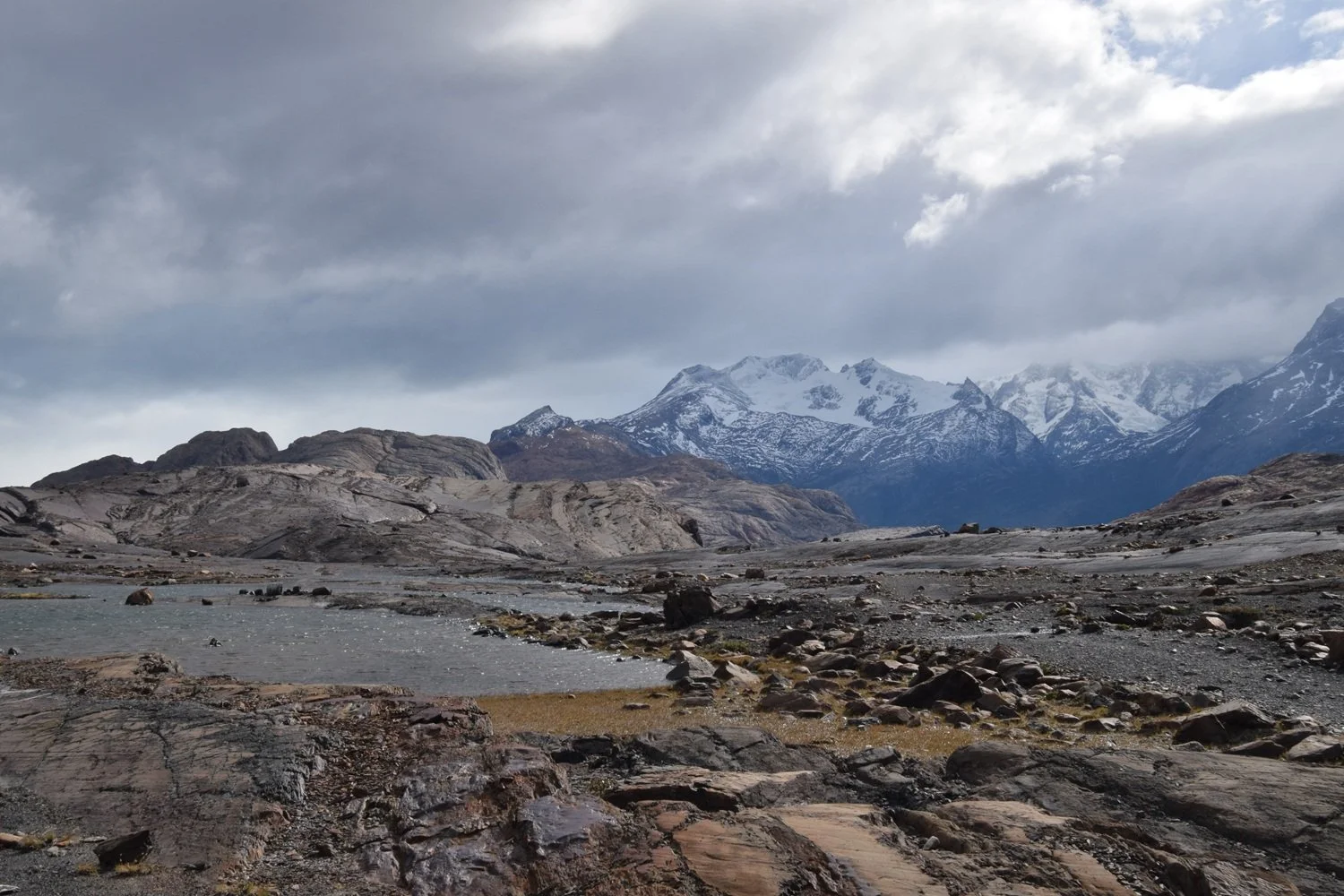
This desolated stretch was still a glacier when Herbert was a young man.
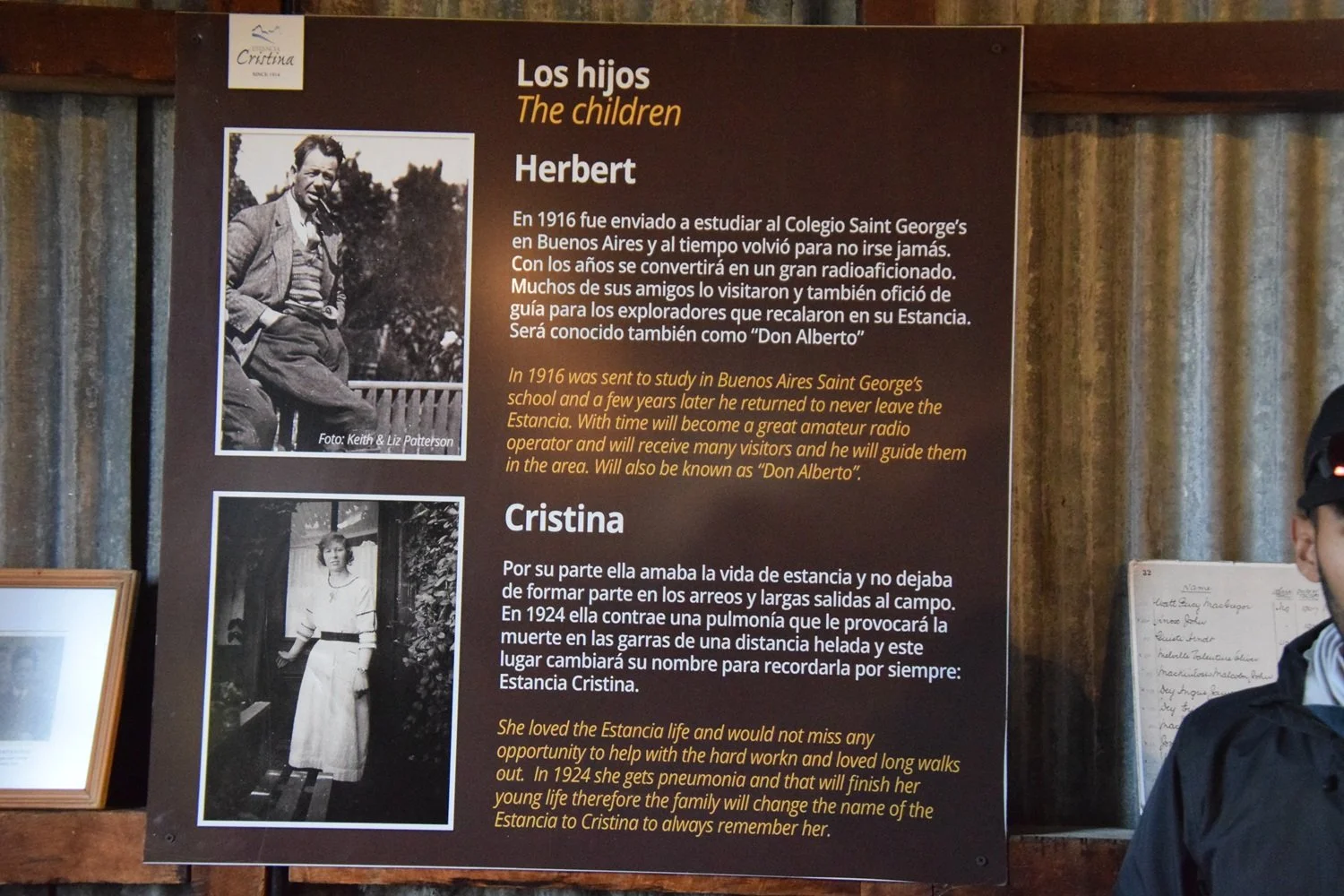
They had two children. Cristina, who died at age 20 from pneumonia. There were no doctors, and probably no medicine to help. Their son Herbert was sent to boarding school near Buenos Aires when he was 14. He returned some years later, never to leave again. The ranch was named after Cristina.
When the Masters took up the land, they would own it in 30 years. 25 years later, the government created a national park around them, and the deal changed. They were given grazing rights and could stay on the land as long as the family stayed there.
I looked through the information carefully, intrigued by Herbert and his boarding school years in Buenos Aires. Did he like it there, going from isolation to city life? Did he want to come home? Maybe he hated it there. All I could find out was he went and came back to stay.
Herbert had no children, so he was the end of the line. A woman, Janet Herminston, came to live with them to take care of the elder couple in their later years. Herbert married her so she could hang on to the land until she passed away.
It was a stark life, but they all lived to an old age. Percival Masters made it to 100.
There were rare visitors, mountain climbers and scientists, but most of their days were spent alone. Herbert became a Ham radio operator and had conversations with people around the world. But most days were spent working with sheep. Winters were particularly harsh, with only a few hours of daylight each day.
The glaciers were much bigger then. There are large areas now that are barren, scraped-off ice where glaciers were when Herbert was there as a young man.
I kept trying to imagine the ice fields as they were 100 years ago. What life would have been like in this remote area. If you needed anything, you had to figure out how to make it yourself or wait until the following summer and hope it would be there when you took your wool to the other end of the lake.
There was a lot of information about the ranch, about sheep raising and history. What was missing was Herbert’s actual story. He lived there for most of his 82 years, but I got back on the boat wondering about him.
What did he think about? What did he feel when he got on his boat for the 14-hour ride to the other side of the lake? Did he think about Buenos Aires?
Did he ever kiss a girl?
I don’t know. That question haunted me most of the ride back across the lake.
Tales of Small Texas Towns
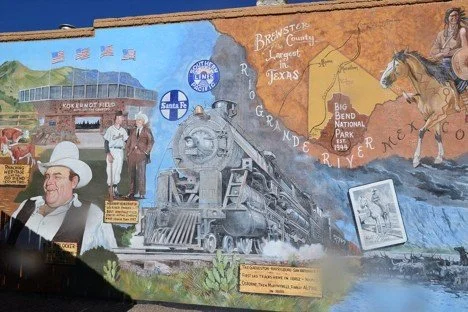
A mural in Alpine, Texas. Many small towns have great murals.
Four stories about towns in West Texas
Alpine Texas is a small desert mountain town that got “small town” right
Alpine, Texas is not in my top 10 favorite places to visit, but this small West Texas town has a lot going for it. It is in a very remote area, but in some ways, it is a cool place.
Alpine was named for its mountainous surroundings, but that seems like a stretch in this barren desert area. It is mountainous for sure, but there are no alpine trees, and probably very little if any, snow. It still beats the original name of Murphyville.
One thing about remote small towns is that you have to create your own entertainment. Often I find them more interesting than larger cities because people had to be creative to make them livable. Some have done better than others, and I think Alpine deserves all the accolades it gets.
It’s about 80 miles north of Big Bend National Park. The town itself is about 5,000 people. It’s very remote. It’s 500 miles to Dallas or Albuquerque, and 400 from Austin.
It has a plethora of murals, which are well done. They are entertaining as well as informative about the history and sociology of the area. A lot of small towns have murals, but Alpine has more than most.
It has an old vinyl record store. There are some very old and valuable albums there, but they know what they have and are not selling them cheaply.
It has some nice restaurants and decent hotels. There is live music and they take their Texas music heritage seriously.
Alpine was a stop along the trail for cattle drives in the 1860s. A little later it was a town for the railroad that was making its way south, which would end the cattle drives as fast as they started.
A description in 1888 said the town had about a dozen houses, three saloons, a hotel and rooming house, a livery stable, a butcher shop, a drugstore, and a post office.
Unlike a lot of small towns, Alpine is not shrinking. In 1920 it had 1,000 people, and that rise to almost 2,000 in 1930. By 1950 it reached 5,200 and is at about 6,000 today.
It still has a lot of old buildings that are more than 100 years old.
There is a walking tour of the downtown, with historic buildings all around. There are a lot of art galleries, bookstores, record stores, and restaurants — all the cool things you want to see in a small town.
You can stay at hotels and eat at restaurants that are 100 years old.
There is a great museum of the area’s history on the Sul Ross University campus.
Kokernot Field is a famous baseball stadium built in 1947 for a semi-pro baseball team that still lives. Sports Illustrated called it the “Best Little Ballpark in Texas.”
There are also a couple of driving tours that will take you through some of the most scenic areas you will find anywhere. One makes a circular trip to Big Bend and does not backtrack. Another goes from Alpine to Marfa, to Fort Davis, and back to Alpine.
Kermit, Texas died and came back to life
The desert of West Texas is bleak. The mountains are to the south, and it's flat as far as the eye can see, and the scenery does not change. It is brown most of the year, and the sky is clear — no clouds and no rain expected.
Settlers made a go of it in the late 1800s, and it was a tough existence. Small towns did spring up as the railroad made its way west, or as the army put up forts and so forth. A year or two of drought could send the settlers flying away in defeat.
Some towns survived, and some did not. There are a few that went to the brink of death but made a comeback. One such town was Kermit, which was all but gone when the oil boom brought it back.
Kermit was the county seat when the county was organized in 1910. Before that, it was a wasteland, but there were a few people around. Kermit was started as a center for area ranches.
It is about 10 miles from the lower edge of New Mexico, and about 100 miles from Big Bend National Park and the Mexican border.
The town was named after one of Teddy Roosevelt’s sons. It was the original county seat. In 1916 a drought chased most people away, and it declined from there. In 1924 there was only one family left, and only one student attending the local school.
Oil was discovered on July 16, 1926, and the town got a new life thanks to the oil boom. By 1927 it had 1,000 people, and by 1929 it was up to 1500. It was incorporated in 1938 and continued to grow. It got its first bank and the first hospital in 1946.
The oil boom lasted through the depression, and the town kept growing. By 1960 it had 11,000 people. It has declined since then as most small rural towns have, but it still has around 6,000 and is a decent enough small town.
The town is not a tourist attraction by any stretch, but it is a nice enough little town. There are hotels and some nice restaurants.
It’s seven miles from Wink, Tx., the birthplace of Roy Orbison. Wink has about 1000 people today, and followed the same pattern as Kermit. No doubt Orbison played music in Kermit at some point.
One small Texas town stayed tame in the Wild West
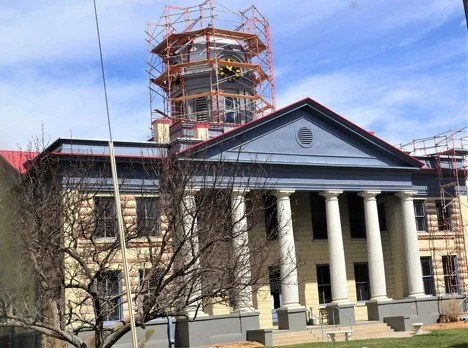
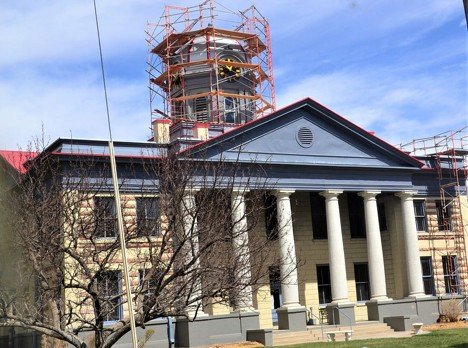
I like to see historic buildings taken care of, but it is still aggravating to come across a small town with a courthouse under repair. I have a lot of pictures of courthouses and quite a few with scaffolding like this.
Fort Davis, Texas, is a very small town in a remote area of west Texas. It has roughly 1,000 people, and it has been at about that size for several decades. It’s not even an incorporated city, which makes a nice courthouse like this somewhat of a surprise.
The town is the highest point in Texas, at nearly 5,000 feet above sea level. It was started because a fort sprang up there during the Indian Wars of the 1850s, called Fort Davis. It was named after Jefferson Davis, who would become the president of the Confederacy.
It was strategically located at the intersection of two major trails settlers were using to go west. Today it is at the intersection of state highways 17 and 118. It’s about 100 miles from the Mexican border, and the closest towns are places like Marfa or Alpine, also small towns in the middle of nowhere.
The nearby Fort Davis is the most well-preserved military installation of the mid-1800s. Forts were set up at strategic locations to defend settlers and mail delivery, against Indians.
With its higher elevation, it is not as hot as some areas of Texas and has been a resort-type place for the wealthy at various times. For whatever reason, the town has never grown into much of a tourist area. It has avoided deteriorating as many small towns have over the years. This very small town was almost pristine in appearance.
Unlike a lot of old west towns, its reputation is fairly pristine as well. Usually, when a town sprang up, it was for mining, the railroads, or for a new fort in the area. Gamblers, bar owners, and prostitutes were usually soon to follow.
There was probably some of that in Fort Davis, but I could not find many tales of wildness. Maybe that is because it did not come into existence because of the fort. There was a small town here already when the fort was created, and it had been there a long time. It was also the site of an old Indian settlement.
The area is a high desert, so there are a lot of rocks and sand and about everything is brown or grey. The scenery is still spectacular with all the rock formations and varied landscapes. There is a 75-mile loop you can drive around the mountains of the area, which is well worth the two or three-hour long trip.
Fort Davis was an interesting stop on the way from Big Bend National Park, back home to Kansas. We still had a long way to go, but there was no rush. It is probably not a place I will go back to, but hiking in this area would be very cool. There are a lot of trails in the area, and you can trace some of the ancient trails Indians, as well as settlers, used.
A note about the history
It is impossible to explore this area without a lot of information about the Indian wars and the Civil War.
It was a different time and a different world than what we live in today. Hopefully, we are more civilized now. That can be debated.
It was the heart of both the Confederacy and where land was stolen from the Indians. I am not sure how much slavery was practised in this area. There were not all that many settlers here, and most were passing through on their way to California. Still, the area supported the Confederacy. The fort, the town, and the county were named after the president of the Confederacy — Jefferson Davis.
I don’t think it is wise to cover up, destroy, or ignore history. It is our history, with both the good and bad parts.
Shafter, Texas went down the Shaft
There’s something mystical and appealing about remote places. They seem remote to us as we speed down a highway at 70 MPH, but just imagine how it felt going not even 5 MPH in a wagon or on horseback 150 years ago. It would take days, if not weeks, to get to civilization that we get to today in an hour.
I wonder what possessed people to want to come to these rugged, remote places. My friend wonders what possesses me to go to those places today. They had to contend with hostile Indians whose land they were trespassing on, as well as snakes, a lack of water, cold, heat, and many other natural dangers.
They were chasing fortunes and some were just chasing a job that would provide food, clothing, and shelter.
The miners who worked in this town were Mexicans, as well as a lot of African Americans. These harsh conditions brought together people of different races and cultures, and they lived together well.
Being very remote is comforting in a strange way. The silence can be suffocating but that too has an appeal. Still, I think I would not find it as interesting if I lived here full-time with no modern conveniences.
Shafter, Texas is one of these places. It was once a silver mining boom town but is a ghost town now. It had 11 people in the 2,000 census, and probably fewer in 2020.
At one time it had 4,000 people and several businesses. Like a lot of boom towns, when the silver dried up the town did too.
Shafter is a ghost town about 25 miles from the Mexican border on Highway 67. It’s about 40 miles south of Marfa.
Shafter was started in the late 1800s when some people discovered silver. They got the commander of Fort Davis, about 25 miles away, involved and a town was slowly built. The town took the name of the Fort Davis commander. They didn’t know how to mine silver and didn’t have the equipment, so it took a few years for the mine and the town to get rolling.
The town was started in 1880. It was not until 1882 that a mining operation was established. It was a typical company town, with the company providing housing for the workers, as well as pay. There are lots of horror stories about company towns, but there are some positive ones as well.
It was quite a task getting mining equipment to this area in the late 1800s. It was probably at least 100 miles from the nearest railroad. There were no roads, so they had to make roads to transport the equipment.
The town grew steadily and by 1940 had 4.000 people. Silver prices crashed and the silver itself ran out. By 1943 the population was down to 1500, and by 1949 it had 20 people.
There have been a few attempts to reopen the mine, but none have succeeded. The town has grown to 100 people a time or two since 1949 but is back to that level now.
The only building still standing is the church. There were some small houses in the area, but none at the original townsite.
Everything is Bigger in Texas
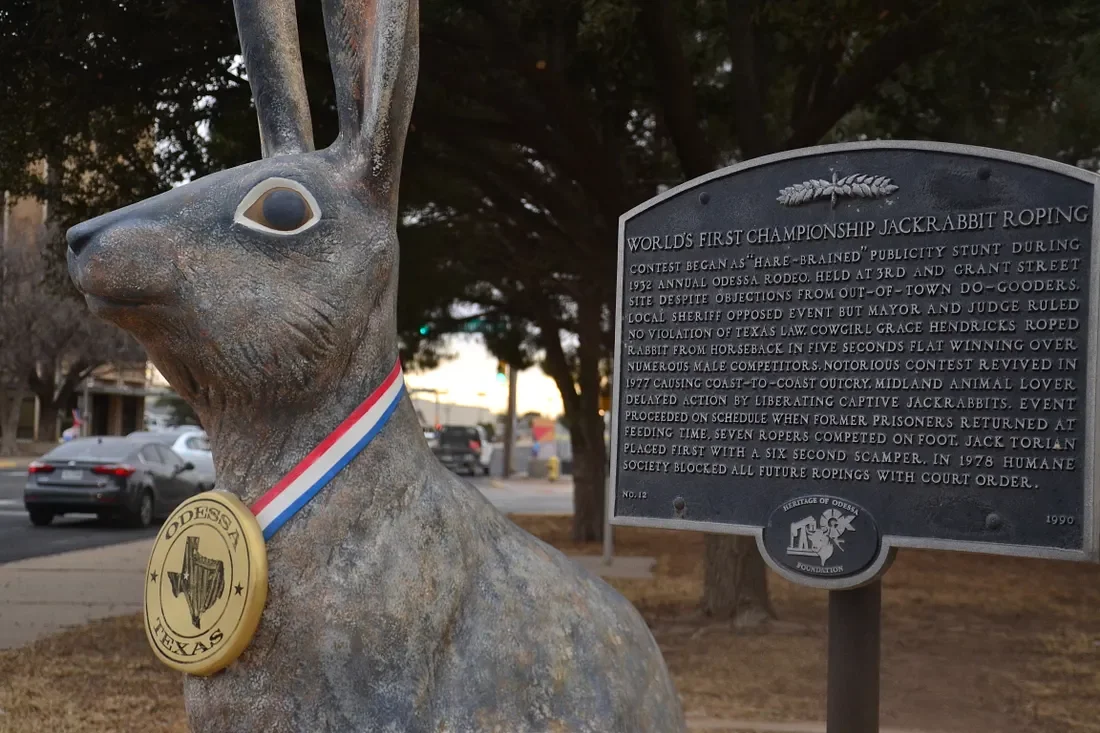
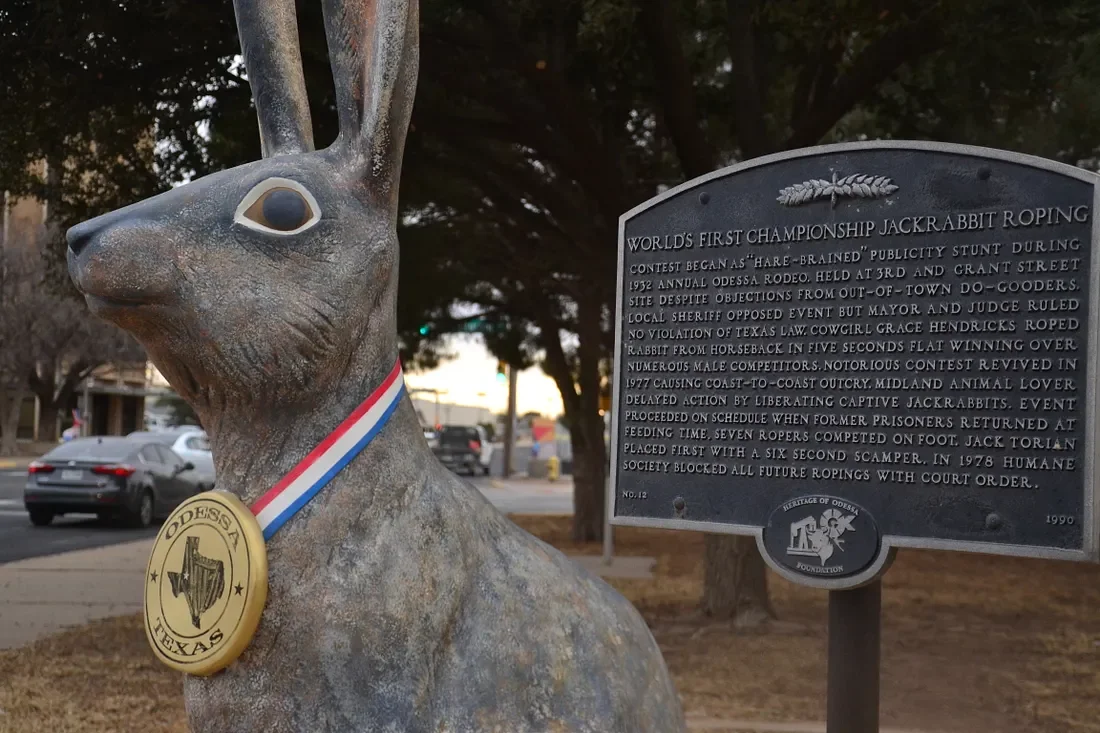
Everything is bigger in Texas, they say. It might be true. Odessa has a bunch of jackrabbit statues that are about four feet tall, spread around town. In the West Texas desert, there is not a lot of scenery, so folks create their own entertainment.
A lot of towns have things like the jackrabbits. In Amarillo, they have the Jackalope, which is said to be a mythical being. But in Odessa, it was bigger-than-life jackrabbits.
A real jackrabbit is about two feet tall. These statues are around four feet, and all are painted.
They tried to have jackrabbit roping, just like they do competitive cattle roping at a Rodeo. This was in 1932, and even then animal rights activists were opposing the event, “out of town do-gooders,” they were called.
Anyway, Grace Hendricks, a young cowgirl, won the event by roping a jackrabbit in five seconds on horseback, beating all the men and boys who competed.
The event was revived in 1977, and it gained national attention — or should we say national opposition from animal rights groups. Local legend has it that someone kidnapped the jackrabbits to try to stop the event. The jackrabbits escaped and came home at feeding time.
The event was held with competitors roping jackrabbits on foot. In 1978, the Humane Society managed to get a court order banning the event from happening again.
Maybe it was revenge, or maybe it's because there are a lot of them around here; someone came up with the idea of statues. There are about 40 of them, and you can get a list from the chamber of commerce. We found most of them.
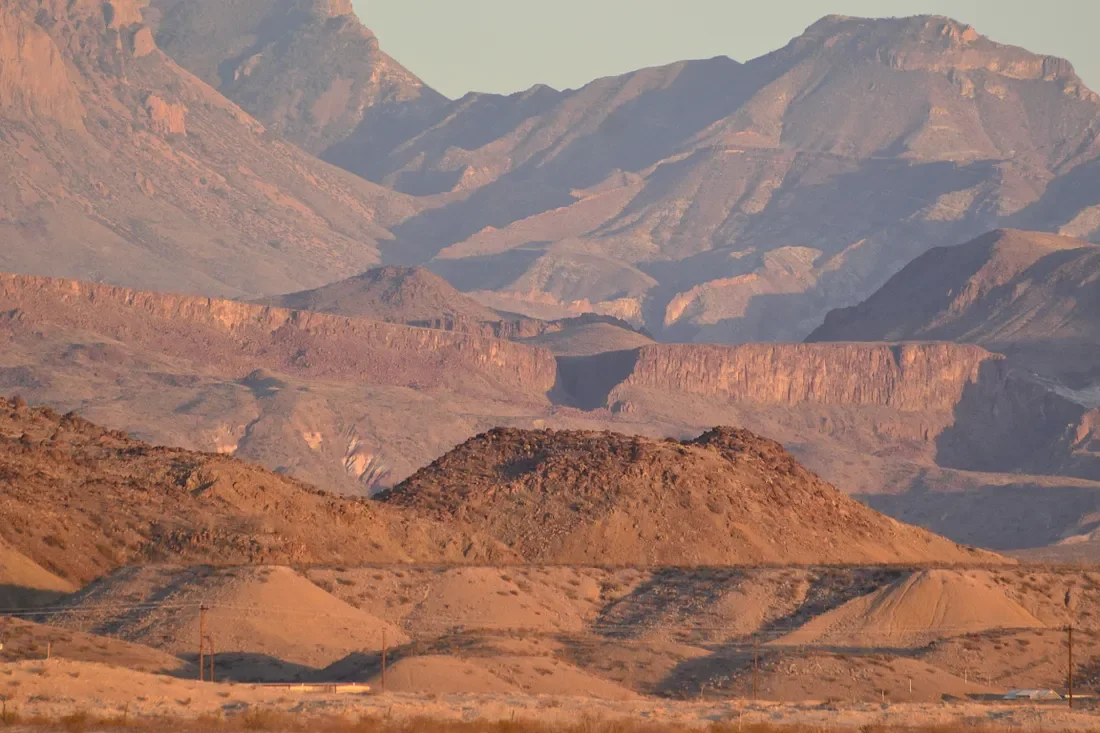
At Big Bend
We made it to Big Bend National Park a little before dark. Planning some hiking and roads to drive through the park.
We drove through a lot of deserts today. The weather was nice, around 70, but I could imagine how hot it gets in July or August.
I am still pretty amazed that people were able to live here before modern conveniences came along.
Small Texas Towns on the Way to Big Bend
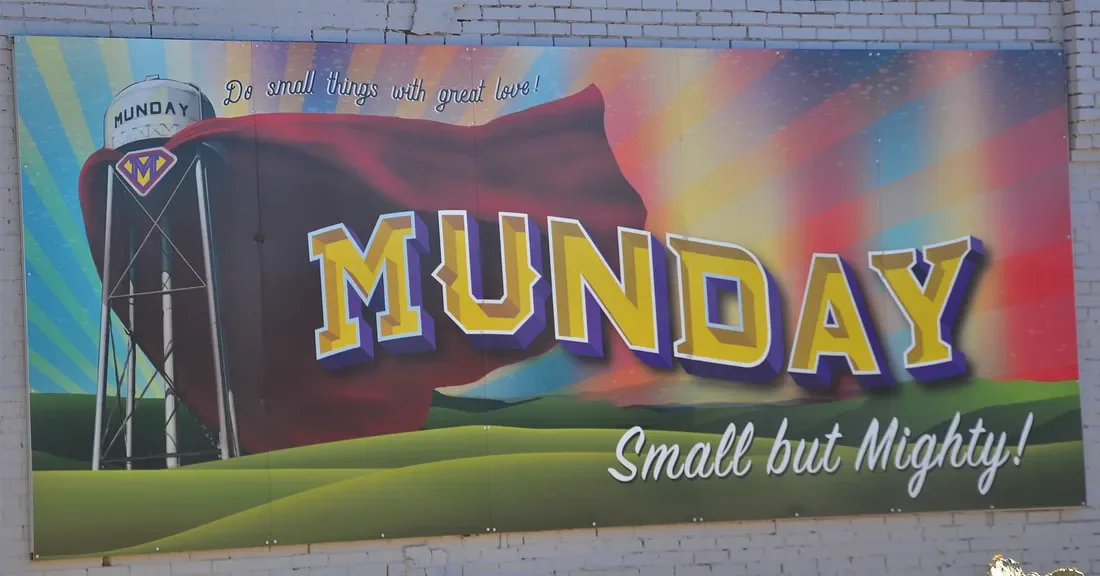
A mural welcomes us to Munday, Texas.
We got off to a slow start Saturday and only made it as far as Wichita Falls, Texas, on our way to Big Bend National Park. Sunday we managed 155 miles from Wichita Falls to Abilene.
Part of the adventure is discovering small towns, and part is finding a place to sleep on the way. That is the biggest reason it has taken us a day and a half to go 155 miles.
We spent nights in Wichita Falls and Abilene. Those are big towns by our standards, and oddly perhaps, it can be harder to find quality cheap accommodations in bigger towns. Often those places are not in the best parts of town, and sometimes the motels are used for … things other than sleeping.
A new trend we found was charging a deposit when you rent the room. One place wanted $100 and another wanted $50, along with the price of the room. They said if I paid cash, I could get the deposit back in the morning if nothing was damaged.
I declined both offers. I was born at night, but it wasn’t last night.
We found a cheap place in Wichita Falls that didn't have a refrigerator. It was cold outside, so we left our cooler outside our door. It was fine in the morning. The room was not really warm, but otherwise fine.
Abilene has a plethora of murals and a lot of statues. One place had statues that were scenes from children’s books — like the Three Little Pigs, the Three Bears, and the Three Kittens — and some I had not heard of.
There was a lot to see and we kept exploring until it was too dark to take any more pictures. We started looking for a place to stay then. We were tired and that isn’t the best way to go about finding a motel for the night.
In Abilene we went for a budget chain motel on the Interstate. That was the first time we had been on an Interstate highway this trip. This one is a bit isolated with no restaurants around. Nice room though.
The best cheap hotels are in the small towns. They are usually owned by local people and the quality is just better. Some businesses take more pride in their product than others. Chains are cookie-cutter operations that often have the bare minimum of standards.
We will likely end up at a smaller town tonight. We have reservations at Big Bend, but since we don’t know where we will be when night falls, we have to find rooms as we go along.
Small towns
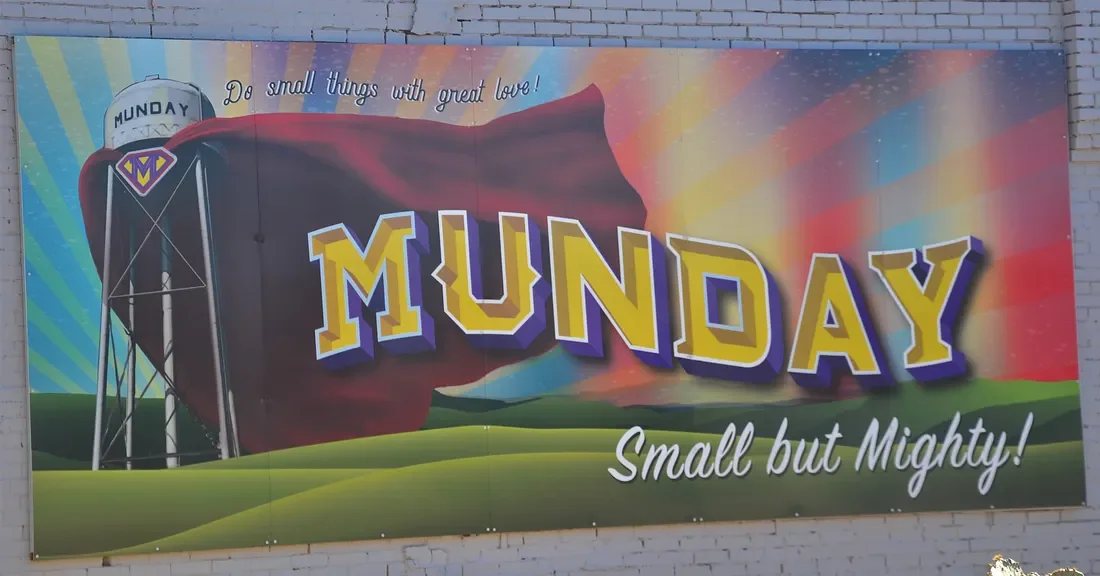
We came across the little town of Munday, Texas, named after a postmaster. We were going to pass it by, but we happened to see a mural from the highway and stopped to take a look. It has three or four blocks of downtown.
We were surprised to find a lot of murals and outdoor art in this town. For a town of 1100 people, it seemed to have a lot going on. We stopped at another small town, Haskins, that had murals and a cool-looking courthouse.
A lot of these towns sprang up with whatever was going on at the time. The arrival of the railroad, an outpost for the army, the oil boom. Some of them sprung up overnight and disappeared almost as quickly when their reason for existence faded away.
Some towns survived, and some are hanging on by a thread today. Some of those towns have murals and other interesting things to see. Some do not.
The Frontier Museum
The Frontier Museum in Abilene gives a great look into the history of the area. It has been a hostile land for many years from an environmental standpoint — hot dry summers, storms, snakes, make it dangerous even today. When the white settlers were arriving there was no medicine and no law. You were literally on your own and only the fittest survived.
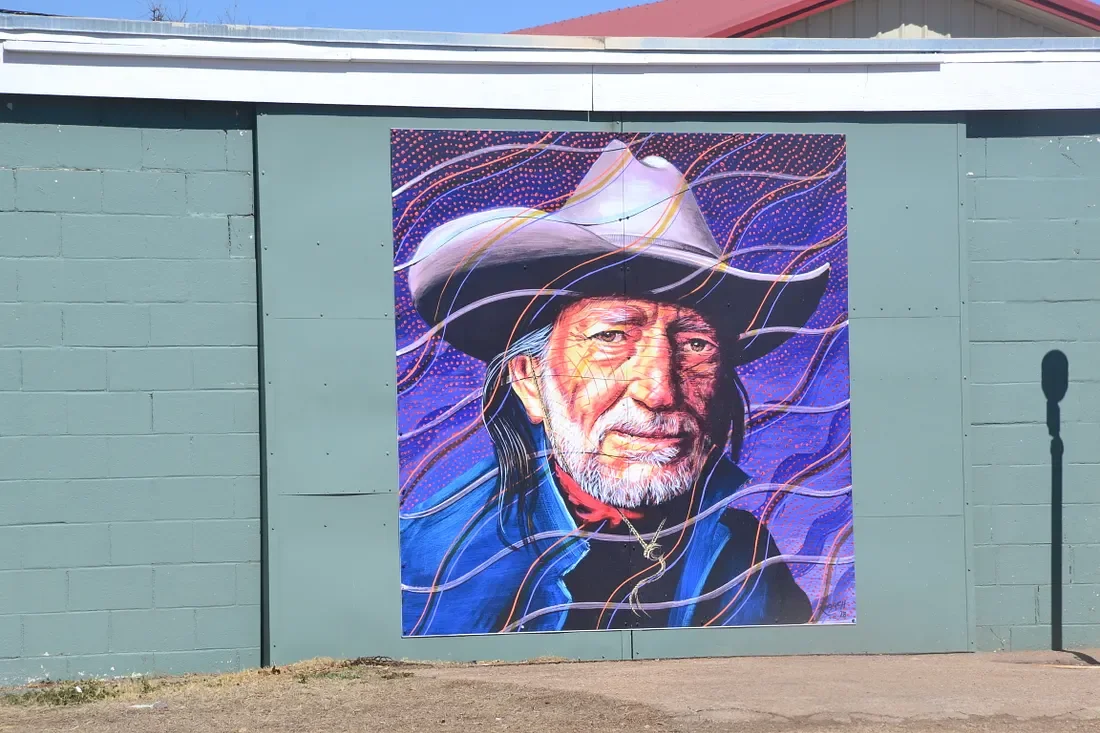
The Mythical American Cowboy
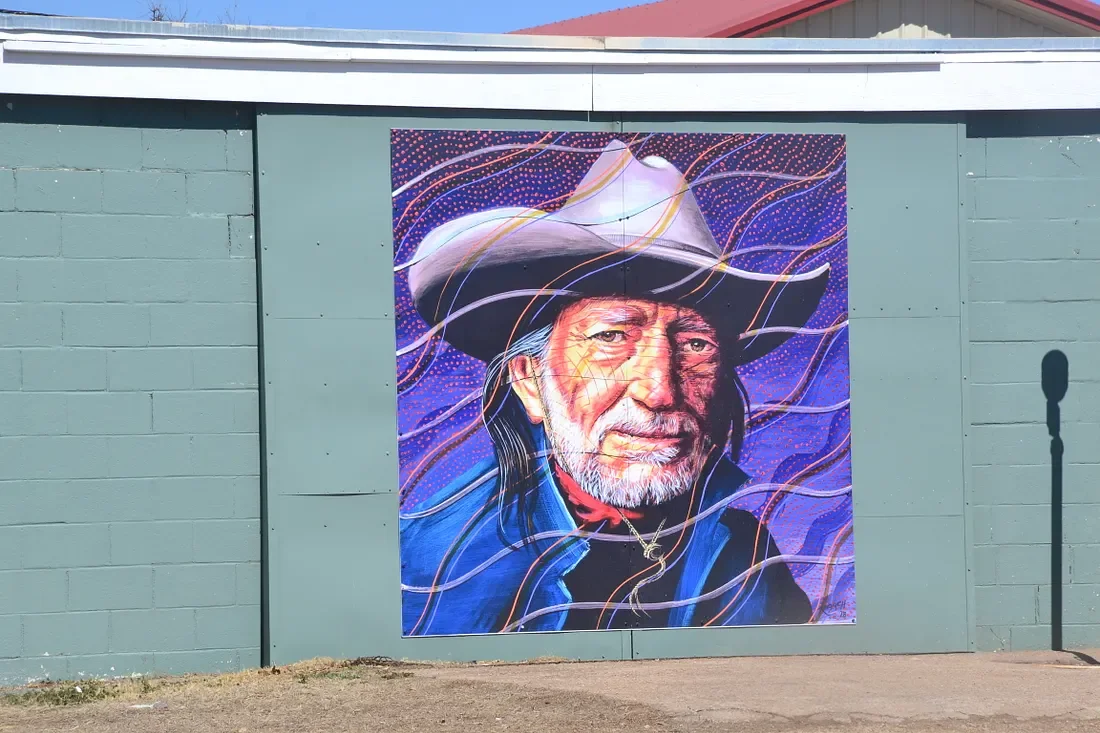
The Museum of the Frontier in Abilene was a great place to get a glimpse of the history of this part of Texas. It was a hostile land for many reasons when the first white settlers arrived. There was a harsh environment with very little water, heat, snakes, and other natural dangers. There were Indians who would attack, and there were bandits.
The legend of the cowboy is pretty much just a legend. As many as half of the real cowboys were black or Hispanics, and even a few Indians. The first cowboys were anything but glamorous. It was a hard dangerous job, driving cattle hundreds of miles from south Texas to the railroads in Kansas.
The cattle drives started in 1866 and by 1880 the railroad reached Texas, barbed wire was going up on ranches, and the cowboy era ended as fast as it started.
There were also some former slaves who went west, and their stories have not been told as much. When they were freed they took advantage of the opportunity to head west and try to settle the harsh land. Many became what we now call cowboys. Some got involved in rodeo, and the sport of steer wrestling was invented by William Pickett.
Even at the end of trail you were not safe. There were lots of swindlers, gamblers, prostitutes, and others more than eager to take your hard-earned money. Probably a lot of cowboys lost their money at the end of the trail.
This was a wild area. It was noted that one person might be an outlaw in one town and a sheriff in another town. I also got the idea that race was not all that important unless you were an Indian. Some who had been slaves became business owners and ranchers.
If you had some money you could become a landowner regardless of race. If you did not have money were a common laborer, you could be a cowboy.
The Comanche and African Americans
There were also Indians who were not pleased with all these settlers arriving. They attacked and killed a lot of settlers, and of course, a lot of them were killed. The Comanche was one of the last tribes to be conquered. They were great horsemen and were fierce warriors with bows and arrows.
The Comanche warriors also had a nasty side. When they attacked a group of settlers they would kill the old and very young, and take the rest captive. They used cruel means of torture at times as well.
Those that were not too old or too young were not killed. They were kept, or sold, as slaves. Indians also had some slavery going on. Especially early in the settlement period attacks by Indians were common. There are a lot of stories of people who were captured and held as slaves by the Comanche or other tribes.
There was a story of a black man — Britt Johnson — who had his family kidnapped by Comanches. He was legally a slave but was treated more like an employee by Moses Johnson, the white man who technically owned him. Lines were blurred on just about everything in West Texas in those days.
During a Comanche raid, some of Moses Johnson’s family were killed, and Britt Johnson’s wife and two children were kidnapped.
Britt Johnson was given his freedom, and some money, so he could go find his family. He found them and somehow got them back from the Comanche.
He was a cowboy for a time, and then drove freight. On one of his trips, the wagon train was attacked by Comanches, and Johnson was killed in the fight.
There was another story Cynthia Ann Parker whose story has been told many times. She was a white woman who had been taken prisoner by the Comanche as a young girl. She was returned to her original family against her will because she had become a Comanche herself. Her son Quanah Parker became the last great Comanche chief.
There were lots of stories of people who were kidnapped and later were released by the Comanche.
The era of the cowboy, and the era of battles with the Comanche, ended about the same time in West Texas.
Then came the oil discoveries and life changed drastically for many.
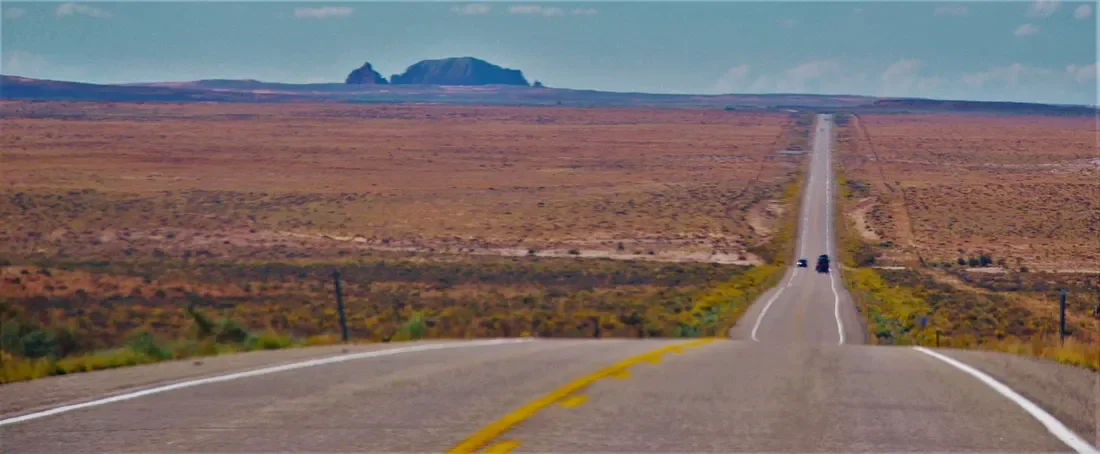
Headed to Texas, Cheap Travels
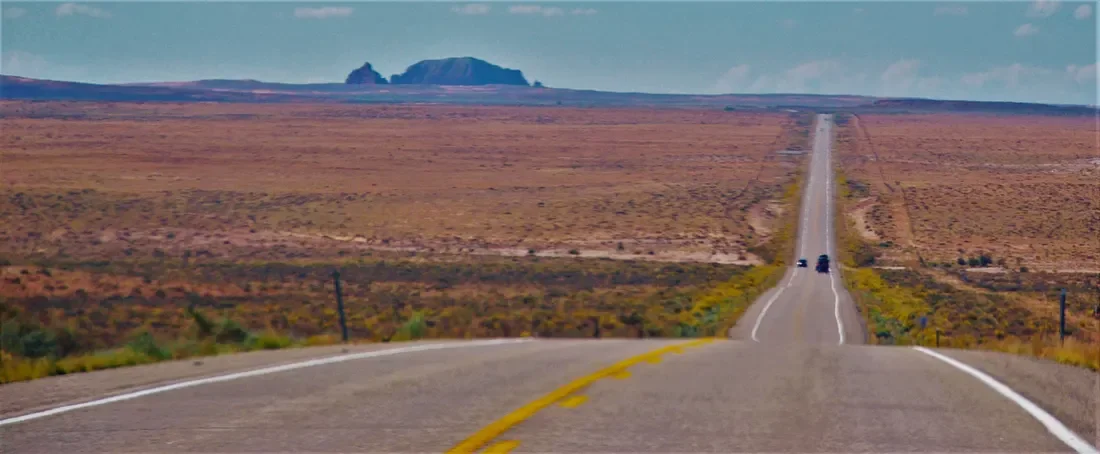
Getting ready to hit the road again. This time we are headed south to Big Bend National Park in southwest Texas. Where we are now is cold. We got to 30 today and that was as warm as it’s been all week. Should be warm, if not hot, in southwest Texas.
One of my dreams once I retired was to travel a lot. We like to travel in a car on the back roads and see interesting things along the way. This will be our third trip since I retired last September, so the dream is going pretty well.
My goal is to not have a firm return date, just a vague idea of when it will be. I suppose this trip will be 10–14 days. So if we say 10 it will be 14 because that is how we roll.
I did a travelogue when we went to Utah last October. I may do one again for this trip. Maybe not every day, but often.
There will be no albatross of a camper behind us this time. I much prefer going by car and finding places to stay along the way. We have found some places that were interesting, and we always look for the cheapest thing we can find for lodging. The roaches are clean. What more do you want?
The roaches are clean.
What more do you want from a cheap hotel?
We both like to travel cheap, which is a good thing. We take some food with us, and often it’s just a sandwich and some fruit as we drive down the highway. We stay away from typical tourist traps and try to spend money on things we really want to see, instead of popular attractions.
We have several money-saving tricks, like filling up your water bottles in the hotel room in the morning. We make our own coffee with our own coffee pot that goes with us. Some little things like that save you a few bucks and it adds up, and you can afford to stay longer.
I am not as into the trip this time for some reason. My depression has been acting up even though I am remembering to take my pills most of the time. I think it's just the wintertime blues. Once we get on the road I will be fine.A
First Day at Big Bend National Park
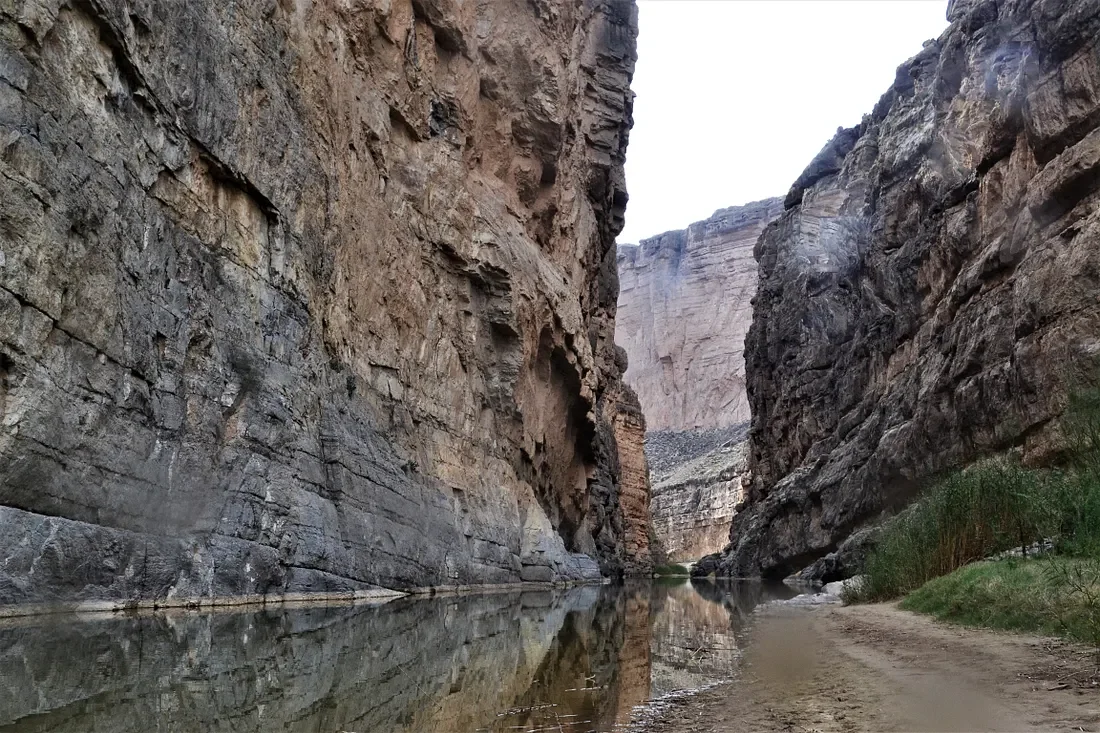
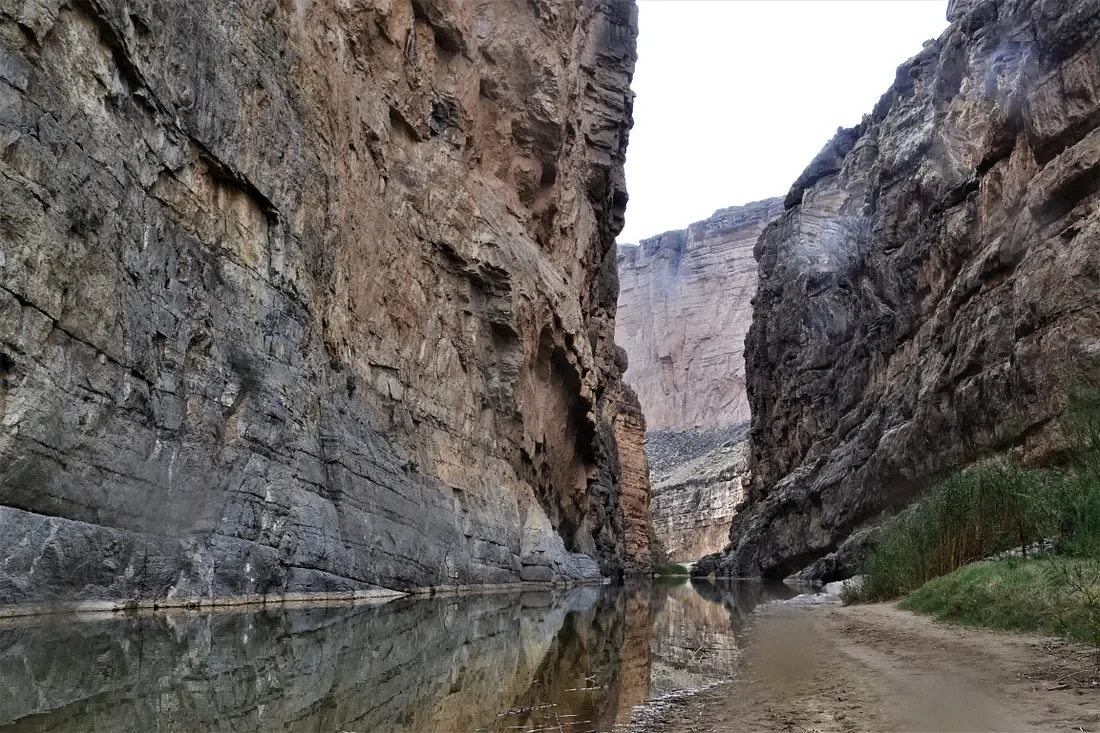
Our first day in Big Bend was mostly driving around, but I managed to get some hiking in. We are staying in Terlingua, which is on the west side. To get anywhere inside the park will be a little drive.
The weather is great for hiking, low 70s, and a slight breeze now and then. This is desert, so there isn’t much chance of rain. They get about 10 inches a year here, which is not much at all.
I made the climb to this canyon. I hiked down to the Terlingua Creek, which the tour paper assured was most likely dry. It was not today and had a pretty good stream running through.
I waded across in water that was up to my knees, so I was fairly wet. There were quite a few people around, and most were taking their shoes off. I thought about turning back, but I was already wet and saw no real reason to stop.
There was a fairly steep climb up one side of a hill, and then a climb down the other side that was not as steep. At the bottom was the canyon in the picture above.
From the creek, over the hill, and down to the canyon was a little more than four miles round trip. It went pretty well, and having wet feet was not a problem. I thought it was well worth the effort. I was a little surprised at how easy the hike was. Maybe it was the dry air or stopping to drink some water every 10 minutes or so, but I was not tired at all.
I was surprised at the level of vegetation in the desert. We are a little early to see cactus blooming, and before most plants get into summer mode. Cactus, yucca, and many other plants were still growing all around.
There is a central basin at Big Bend. The road snakes its way through the desert floor in the picture above. Mountains on each side. We had to drive up and down the mountain at each end, which was an adventure but nothing too scary.
Winked out by Roy Orbison
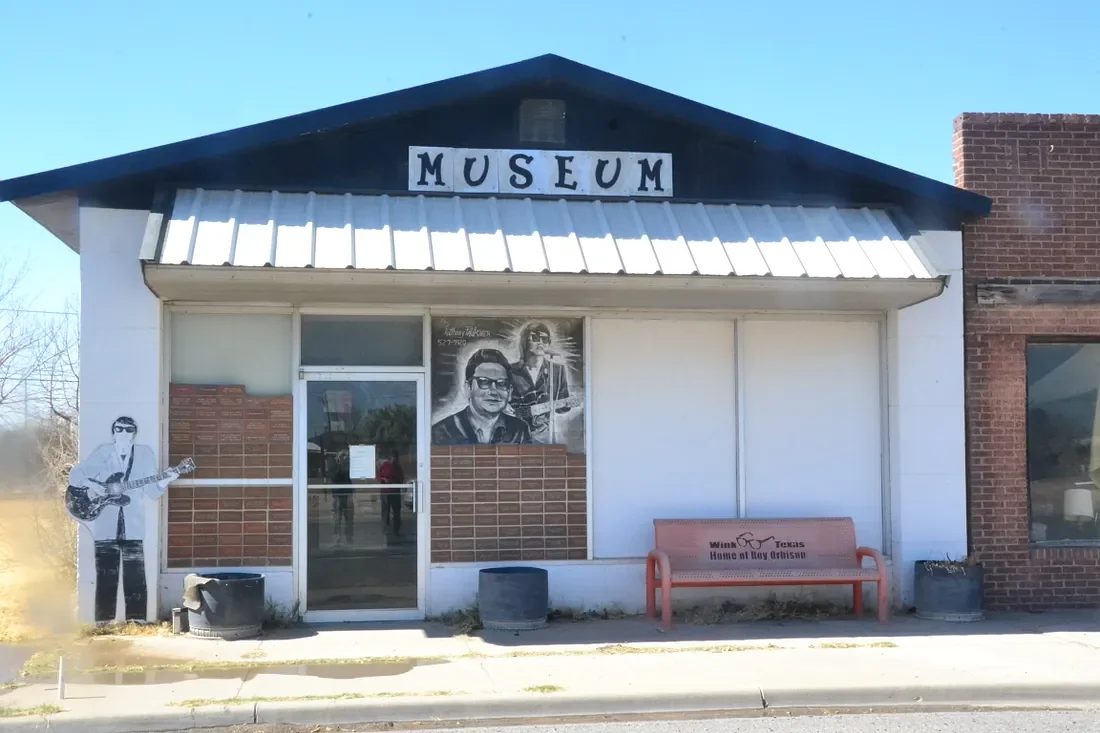
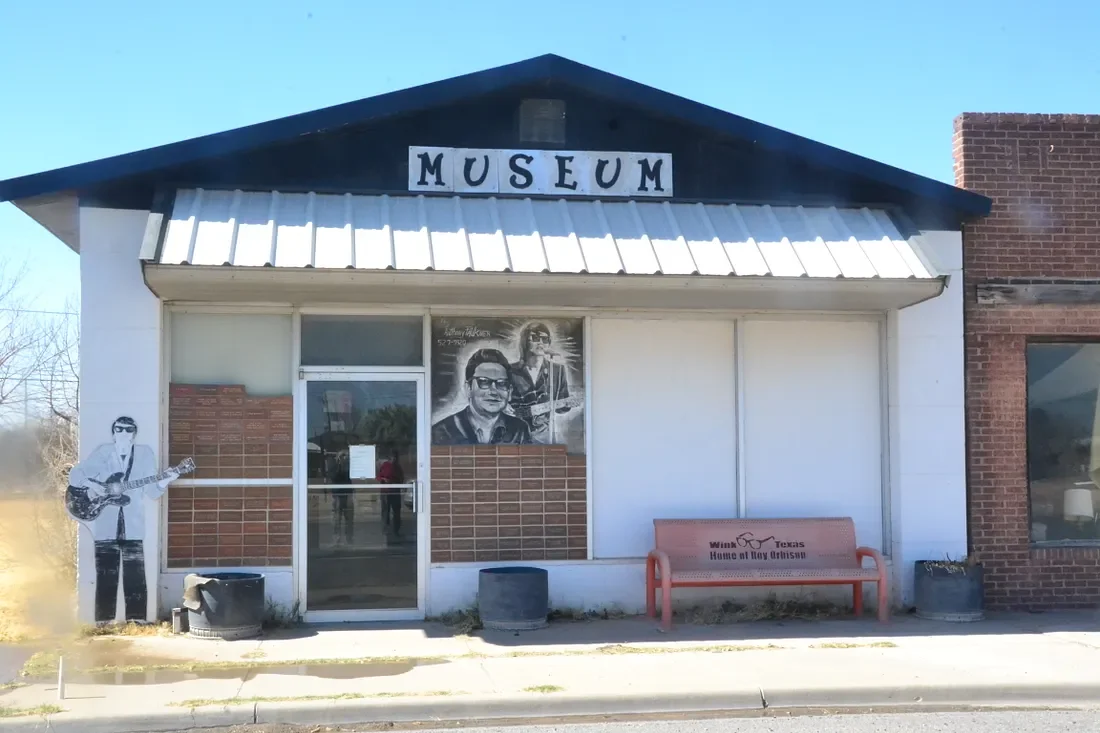
They say the town was so small if you wink you will miss it. That’s pretty much what happened when we made a detour to Wink, Texas, to see the town where Roy Orbison grew up.
I was aghast at a young man who did not know who I was talking about when we were about to leave Big Bend National Park. He didn’t know the Traveling Wilburys either. Oh my.
We were 150 miles south at Big Bend National Park, where there are no phone signals and no Internet. Wink is a town of fewer than 1,000 people, and it is an old oil town that has about dried up. The museum that bears his name is a one-room building and is by appointment only.
I tried calling on the way, and once we got there. There were more phone numbers on the door at the museum, and I tried them all.
No one was available to give us a tour. I looked through the door and saw a few things. I listened to some Roy Orbison as we drove down the highway. That will have to do I guess.
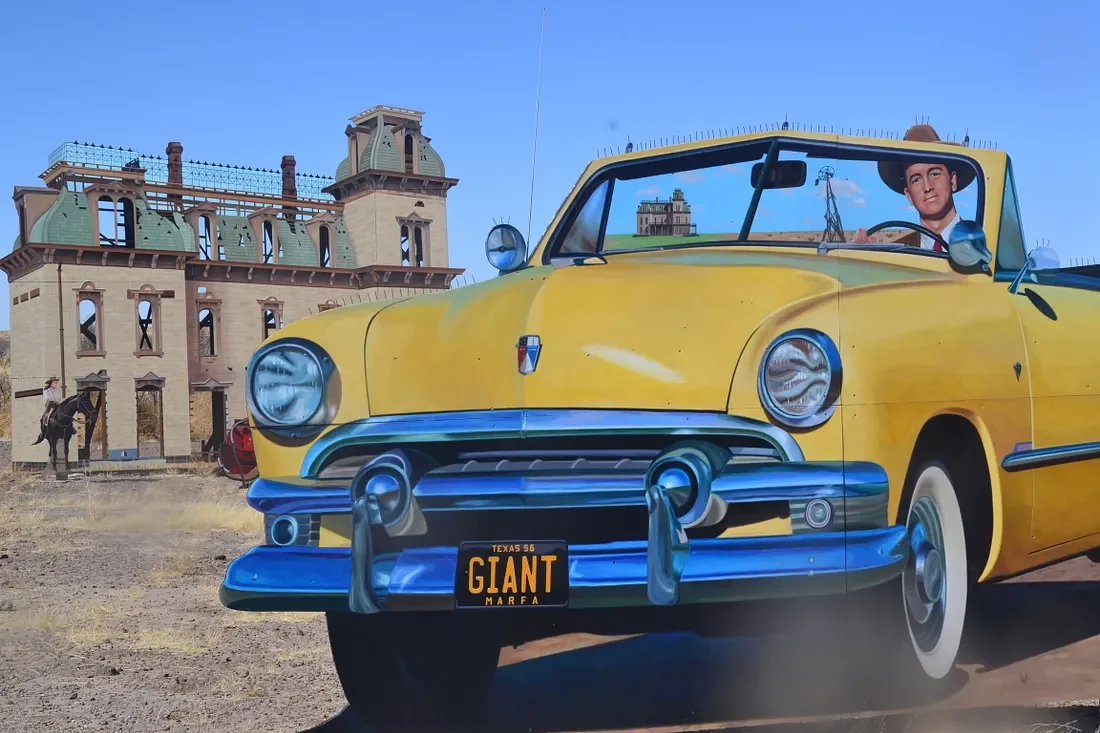
Giants in the Desert
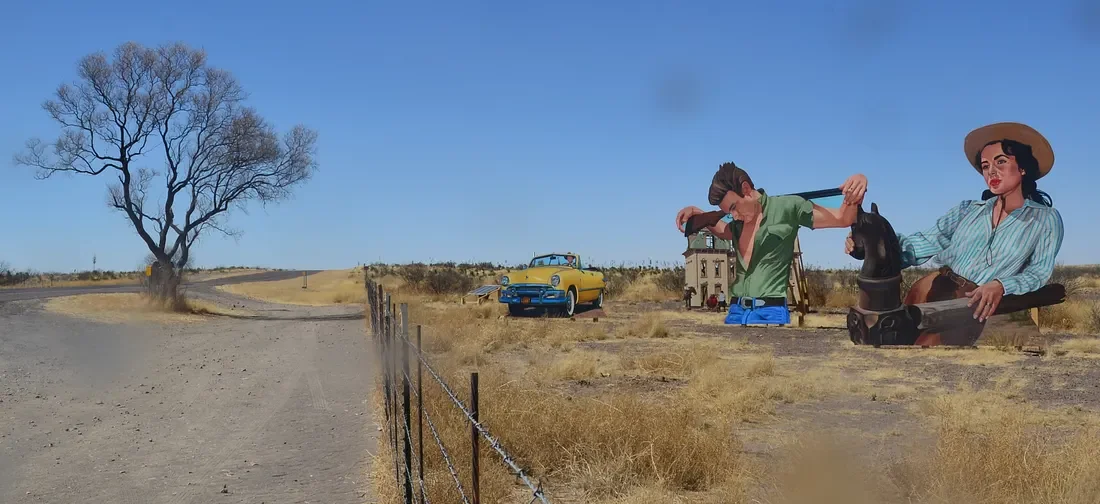
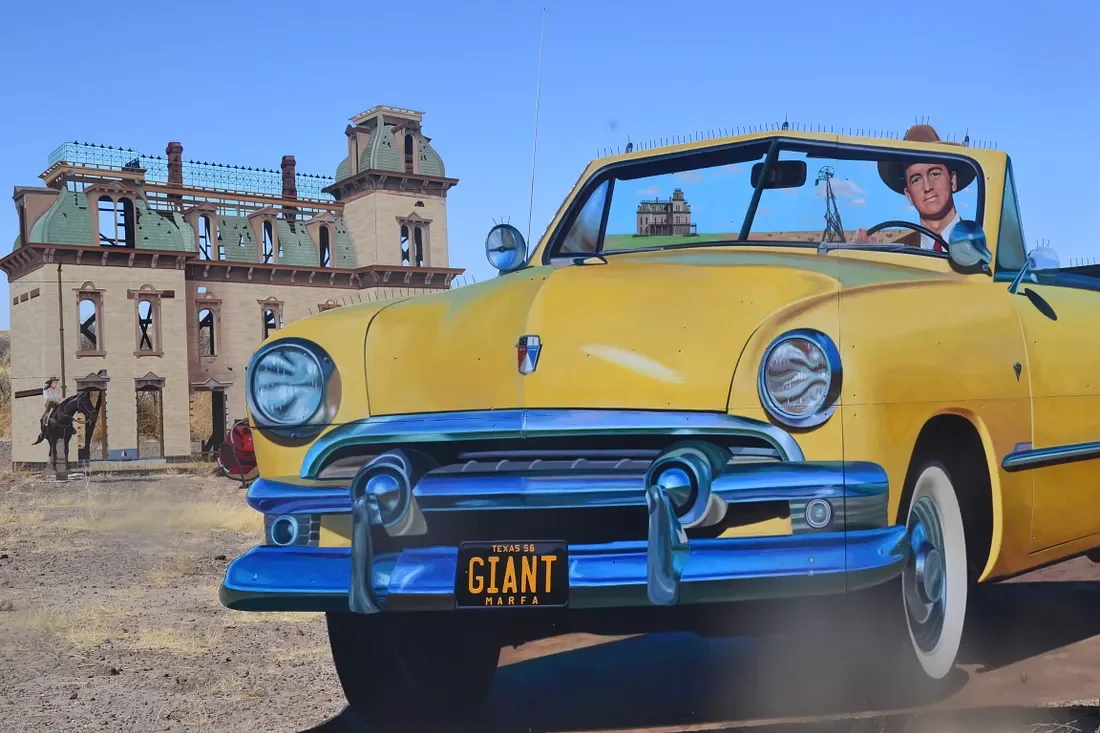
The classic western movie seems to always take place in Texas, and some were filmed there. The film “Giant” with James Dean and Elizabeth Taylor, was made just outside the small town of Marfa, Texas. Its on Highway 90, just a few miles to the west of town.
Larger-than-life billboards mark the spot where the movie was filmed, which is on a farm along Highway 90 west of Marfa. The murals were put up in 2018 by a local artist.
Marfa is an artsy town about 20 miles from the Mexican border and 40 miles north of Big Bend National Park.
It is a surprise to be driving down the highway and see these people rising up out of the desert floor. But it was on this farm that most of the movie was made.
The movie was made in 1956 and was about a couple moving to Texas and getting involved in the oil industry there.
Lost on the Chisos Trail
Chisos Basin area of Big Bend National Park. I wanted to do some hiking and got a bit more than I had bargained for.
I got lost.
The hike was the Chisos Basin Loop Trail, which was a 2-mile trail that was not supposed to be very hard. I took a wrong turn, and then took some bad advice, and found myself way off course on a trail I did not mean to be on.
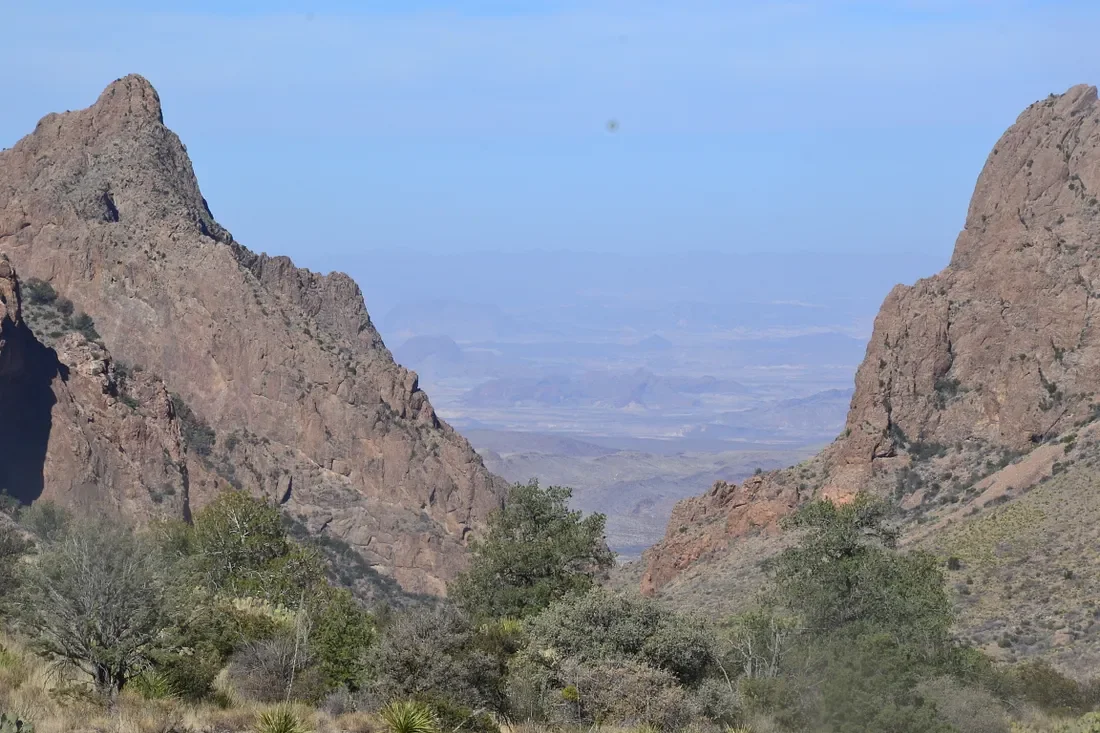
I was at the Chisos Basin area of Big Bend National Park. I wanted to do some hiking and got a bit more than I had bargained for.
I got lost.
The hike was the Chisos Basin Loop Trail, which was a 2-mile trail that was not supposed to be very hard. I took a wrong turn, and then took some bad advice, and found myself way off course on a trail I did not mean to be on.
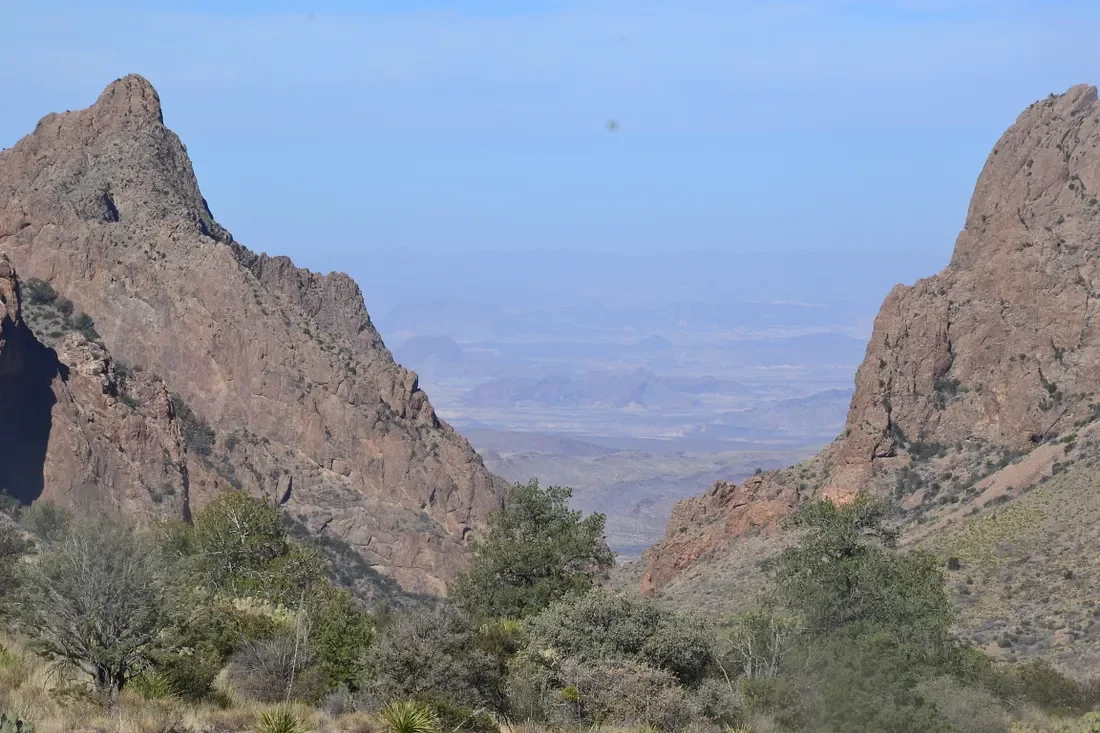
There is a place called the Window, where two mountain ranges form a frame that looks like a window. I could see it from the trailhead, and continued to see it as I hiked the trail.
I got to an intersection and the signage was not exactly clear, but I thought it was clear enough so I pushed onward. I started to think something was not right when I could no longer see the window. I had also been going downhill for a long time.
I passed by someone and asked them if this was the right trail. I did not say the name correctly, and they told me it was the right one, so I kept going. By then it was getting to be around noon and getting hotter by the minute. I looked at my step counter and I was at 3.3 miles and did not seem to be close to the end of the trail at all.
I was going back uphill though, and I took that as a positive sign.
I was running low on water and dreading the thought of having to backtrack. I thought I would feel bad if I was almost there and went all the way back. I ran into a man and a woman who were checking their map.
After talking with them and looking at their map, I saw that I was very far off track. I would indeed have to backtrack. By this time, it was 1 p.m., very hot, and I was out of water. They gave me some water. By the time I got back to the trailhead, I had been gone for almost five hours and hiked eight miles. My wife had gotten tired of waiting and went off exploring. She was upset, thinking I had changed my hiking plans without telling her. At least she felt some sympathy after realizing I had been through a pretty tough day.
There was no phone service available, so there was no way to contact each other.
I was worn out after that long hike. We drove around some more and got back to our room a little after dark.
The allergies are still hitting me hard, but I am recovered from the long hike as far as I can tell. They helped me recover to some degree.
They were headed back down the trail towards where I had started so we hiked together.
I was also having some heavy-duty allergies, which is ironic in the desert, but things are blooming everywhere. There must be some pollen I am not used to because I have not had an allergy attack like this in many years.
So I was hiking along, very hot and tired and having some bad allergies — sneezing, eyes burning and itching, and general misery.
Ghosts, and Ghost Towns Along the Border
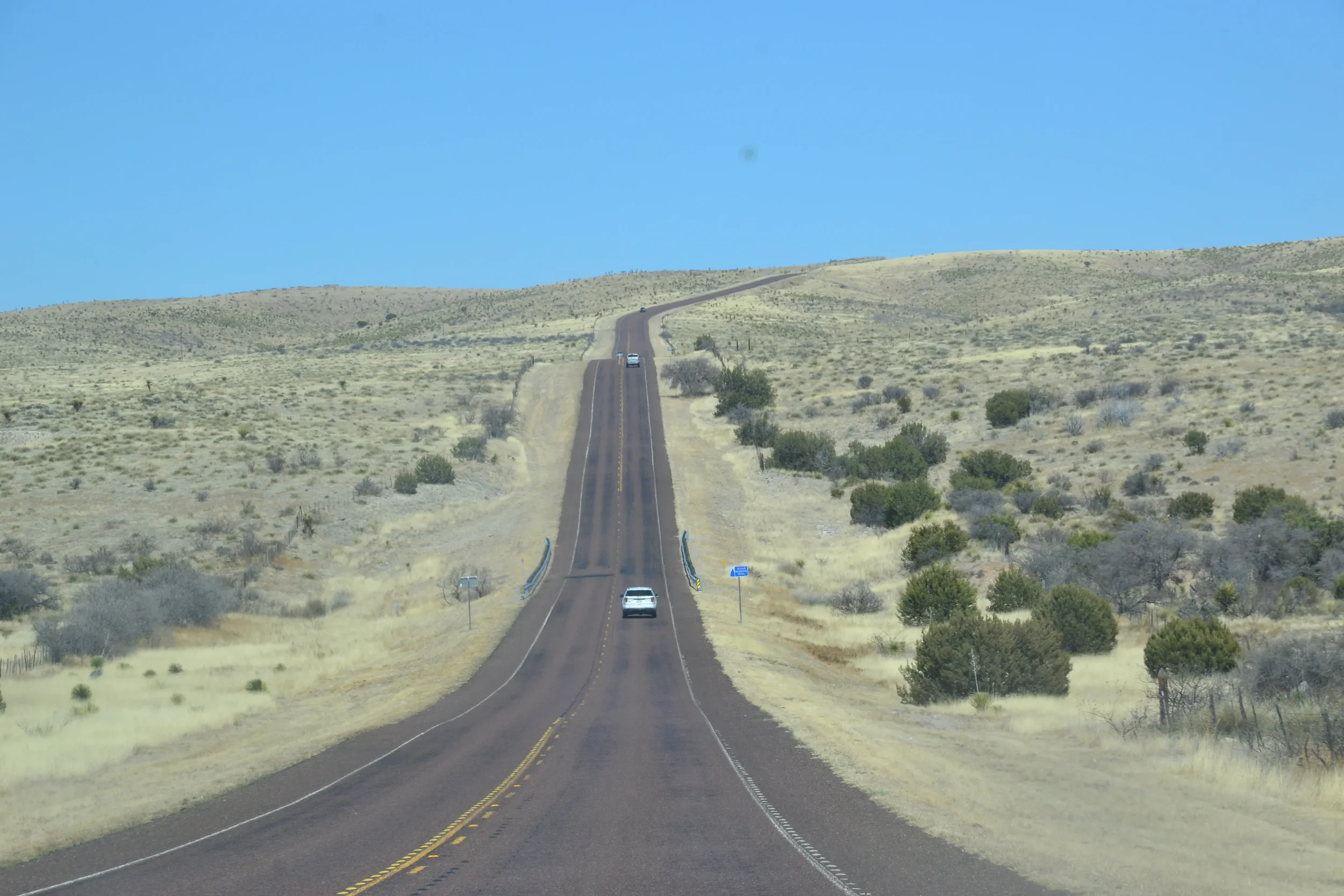
Small ghost towns and other remnants of attempts to tame the west dot Texas State Highway 170 along the Rio Grande and the border with Mexico.
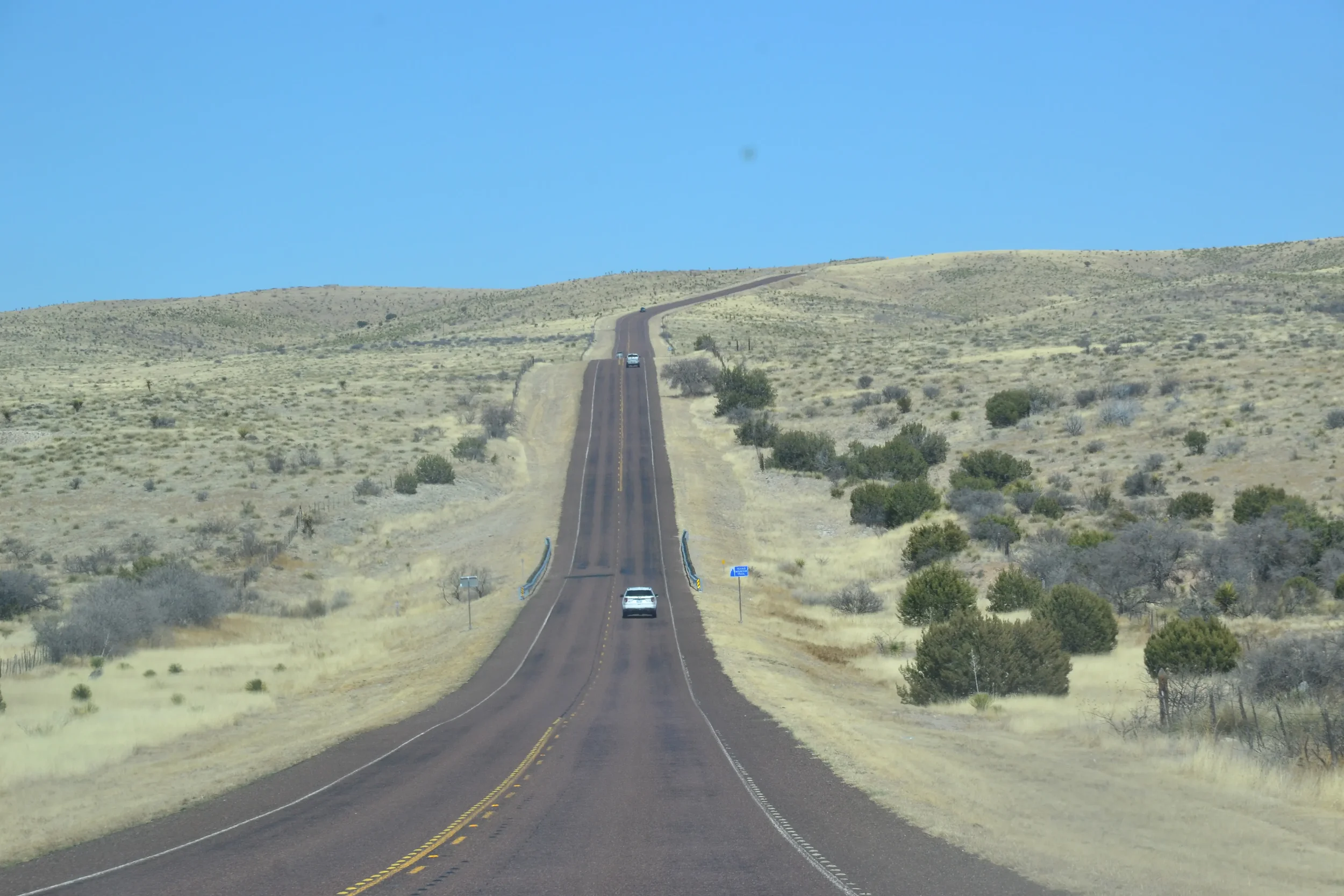
It is a harsh but beautiful drive through the mountains, roughly 60 miles from Terlingua to Presidio. You can see the Rio Grande often during the drive, and there are lots of places to pull over and go down to the river. It was an amazing drive, but what struck me most were the ghost towns along the way.
The drive through Big Bend National Park was inspiring. I was skeptical when they told me the drive onward to Presidio was even more impressive, but “they” were right for once. From Presidio northward to another ghost town — Shafter — is only 20 miles or so, but is almost as impressive as the drive along the Rio Grande.
There were Native Americans here for thousands of years, and there were Spanish explorers in the area from the 1500s onward. It was a harsh environment no doubt. Then white settlers came in the early 1800s, and even more in the late 1800s with silver mining.
Several towns sprang up overnight for silver mines, or later for oil, and most of them disappeared just as fast.
The environment was hot and dry, there were snakes and other wild animals, as well as Indians on the warpath now and then. It was a rough life, and people still struggled to survive. There was also a lot of appeal to the area, to the rough environment. I heard more than one person say they didn’t intend to stay there, but they did.
While at Big Bend we stayed in Terlingua, which is between the national and state parks by the same name. Just a mile or so away is another settlement called Study Butte (pronounced stoody boot). Both were the sites of big silver mines in the early 1900s, and both also made Mercury through the 1940s.
Once the silver mines were no longer profitable, the mining companies withdrew and they both became ghost towns. The towns are getting a resurgence now with tourism, as launching points for Big Bend and the river.
The silver miners also changed the environment significantly. Before the 1900s the area had tall grass which was great for grazing cattle, and there were a lot of trees. Virtually all the trees were cut down for the Mercury-making process. That left nothing holding the soil down and it all blew away, and there was no place for the grass to grow anymore. The desert quickly overtook the area and it remains desert today.
The two-lane blacktop winds through the mountains out of Terlingua, and around each curve is another gorgeous scene that would make a great photo. We pass up most of them.
There are other sights as well.
The home of Pablo Acosta is one that comes fast. It is a very nice house, almost a mansion, beside the road after leaving Terlingua. Acosta was a major drug dealer and controlled most of the drug traffic across the Rio Grande in the 1980s. He was finally killed after an ambush in a nearby canyon in 1987.
There is also Contraband Pass, which some locals told us about. There is a relatively easy pass through the mountains that has been used for centuries for trade. A hundred years ago a plant that was used to make candles was smuggled through that route and traded to businesses on the American side of the border.
We didn’t see any signs of that sort of smuggling, but there were places where people left trinkets, walking sticks, and so forth to be purchased. There was a can set up to hold the money and it was on the honor system. It’s illegal for them, and it's illegal to buy the trinkets.
As we went on down the road we came to Lajitas, another town that has not quite made it to ghost town status. It is having more of a resurgence as there is a fancy resort and golf course there now.
There were more ruins here and there as we wound through the mountains, just small piles of rocks that were a building of some kind.
It is ironic perhaps, but Presidio is the only town that is still functioning as an actual town. It is the only one that did not come into being because of mining. It was established by the Spanish, and there is the Mexican town of Ojinaga just across the river.
From there we went north on Highway 67 to another ghost town. This drive was gorgeous as well, but it was a different kind of mountain, with much different rock formations.
About 25 miles north of Presidio is Shafter. This once prosperous mining town now has five or six families, a church, and that is about all.
About 40 miles north of Shafter is the town of Marfa, which was a nice little town that seems to have a lot going on. The town of Alpine is just 10 miles to the east, and it is similar. Both appeared to be bustling small towns with a creative arts scene.
Riding the Rio Grande - Life on the Border
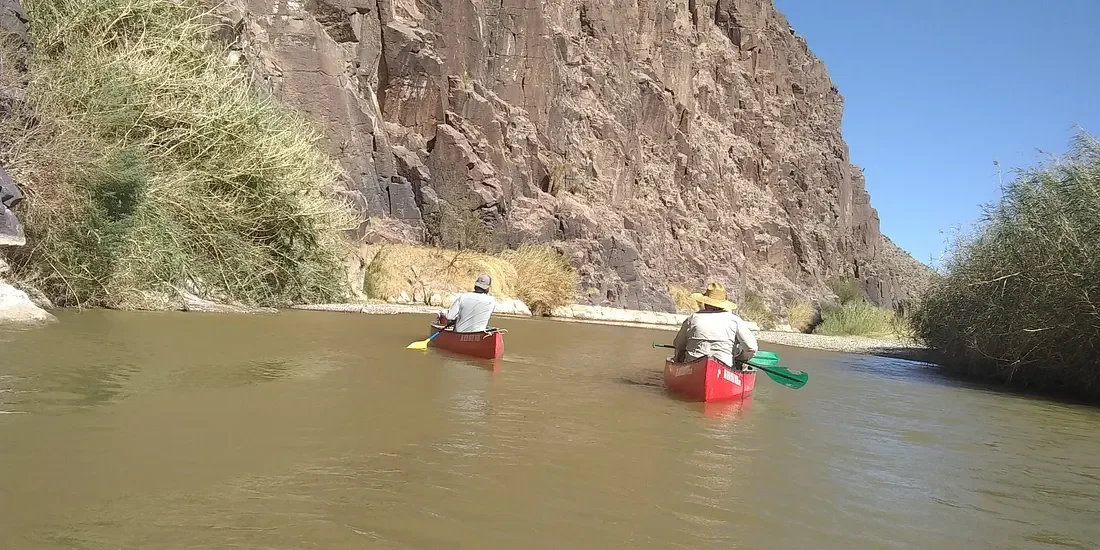
A canoe ride down the Rio Grande is about as peaceful as you can get. The flow is slow and the water is not deep. We went on a guided tour before we left Big Bend, National Park. The tour was in a state park by the same name, which is just an extension of the park itself.
Tall brown grass on both sides of the river creates a different world. A person could forget they are in a desert for at least a little while.
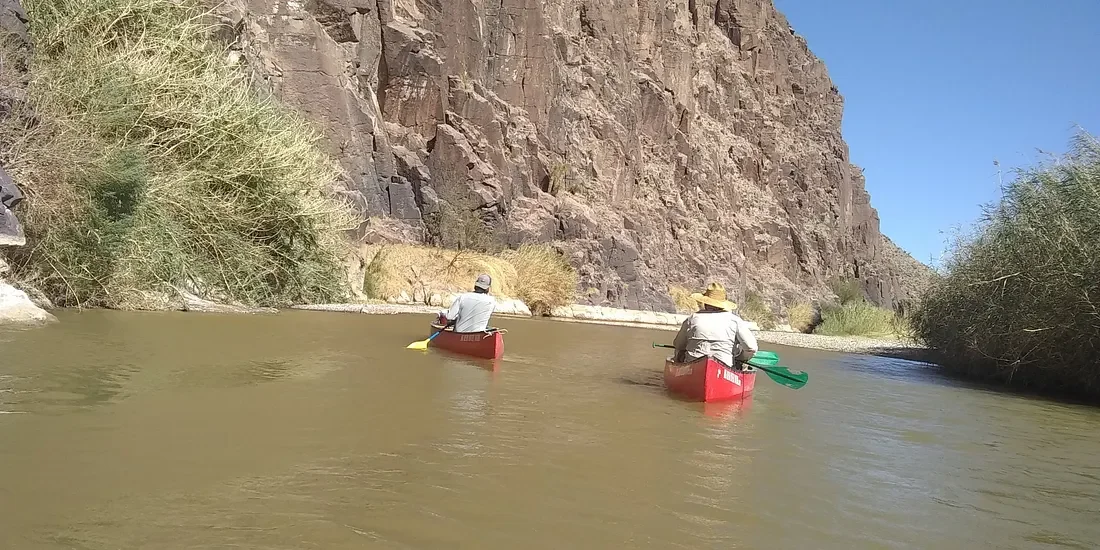
A canoe ride down the Rio Grande is about as peaceful as you can get. The flow is slow and the water is not deep. We went on a guided tour before we left Big Bend, National Park. The tour was in a state park by the same name, which is just an extension of the park itself.
We were not very familiar with canoeing and we were given some basic instructions, which were good enough.
You would have to really mess up to turn over, but it could happen. There were some “rapids” that were a little tricky, but our guides helped us through.
Steering a canoe is not as easy as you would think, and we went down one rapid backward. We got to a point where it was going to be too hard to turn around, so we just went back and it worked out fine.
Tall brown grass on both sides of the river creates a different world. A person could forget they are in a desert for at least a little while.
150 years ago when the west was being settled, and this area was still in contention with settlers, Mexicans, and Indians, the area was more green and the river had more flow.
Dams have been built and that has caused a smaller water flow, and the environment has changed. There was a lot of silver mining in this area 100 years ago, and all the trees were cut down to have fires that were needed to work with the silver.
Once the trees were gone, there was nothing left to hold the soil in place. Once a drought came along the topsoil was blown away, leaving nothing but sand. That made the area turn into a desert fast and the grass never came back.
March is the dry season so the water level is low. In the fall the level is high enough for rafts.
We ran aground a few times in the canoe, but it was easy to push off with the oars we had.
It is still a very remote area. Our guides told us there are very few people living on either side, and it is a long way to civilization from here.
Before 9–11, no one here paid much attention to the border. Folks on the Mexico side sent their kids across the river to go to school. After the 911 attacks the U.S. got more strict with the border.
In one case a Mexican town depended on infrastructure and supplies from the American town. Once we got stricter with the border, folks in that town had nowhere to go to get anything they needed. That area is a ghost town now.
There is a Mexican National Park on the other side of the river, so there is a national park for hundreds of miles on both sides of the border. There are still border patrol people around. You can go across the river easily enough, and our guide told us you can get cited with a misdemeanor if you cross the river.
There are virtually no “illegals” entering the U.S. from this area. The river is easy to cross, but hundreds of miles of desert with no water or anything else is not easy.
The Reality of the Mexican Border
If someone did walk from a remote Mexican town, cross the Rio Grande, and make his or her way into Big Bend National Park and onward, that would be a super-human feat. That person would have to have someone pick them up, or they would have to walk as many as 100 more miles to a town of any size in the U.S.
If a person did that they should be given citizenship and a medal of some kind — not deported.
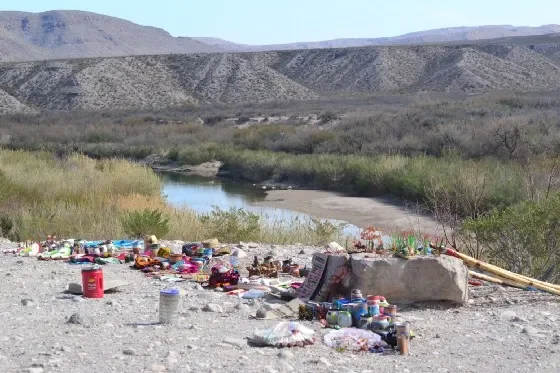
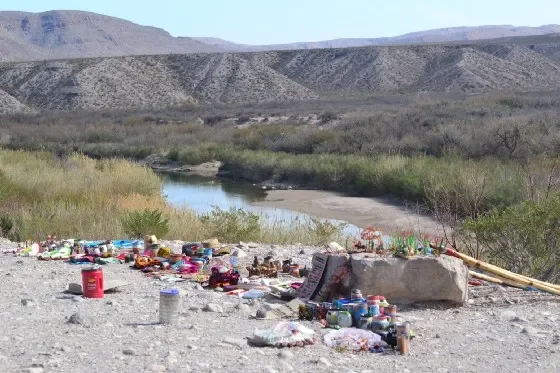
Trinkets and crafts left for sale on the U.S. side of the Rio Grande. Photo by James Jordan
The desert at Big Bend is a bigger obstacle than a wall would have been
It would be easy to wade across the Rio Grande, from Mexico into Texas, without any problem in the remote desert of Big Bend National Park.
There is a lot of border between the U.S. and Mexico, and there is a lot of remote wilderness that is largely desert and untamed. I never knew for sure just what the border was like until we visited it at Big Bend National Park. It’s even wilder and more remote than I had imagined. The other side of the border is also a national park and just as much desert.
I hiked a few trails that went down to the river, and could easily see across to the Mexican side of the river. It is the dry season and water levels are very low.
For centuries people that lived in these parts didn’t worry too much about borders. They did business together and helped each other at times. It’s only become more of an issue in recent years. But even at Big Bend National Park, there are border patrol agents around.
There are no towns of any size to speak of on either side of the border. This is a remote desert on both sides for many miles. Most of the border areas I saw were desert, but there were some ranches and some signs of life.
If someone did walk from a remote Mexican town, cross the Rio Grande, and make his or her way into the park and onward, that would be a super-human feat. That person would have to have someone pick them up, or they would have to walk as many as 100 more miles to a town of any size in the U.S.
If a person did that they should be given citizenship and a medal of some kind — not deported.
Once you crossed the river in either direction you would have at least 30 miles to go before you got to even a convenience store and 100 miles to a town that probably does not have 1000 people. Imagine doing that on foot in intense heat with no water available. It would probably be 300 miles in either direction to get to public transportation.
Trump talked about building a wall. I can’t think of anything that would be uglier than that in this wild area. A few hundred miles or more of dry desert is more of an obstacle than any wall could be.
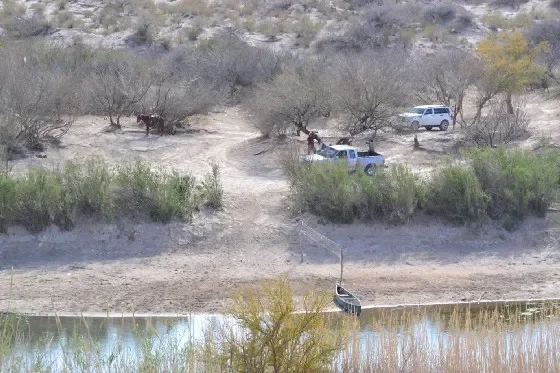
Just across the border, there were people with trucks and horses — and canoes. There are still operating ranches on both sides of the border.
But there is one thing that does happen.
At various spots, there are trinkets, walking sticks, and such, set up for sale. There is a can with a note saying to put your money into the can to support families on the other side of the border.
It is on the honor system, and some of them had what looked like a decent amount of cash in them. I saw several of these setups, and at times they were in very remote areas along a trail near the border. I half expected someone to jump out of the bushes and give me a sales pitch.
No one ever did.
There are warnings posted not to do business with these people. Our government says it encourages illegal entry, and that we should not do so.
The trinkets looked like handmade crafts. I could not tell if they were real handmade art or if they were cheap Chinese knockoffs. I didn’t care really. I stuffed a few dollars into one of the cans and maybe that helped someone a little bit. I didn’t take any of the trinkets.
These people do sneak across the border and put up these things before daylight, and come back in the evening to collect whatever money was made and the stuff that did not sell.
If you are already there, crossing the border is not a big deal. Getting anywhere once you cross the border — in either direction — would be quite a feat.
Living in the Mystery of God
Labels are useful for debate; they’re less useful for living.
What remains is simpler and harder at the same time: trust the character of God, hold the clear parts of Scripture firmly, and leave the rest in the mystery. The secret things belong to Him. I’m okay with that now.
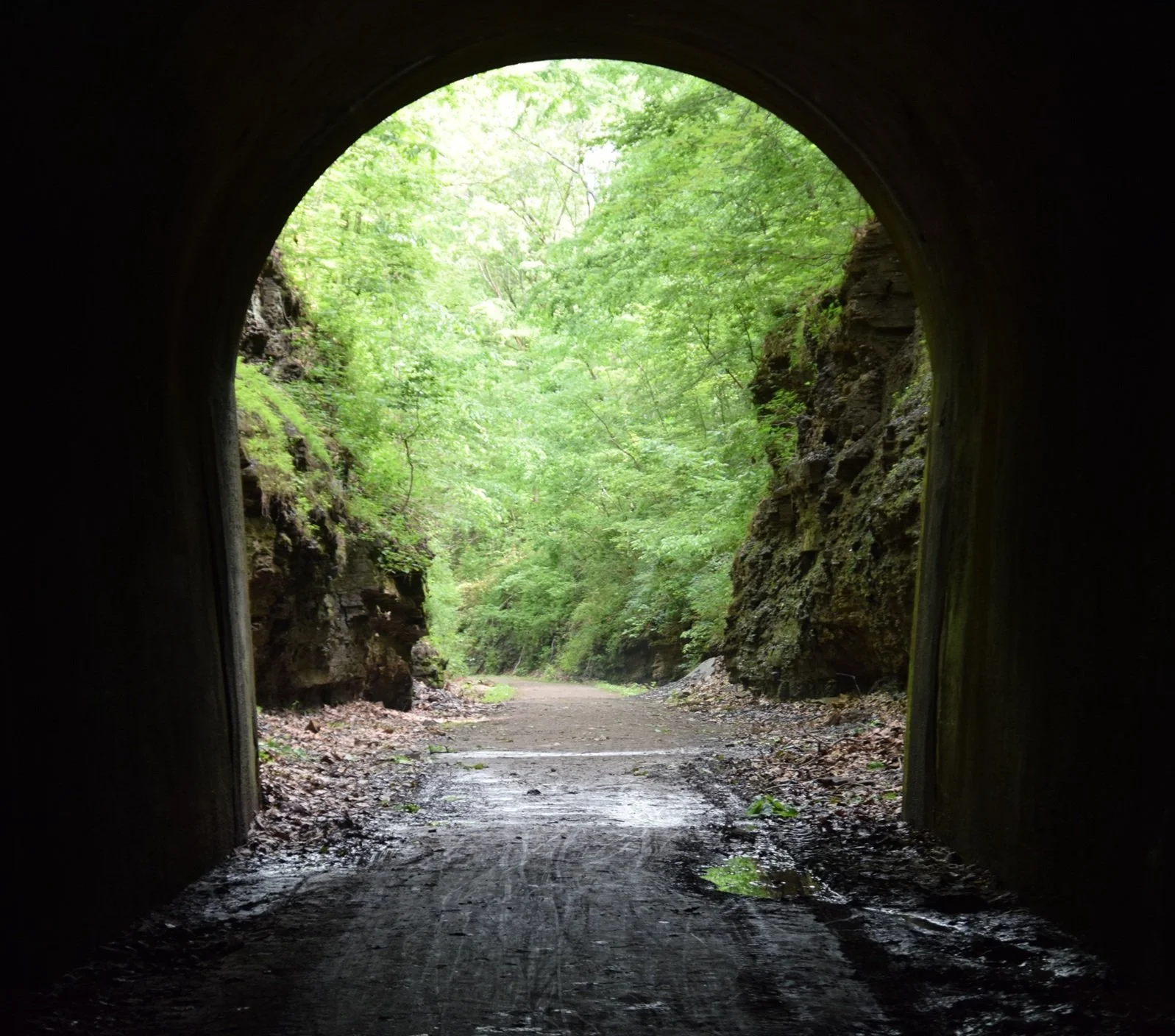
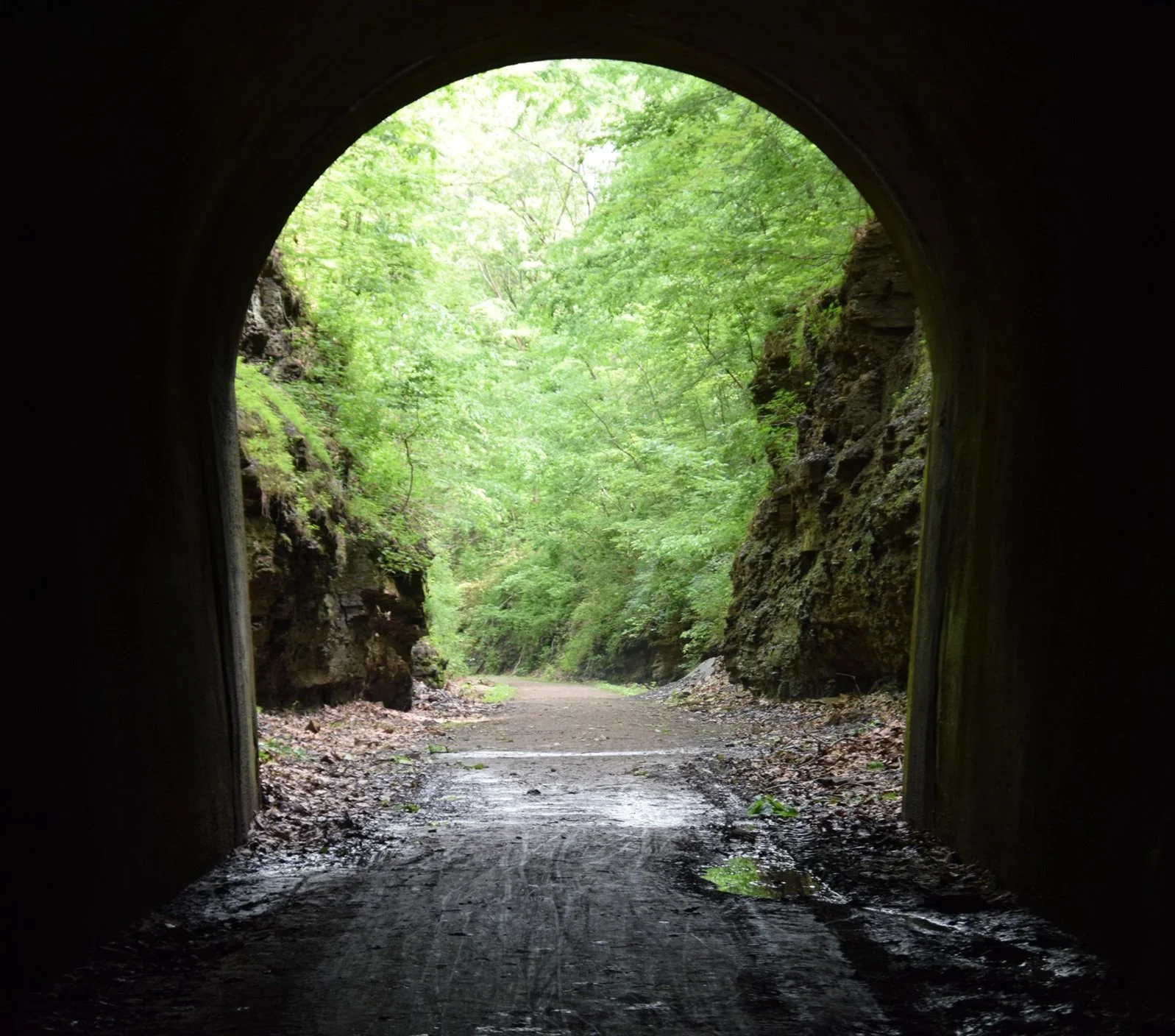
An abandoned railroad tunnel. Photo by James Jordan
I’ve never been big on theological labels.
For a while I called myself a Calvinist, and I’m still no hater of the system. I can’t accept limited atonement. Christ died for all—that part seems clear. But once you say the provision is truly for everyone, another question rises up: if the gift is already there for every person, why does it matter whether someone accepts it or even knows about it? Shouldn’t “all” simply mean all?
That question used to bother me more than it does now.
I’ve come to see that the greater problem is our constant urge to explain the unexplainable. We keep trying to map out the mind of God, and none of us really has the ability to do that.
Take the harder questions that sit right behind free will and election. Why create people with a real capacity—and after the Fall, a strong propensity—to sin, then hold them accountable for it? Why give genuine freedom knowing most of us will choose poorly a good deal of the time?
If I were an atheist, I’d lean hard on that one. It’s a strong objection. But I’m not an atheist. I’m more the mystic type.
I’ve grown comfortable living in the not-knowing.
The same comfort applies to how God knows the future. Somehow—I don’t claim to understand the mechanics—He knows what is coming without determining it.
Knowledge isn’t the same as causation.
We live inside time, moment after moment. In the spirit world, or whatever dimension God fully inhabits, time doesn’t work the way it does for us. From that vantage, past, present, and future are simply present. He sees the whole without having to force every choice that unfolds inside our timeline.
Arminianism never sat right because of the lack of eternal security. Calvinism lost me on limited atonement. The newer term “Provisionist” probably fits the leftover pieces—God provides for all, people can respond, and once you’re in you’re secure—but I don’t feel any need to wear the label.
Labels are useful for debate; they’re less useful for living.
What remains is simpler and harder at the same time: trust the character of God, hold the clear parts of Scripture firmly, and leave the rest in the mystery. The secret things belong to Him. I’m okay with that now. Not every question needs an answer I can fully explain. Some just need room to breathe.
A Case for Serious Bible Study: Spiritual Growth
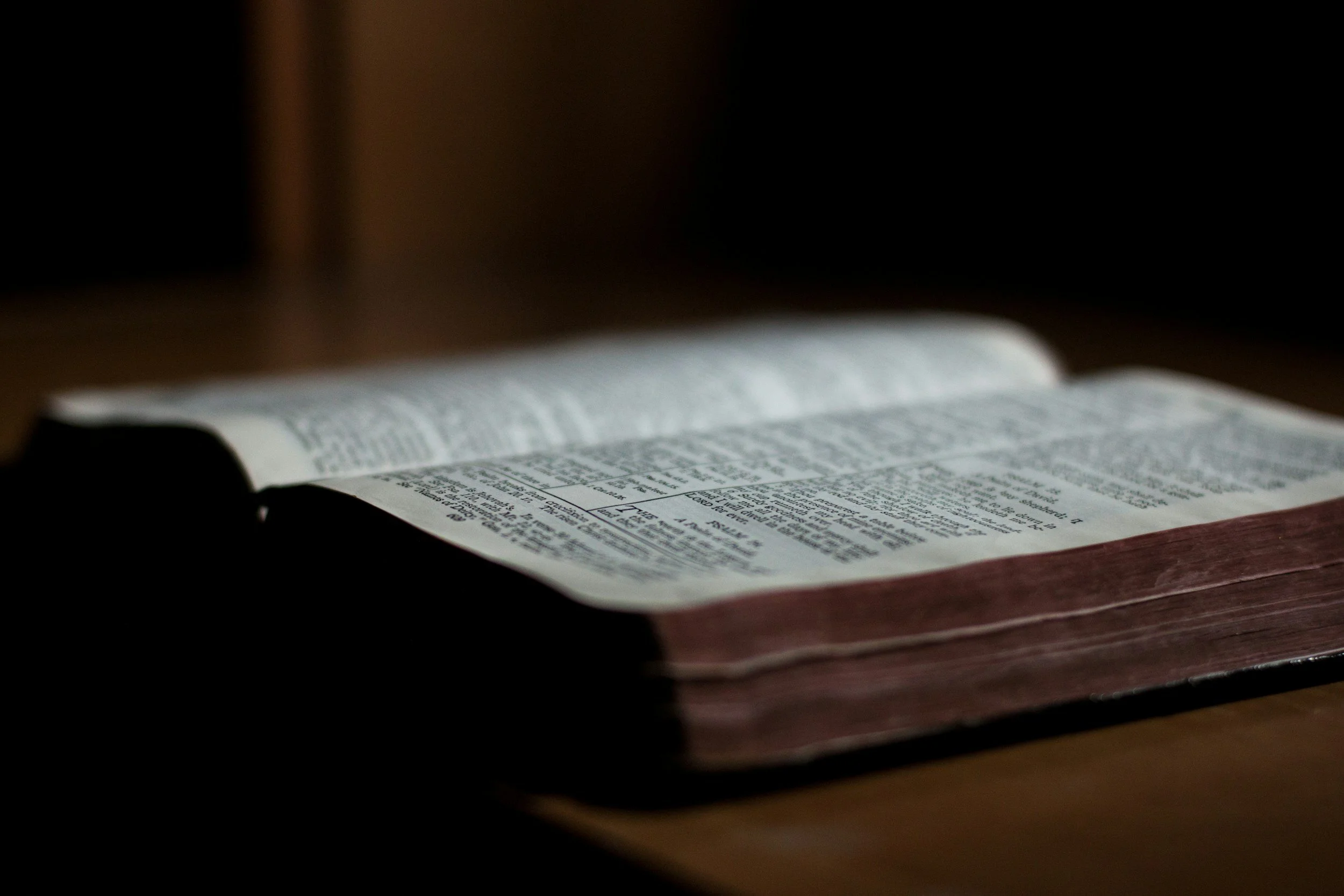
Photo from Unsplash
"Do your best to present yourself to God as one approved, a workman who does not need to be ashamed and who correctly handles the word of truth." — 2 Timothy 2:15
We hear preachers and would-be prophets delivering all kinds of messages, and it isn't always easy to know what's true and what isn't. But what we can know for certain about God — objectively, verifiably — is written in the Bible. That's why Scripture, and the serious study of it, matters so much. The best way to build a real relationship with God is to study Him in the pages He gave us.
What "Study" Actually Means
The King James Version renders 2 Timothy 2:15 as "study to shew thyself approved." The NIV translates it "make every effort." Both come from the Greek word spoudazo — to put in effort, to work hard, to be diligent.
Notice what it doesn't mean. It isn't passive reading. It isn't waiting for a feeling or a sudden flash of insight. It means doing your best to understand the meaning — actively, deliberately, on purpose. Do that, Paul says, and you'll be able to "correctly handle the word of truth," a phrase pointing to the message of the Bible itself.
Paul is telling Timothy — and every Christian after him — to work at becoming the kind of believer God approves of: one who can handle Scripture accurately. Get that right, and two things follow. You grow closer to God. And you become harder to fool.
There are plenty of preachers out there teaching things that simply aren't true, twisting Scripture to fit an agenda. If you don't know what the Bible actually says, you have no way of knowing when someone is misleading you. That alone is reason enough to study consistently.
Study Means Digging, Not Skimming
Real study means digging in, meditating, praying over the text — not reading passively. It means picking a passage apart and asking every question you can think of. You won't always find the answer right away. But the only question guaranteed to go unanswered is the one you never ask.
It helps to be clear about what you're studying. At its core, the Bible is God's love letter to you — His way of revealing Himself. It has supernatural origins, but for the most part it reads quite naturally, and we're meant to bring our whole minds to it, using every tool available to get the most out of our time in it.
It's worth saying plainly what the Bible is not. It isn't a rulebook. It isn't a history book. It isn't even primarily a how-to guide for life — though it contains elements of all three. First and foremost, it's a love letter from God to us. And because it's addressed to us personally, it's worth digging out the meaning ourselves, even while we listen to good teachers and preachers along the way.
Not About Earning Approval
It's worth pausing on Paul's phrase "to show yourself approved," because it's easy to misread. God's approval of us isn't conditional on nailing every fine point of interpretation. God approves of us because we believe in His Son. There is nothing we do to earn salvation — that's simply not what this passage is about.
What Paul is saying is that we should be able to present ourselves as workers who handle the word rightly — the kind of Christian who doesn't fall into error or lead others into it. It's the believer, not God, who bears the consequences of handling truth carelessly.
Paul's word picture is a workman who has no reason to feel ashamed of his work. Think about how you'd feel if your boss walked in and your work was sloppy — versus how you'd feel if it was done well. It's the same with Bible study. Handle the word accurately, and you avoid being misled, which is exactly what pleases God.
And to be clear: God doesn't need us to study in order to accomplish His purposes. We are the ones who benefit. The whole point of Bible study is to know God better and deepen the relationship He's already given us — not to check a box for Him.
Three Pictures of Effort
Paul isn't content to make his point once. In verses 3–6, he offers three word pictures — a soldier, an athlete, a farmer — each showing what it looks like to grow.
The soldier endures hardship with loyalty and focus, unwilling to be distracted from the mission. In the same way, we're called to stay focused on the word of truth.
The athlete only wins by competing according to the rules. Every sport has boundaries, and there are no shortcuts to victory. The same is true of spiritual growth — it takes going through the process, putting in the time.
The farmer works a field that ultimately belongs to someone else, and still gets his share of the crop. Seeds don't become fruit overnight; growth takes time. So it is with Scripture: our understanding won't arrive instantly, but the effort we put in will eventually produce a harvest.
The thread running through all three is simple — spiritual growth takes effort. None of this is about earning salvation. It's about becoming the kind of person who can handle the word accurately and, in doing so, knows the truth.
Using Your Mind, Not Just Your Feelings
Handling Scripture well means engaging your mind, not just your emotions. A lot of people interpret the Bible primarily through feeling, sometimes even attributing those feelings to the Spirit. Feelings have their place — but truth is something we come to know with the mind, and it's the mind that should ultimately govern how we live.
We also carry preconceived notions, often absorbed since childhood, that may or may not hold up under scrutiny. The goal is to approach the text honestly and objectively, looking at what the words actually say before drawing conclusions — and always reading in context. That's one reason it's worth reading through the whole Bible more than once: it gives you the full picture, so no single verse gets pulled out of its setting.
Questions Are Welcome
Handling the word accurately also means asking questions — even hard ones. A healthy skepticism toward teachings and beliefs (not toward God Himself) is part of careful study.
Consider "doubting Thomas," who refused to believe Jesus had risen until he saw for himself. Jesus didn't rebuke him for asking. He let Thomas see what he needed to see. That's the same posture God takes with our questions. We may not get a sign written in the sky, but if we search and study, we eventually find an answer.
The Passage in Context
It's worth stepping back and reading 2 Timothy 2:15 inside its chapter. Paul is writing to Timothy, a young pastor, though the encouragement applies to every believer. The theme of the chapter is spiritual growth — both helping others grow and tending to your own walk with God.
Paul opens by urging Timothy to "be strong in the grace that is in Christ Jesus" (v.1). We aren't strong on our own; it's a matter of faith, trusting that Christ is the source of our strength. From there Paul moves into the three analogies already discussed, before landing on verse 15's call to "rightly divide" the word of truth.
That phrase — "rightly divide" — comes from a Greek term a carpenter might use, meaning to cut something accurately, to correctly interpret it. Verses 11–13 function almost like a short poem on cause and effect: not salvation by works, but a simple principle that effort produces results. And even here, Paul softens it with grace — "if we are faithless, He remains faithful" (v.13). Even when we fail at handling the word well, God doesn't walk away.
Paul then warns against quarreling over words (v.14). Few things stir up emotion like religion, and people can get so attached to being right that arguments turn into open conflict. Paul isn't telling Timothy to agree with people who oppose him — just to avoid getting dragged into pointless disputes. Arguing rarely helps anyone. Working diligently to find the truth does.
The Reward of Diligence
When you actually put in the time, something interesting starts to happen. You'll be reading one day and something from last week's study suddenly clicks into place. A word study from days before resurfaces at just the right moment, and the pieces come together into a new understanding — one grounded in the facts of the text, not in a feeling that may or may not have been reliable.
That's the payoff Paul is pointing to. Like the soldier's loyalty, the athlete's discipline, and the farmer's patience, our reward comes from doing whatever the work requires. Handle the word rightly, and you'll be equipped to apply it to your life — and your relationship with God will grow because of it.

What I Learned From a Teenage Scottie Pippen
I was taking in all the sights and sounds of the dimly lit, rickety gym in Hamburg, Arkansas that was quickly filling. The sounds, smells, and visuals were overwhelming.
A voice suddenly broke through the din and haze.
The wake-up call
“Hey Mister Newspaper, take my picture?” a young Scottie Pippen said.
I looked at him and smiled. We made eye contact, and he grinned at me. We both laughed.

Photo by Markus Spiske on Unsplash
I was leaning against the wall at the end of the basketball court, camera and notepad in hand. These gyms in these small towns are small. There’s only a few feet between the wall and the court.
I watched the teams warm up, feeling nervous as I entered a new world. I was from the mountains in East Tennessee where there are few black people. Here I was one of the few white people. Because I was from the newspaper, they were polite, but didn’t say much.
I was taking in all the sights and sounds of the dimly lit, rickety gym in Hamburg, Arkansas that was quickly filling. The sounds, smells, and visuals were overwhelming.
A voice suddenly broke through the din and haze.
The wake-up call
“Hey Mister Newspaper, take my picture?” a young Scottie Pippen said.
I looked at him and smiled. We made eye contact, and he grinned at me. We both laughed.
At that time, he was barely a starter on his basketball team. Just a good-natured happy kid interacting with his world. It was unusual for a newspaper reporter to be there, and he was the one brave enough to interact.
Something clicked in me at that moment. I didn’t know what it was, but I knew my life had changed.
It was my first job out of college, and I was 1,000 miles from home. I was out of place doing a sports story as a news reporter. I was around people who were different than me. I was a bit nervous, but it was not uncomfortable.
I started working there toward the end of football season, and I helped by covering Friday night football games. My pictures came out better than I expected, and it was fun.
But when basketball season rolled around, it got a lot more personal. Covering basketball is much different than football. There is a distance in football, but not in basketball. The players are just a few feet away.
In an enclosed area like this, the sound is multiplied. It was a deep sensory experience, but Pippen brought it into the real world for me.
He stood out because he was real. He was loud but not obnoxious. He had no fear or preconceived ideas about me. I was just a new person in his world, and he said hello in a way only he could do it.
What it meant
When he said “Hey Mister Newspaper,” he recognized me and welcomed me into his world. I was not some white guy with a notepad, and he was not some black kid on the court — we were just two people caught up in the moment.
It was my first honest interaction with a person darker than me. My first time to “get” what sports are really about and how they transcend things like race or age. My desire to become a sportswriter was born.
That is the reason I remembered Pippen. At that time, he was a decent player but nothing special. The star on that team was Myron Jackson, who also went on to the NBA.
Pippen did not blossom until he got to college. He started college as a walk-on and was one of the best players in the world when he was done. I was very happy for him when I saw him get drafted in the NBA and win championships alongside Michael Jordan.
I too moved on. I became a sports writer and won a lot of awards in different states for my sports reporting and photography.
Still, it’s that “Hey Mister Newspaper,” that sticks with me.
A deeper lesson
I was very naive about racial relations and did not even know racist lingo. The Pippen thing was fun, but there were serious lessons as well.
Some time later, I approached the coach after a game to get a quote for my story.
“Your boys looked good out there tonight, didn’t they?” Asking a leading question, figuring he would take that as a cue to give me some coach-speak.
He glared, one eyebrow up like I’d lit a fuse. “What you mean, boys?” he said, voice rising.
“Uh, your team?” I stammered, totally lost.
His frown broke into a smile. “You really don’t know, do you, son?” He chuckled, shaking his head.
“No sir,” I said, still baffled.
We would laugh about it later over lunch. He enjoyed ribbing me by saying “boy” a lot.
That too was part of my education about racism in the Arkansas side of the Mississippi Delta.
“Mister Newspaper” had welcomed me, but the coach showed me I had things to learn.
Why I Have the Post Festival Blues
Running out of feel-good chemicals
A lot of it is chemical. You get lots of dopamine and other natural feel-good chemicals going on in your head when you are anticipating a big event. You may get even more during the event. When it’s over, those chemicals fade, and you don’t have any left in your tank. That’s a sure recipe for a dose of depression. It’s extra hard to manufacture them when your supplies are depleted. Even things that usually pick me up, don’t in this situation.
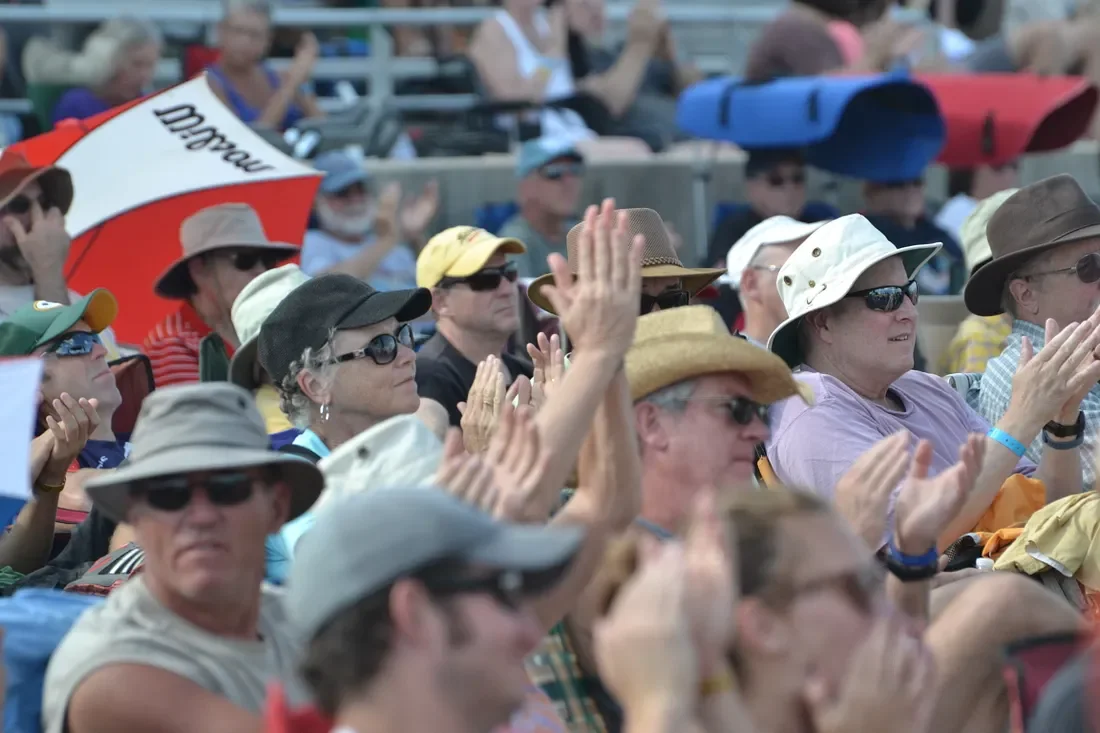
The crowd at The Walnut Valley Festival
Best festival yet, so why do I feel so bad when it’s over?
I just got home from one of the best bluegrass festivals in the nation — The Walnut Valley Festival in Winfield, KS. I had a blast — probably the best experience in the 20 years I have attended. It was everything I hoped for, and even more.
So why do I feel like crap?
It is one of the highlights of the year for me. My world revolves around the third weekend of September. It also falls on my birthday, which is a bonus.
Yet, three days later at home, I feel like the world has ended. Life has no meaning or purpose. I can hardly get out of bed. I’ve long suffered from bouts of depression, but this one seems worse than most. The weather is perfect for hiking, an activity that I love. Yet I’m sitting in my basement and can’t even get dressed.
I am retired and don’t have a job to go to. Going back to work used to be a needed distraction from the letdown. Today there is no distraction from the painful letdown after such a tremendous high.
I am not alone in this. There are lots of psychological articles out there on post-event depression. I like studying mental health, and this always helps me out.
Running out of feel-good chemicals
A lot of it is chemical. You get lots of dopamine and other natural feel-good chemicals going on in your head when you are anticipating a big event. You may get even more during the event. When it’s over, those chemicals fade, and you don’t have any left in your tank. That’s a sure recipe for a dose of depression. It’s extra hard to manufacture them when your supplies are depleted. Even things that usually pick me up don’t in this situation.
It is the same thing with actors. They work a lot to prepare a production. There is lots of anticipation, building to an incredible high during the performance. Then it’s over, and the bottom falls out of one’s emotional health. I have felt that myself. I like acting, but could not live with the crash after the performance.
We will get to some coping strategies further down.
I don’t remember feeling this intense after previous festivals. Returning to work was part of that, but this year was different. Everything was so perfect this year; it seemed like a dream.
What actually happened
There is an elaborate process to getting set up for camping. Lots of people want prime spots, and there is competition between groups. I go as an individual, which makes it a little trickier. There is a lottery of sorts for the lineup. When they open the gates, it is a free-for-all. Everyone goes in and claims their spot as fast as possible. Lots of adrenaline there, but I got a great spot. I scouted the grounds the day before and landed exactly where I wanted to be.
I also ended up next to a group from Texas who took me in, and before the first day was done, I was part of their group. I enjoyed them so much that I have been invited to camp with them again next year.
Then there was my music. I have been taking my guitar playing more seriously for a couple of years. There is lots of jamming in the campgrounds, from beginners to experts. I saw some progress in myself and was reminded I have a long way to go.
I ran into a music instructor there who enjoyed helping me. He showed me things like holding the pick, strumming methods, and posture—mostly mechanical things that change how you play the music. I looked around at the festival, and all the greats were doing what he said.
I’m looking forward to putting all he showed me into practice and improving at guitar.
I always work at the festival too. It is a way of helping out, and pays for my ticket and most of my camping fees. That too went as well as it could have.
The weather was hot, with the occasional thunderstorm.
There isn’t anything I can find to complain about from this year’s festival.
That makes the post-event depression worse. I had all this buildup and anticipation. The event went as well as it possibly could have. Now there is nothing but emptiness.
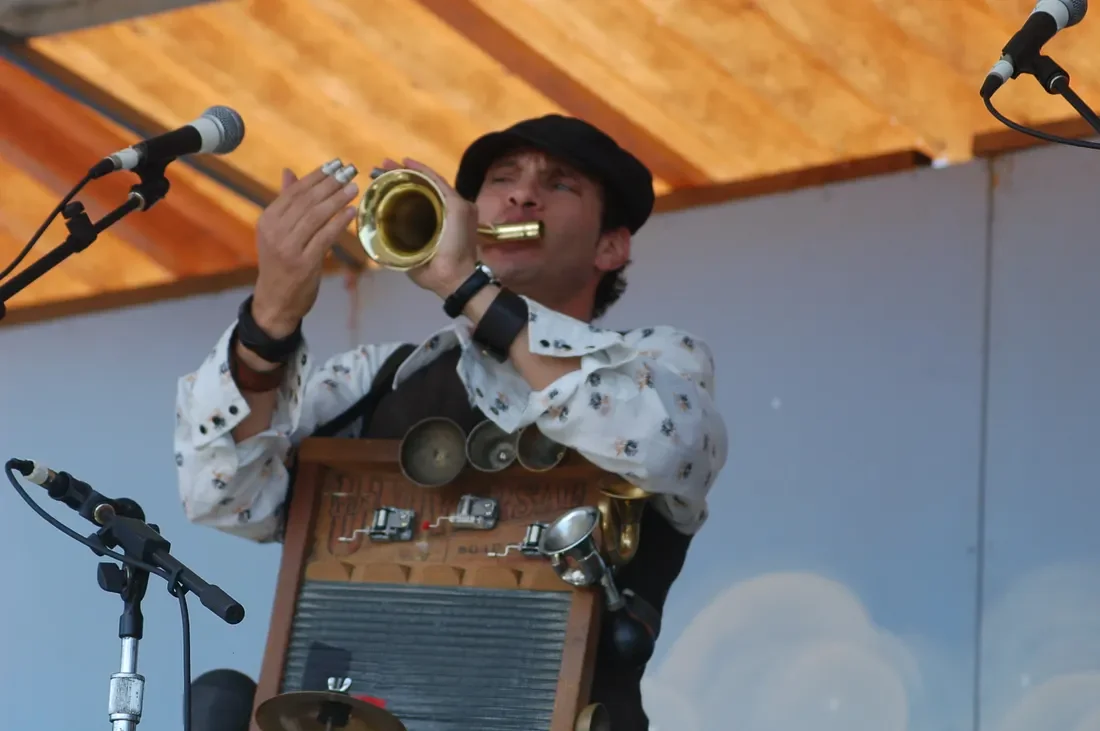
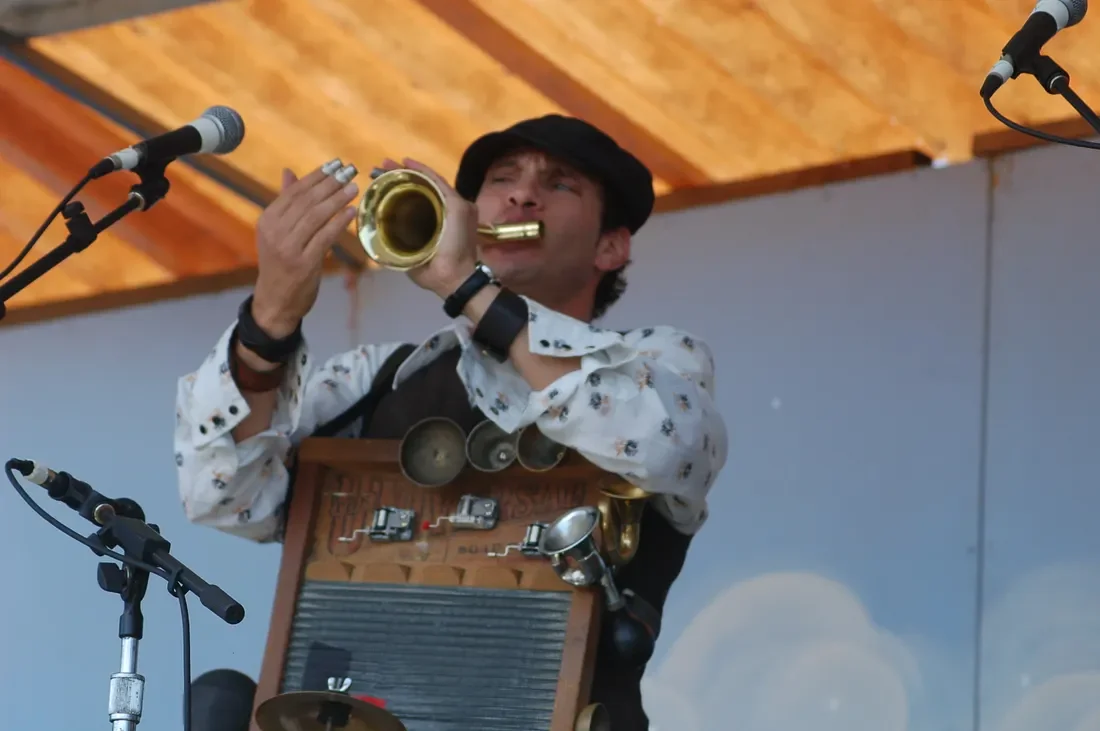
One of the musicians at the festival. Photo by James Jordan
So what do you do with these feelings? From reading several articles, here are some tips I have gathered.
Embrace the feelings
Understand this is a normal reaction. Give yourself some grace. Your body, mind, and spirit need rest after a major event. Take the time off and rest if you can. It is not comfortable, but it will pass in due time. Usually, that time is not overly long.
Prepare
You can be aware that this is likely to happen, so prepare yourself. If you don’t have a natural distraction, create your own. Have something else to be involved in, or to get involved with as soon as the event ends. It should be something not as intense, but it could lessen the depth of the letdown.
Talk it out
Talk about the feelings with someone who will listen and try to understand. Having someone support you in this time can be very valuable.
Think about the good
You can take time to revisit what happened. Make journal entries. This can make it worse for some people, but it also helps others. Recalling the good things may ease the letdown. If there were bad things that didn’t go well, you could think of ways of improving them for next time.
Find another cause or goal
It may be a good idea to do this even before your event. Have something else in mind to look forward to or achieve. If you just got back from a vacation and feel low, start planning the next one. Think about another place you want to go and how to get there.
The Takeaway
A letdown is normal after a big event or after you achieve a major goal. The key is to accept the feelings and take the rest you need. It is a good idea to have something to fall back on, like the next goal or event, to get started on.
The Spirit of Place: Peru and Argentina
I loved Buenos Aires, and the city let me admire its charm all I wanted. I loved Lima too; it has its own charm, but it felt like Lima loved me back or at least gave me a small hug. Buenos Aires was the sexy woman, not minding you looking at her. Lima was the very pretty girl smiling because you were looking.
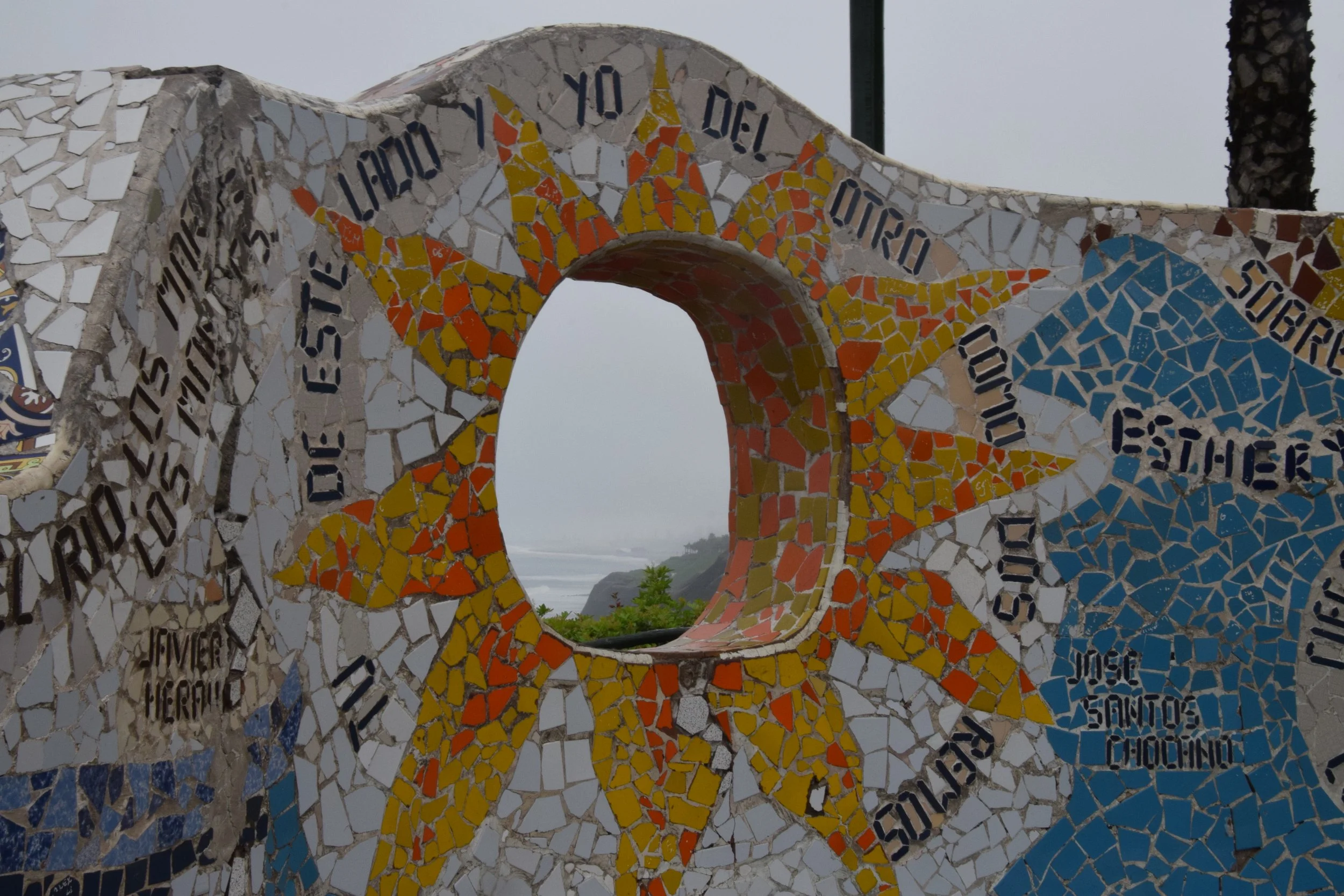
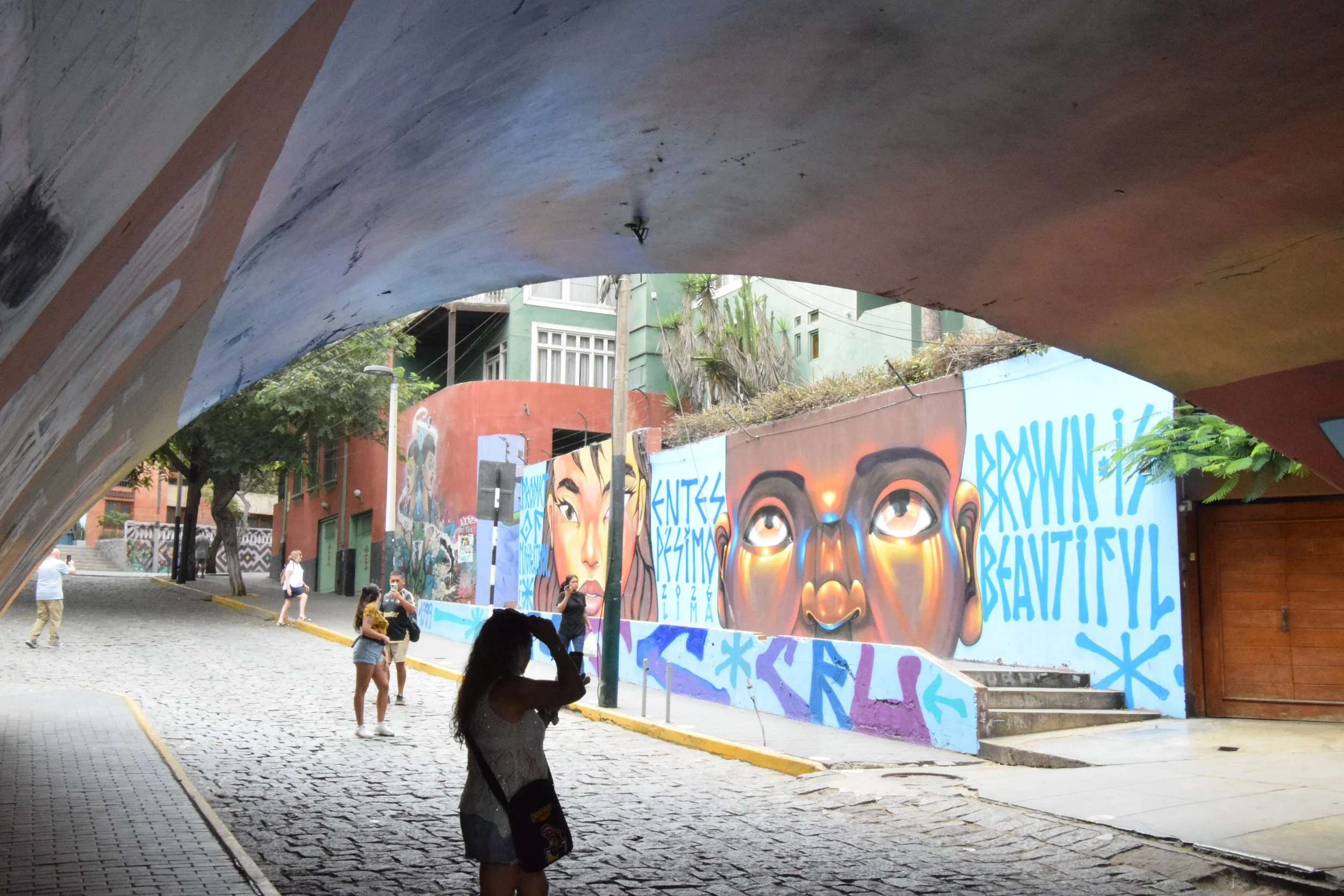
Wall decorated on a wall near the beaches of Lima, Peru
Last spring in South America, two countries taught me that place has a personality.
Argentina moved with a precise, almost European efficiency—grand, polished, and slightly reserved. Peru felt warmer, more colorful, and quietly generous, as if the country itself was glad you’d come.
I went for Patagonia’s glaciers and trails, but it was Peru that surprised me most.
I started in Buenos Aires, Argentina, but hundreds of miles from Patagonia. The city is called the Paris of South America, and it seems right. There are grand buildings with classic architecture. There are large parks and public areas that are beautiful and functional. People are out all hours of the day and night.
I was only there for a couple of days, but I felt that bright urban spirit right away. It’s a serious city that demands to be taken seriously—but it also rewards you when you do so.
There’s a European efficiency that seems to go against the usual laid-back Latin stereotype.
There is an openness, but it’s an openness to their structured system.
I stayed in Buenos Aires for two nights before my tour began. On the day I was to join the tour, I had to check out of my room, join my tour group, and check in again with the group: same hotel but a different room. Orderly, but I had to pack up and unpack again anyway. That night at an Argentine steakhouse, they brought me a liter bottle of beer. I asked if they had a smaller bottle. The waiter said no, as though it was a silly question I should not be asking.
In both instances, the system was clear and precise. They were helpful, friendly even, but there wasn’t much room to wiggle.
Patagonia was much the same. That is a very remote area, but the same spirit was there. There was a no-nonsense system in place that worked. I had no complaints, but I was always on the outside looking in.
Peru was different from the start.
I was in my hotel room for two days before the Peru part of the tour started. I asked if I would have to check out and back in. The person at the desk shrugged, “No, no you don’t have to do that,” he said. “We will take care of it.” They did take care of it, and it was that simple. I joined the tour group and stayed in the same room.
Things like that felt more normal in Peru. There was a warmth added to the efficiency that wasn’t there in Argentina.
At times it didn’t look efficient, but it still was. One time, we had to pack a few things into a small bag for a one-night stay, and then we went to another hotel. That’s a train wreck waiting to happen, but it didn’t. When we got to the next hotel the next day, we were already checked in, and our bags were waiting in our rooms.
It wasn’t a production, no formalities, just a quiet, friendly competence.
Peru was also more colorful. There were more murals, more decorated things. Argentina was beautiful, but in a more formal, historical way. Argentina felt a little more sophisticated, but Peru was friendlier and warmer.
All big cities have their street musicians. Buenos Aires had its share, and they put on performances worth stopping for. But I won't forget the older man in Lima playing a pan flute, strumming a guitar, and singing all at the same time. When I dropped a sol into his hat, he looked up, smiled, and gave me a little nod. It was a tiny gesture, but somehow it felt perfectly Peruvian.
My trip finished in Lima, Peru. I loved that city. It has 10 million people, but it didn’t feel like a big city the way Buenos Aires did. The biggest thing I noticed was the difference between how Buenos Aires and Lima felt.
I loved Buenos Aires, and the city let me admire its charm all I wanted. I loved Lima too; it has its own charm, but it felt like Lima loved me back or at least gave me a small hug. Buenos Aires was the sexy woman, not minding you looking at her. Lima was the very pretty girl smiling because you were looking.
Inside the ADHD World
Here are some thoughts about having ADHD and how I have related to it over the years.
It is a real condition, but I am not convinced it is an illness. It may just be different than the norm.
There are some positive aspects of ADHD. There is a downside too, of course, and the biggest one I believe is being misunderstood.
It is real, and we do see the world differently than you do. That does not make it bad, and I still don’t like calling it a disorder.

PHOTO BY PETER BURDON, Unsplash
Here are some thoughts about having ADHD and how I have related to it over the years.
It is a real condition, but I am not convinced it is an illness. It may just be different than the norm.
There are some positive aspects of ADHD. There is a downside too, of course, and the biggest one I believe is being misunderstood.
It is real, and we do see the world differently than you do. That does not make it bad, and I still don’t like calling it a disorder. It is just that our world is dominated by people who do not share the ADHD trait. Maybe it’s everyone else that is messed up and the ADHD people are the ones who are normal. As they say, the winners of the war get to write the history. I’m not ready to totally concede anything on this.
People think I am a space cadet at times, or that I have trouble paying attention. They think I am easily distracted, and even worse things. The world is designed for non-ADHD people, and often we feel that we just don’t fit. We don’t fit really. I know some people want a black-and-white world, and I am living in a million shades of grey and am not even sure black and white exist. Do you see how this can be a problem? We don’t even have the same frame of reference for reality.
Trying to cope, not knowing what to call … whatever it was
Some strange things happened in school. I still remember in third grade, thinking my history book was so interesting that I stayed up all night reading it. My teacher didn’t believe me when I told her I had read the whole book and had no sleep, and that was why I was sleeping in her class.
I would take books home at times, and I would read the book cover to cover without stopping. I hated being interrupted in those times. But there were other times I would just lose interest and forget to study for a test, and bomb it totally.
The inconsistency I showed baffled teachers. I might get every question right on a test one week, and the next week, get hardly any right. It was not uncommon for my report card to have A’s and F’s in school. Teachers always wanted to know why, and I had no answers at that time.
A classic example was when we had to write an essay in class. I was good at this. I helped my two buddies get started, and I was nearly done. Next thing I know, everyone else was done and turning theirs in. I had stopped and never got going again. There were a few teachers here and there who “got” me and let me develop at my own speed and way of dealing with things. Most didn’t, and I developed a pretty bad attitude by the time I got to high school.
Some people “get it,” but most do not. I really value those that do, and I am fiercely loyal to them as friends. Even as an adult who takes medicine, I still have trouble finding people who “get me.”
People with perfectionism think I am crazy. I don’t think highly of them either. I sometimes think perfectionism is the antithesis to ADHD. We are like oil and water. Maybe like gasoline and water. Don’t light a match if we are in the same room.
Press enter or click to view image in full size
Unsplash photo
People with perfectionism think I am crazy. I don’t think highly of them either. Perfectionism is the antithesis to ADHD. We are like oil and water. Maybe like gasoline and water. Don’t light a match if we are in the same room.
It is who I am
I know it is hard to understand. No, I cannot just sit still. I need my phone because I need to fidget with something. Sorry, clicking my pen irritates you, but if I stop, I will soon be tapping on the table, and that will irritate you worse. I am paying attention as I look around the room, or at my phone, or at whatever is happening out the window.
I will tune you out if you keep going on and on about some trivial matter while I think about 10 ideas at once. I have tried to learn to pay attention, and I am a lot better than I used to be. It really isn’t personal. I still struggle with having to listen to someone about something when my 20 ideas are trying to get my attention.
On the other side, there is “hyperfocus.” It is another side of ADHD that most folks don't understand. If I get locked in on something, nothing can distract me. I was a reporter for many years and developed the ability to turn hyperfocus on and off at will. It was hard, and it does wear me out, but I can focus when I have to.
Discovering ADHD
I was well into my 30s before I realized I had ADHD. I was in counseling for depression. My counselor and the medical doctor agreed that I had the condition. Some tests can be done, but they are not reliable, and whether they are even accurate is still a question doctors are debating. It is like a lot of other mental issues. There are certain traits, and if you have them, then you likely have the condition.
Just for the record. There is a chart of 10 symptoms. I have eight of them. I have one of the other two at times in certain situations.
Battling depression
I battled depression for some years. I self-medicated with tobacco and sex. Alas, neither does enough eventually, and depression sets in. Depression and ADHD go hand in hand. They are first cousins, or they might even be brothers. The problem is, ADHD makes the world a harder place to live in. Things don’t work as they should. Things are harder than they are for other people. As a result, you can get depressed because people are always upset with you or hardly ever understand you.
Generally, if you treat one condition, you will treat the other. A mild antidepressant can be just as effective as an ADHD med, for example. It also takes time to figure out what the best treatment options are. Some doctors just prescribe the same medicine for everyone, and it may or may not work. I was fortunate to have a doctor who was willing to work with my counselor and me to find the right drugs and the right combination.
To medicate or not
The medications are a two-edged sword. They do curb your creativity somewhat as they take the edge off those things that can cause the depression that fuels our creativity. It is not that the medication curbs your creativity, but it does rob your creativity of its fuel — which is often depression.
I don’t have a severe case, so I take a fairly light dosage. It is not a big deal if I miss taking it a day or two here and there, but I can tell a difference after a couple of days. Without it, the distractions are much stronger, it is much harder to focus, and there is a general spaced-out feeling. I can get irritable then too.
When I was younger, I would have some pretty extreme mood swings. I might get angry and cuss you out, and you not really even know I was upset. Well, I wasn’t upset at you really. It had been building for a few days, and whatever it was you said or did just broke the dam open, so to speak.
I might get hyper-focused and work for days with minimal sleep and food, almost nonstop. I also might never be able to get interested.
Like a lot of other ADHD people, I also developed a reputation for not being dependable. That was well before I knew I had it. But I might just decide to head out of town for a week or so and not tell anyone. Irate bosses would fire me, and family would worry. I would come back home and not have any idea why people were upset. Did I forget to tell you I was going? You fired me for that??
There is also this thing of staying interested or getting bored. It is a two-edged sword in a sense. On one hand, I do lose interest very quickly. I rarely finish an article on Medium, even though many of them are great. But at the same time, I might get interested in it and read it 10 times, underline things and take notes. I might then get on Google and research it to death, and even write my own article — certainly not copied but at least inspired.
That is something that surprises me too at times; I never know when something will click.
But as I said earlier, I don’t have a severe case and most people around me don’t know I have it. You have to be careful who you tell, and you have to be careful about revealing this at work. I have developed some coping mechanisms and can hide it pretty well. But even then people think I am kind of spacey.
I do forget details, or I might remember details that don’t matter. I might leave one thing undone and do something else, for instance.
I could take stronger medication, but that would drown out my creativity too much and would have other negative side effects. I think I have a good balance there. I have enough medication to calm things down to a level where I can manage. That leaves me able to make use of the advantages of ADHD.

Riding out a Bad ADHD Day
Nothing was actually wrong, yet everything bothered me. A trivial comment from my boss that normally wouldn’t register suddenly felt infuriating. A coworker’s joke — the kind we make all the time — landed like sandpaper.
I knew I was overreacting, but knowing it didn’t make the feelings go away. It only added another layer of frustration.
This is the internal world of a bad ADHD episode.
Inside the ADHD Brain. Image from Unsplash
This story was written a few years ago but still feels just as relevant.
Yesterday was a Bad ADHD day.
Nothing was wrong, but nothing was right.
Even having a casual conversation felt difficult. It was like banging hard on an out-of-tune guitar, desperately trying to play a song I don’t really know — then wondering why the tune sounds so unfamiliar. No matter how hard I strummed, it just wouldn’t come together. Eventually I wanted to smash the guitar and walk away.
I had felt it building for a few days: that deep inner restlessness that makes your whole world feel slightly off. By yesterday it had turned into full-blown irritation, overreaction, and slow-boiling anger.
Nothing was actually wrong, yet everything bothered me. A trivial comment from my boss that normally wouldn’t register suddenly felt infuriating. A coworker’s joke — the kind we make all the time — landed like sandpaper.
I knew I was overreacting, but knowing it didn’t make the feelings go away. It only added another layer of frustration.
This is the internal world of a bad ADHD episode.
I used to get these frequently before medication. The pills help a lot, but every now and then the fog still breaks through hard. It’s more than just being scattered or forgetful. It’s being upset as though something major had happened — when in reality, nothing did.
Lying in bed that night, I couldn’t sleep. My mind kept searching for things to be angry about. I tried to find real incidents to ruminate over, but even the ones I came up with felt insignificant and boring. I was experiencing all the physical and emotional symptoms of being attacked — without any actual attacker.
I was angry, agitated, and restless, but the target kept shifting.
I came very close to quitting my job over something completely trivial. Thankfully, I paused long enough to question whether my reaction matched the situation. It didn’t. Not even close.
The next morning the fog had started to lift.
I showed up to work, and everything was normal. My boss was the same person. My coworkers were joking like always. No one had any clue about the internal storm I had been fighting the day before.
I’m glad I didn’t act on any of those impulses. I didn’t yell, I didn’t quit, and I didn’t unload on anyone.
There’s a difference between bottling things up in a harmful way and simply choosing not to dump your bullshit onto other people.
Sometimes the wisest move is to ride out the storm quietly.
Bad ADHD days like this are exhausting. They remind me how much energy it takes to manage a brain that can turn a completely ordinary day into an emotional battlefield. But they also pass. The clouds eventually roll away, and a new day begins.
One bad day survived. Tomorrow is another chance.