How Christianity Created Women’s Liberation
Evangelical Christianity and the feminist movement may seem at odds now, but it was Christian women preachers who started the feminist movement.
They led the suffrage movement to get to vote and many other social issues. They were significant in the rise of the Progressive Era, 1890–1917, and were involved in social activism, political reform, and battling corruption.
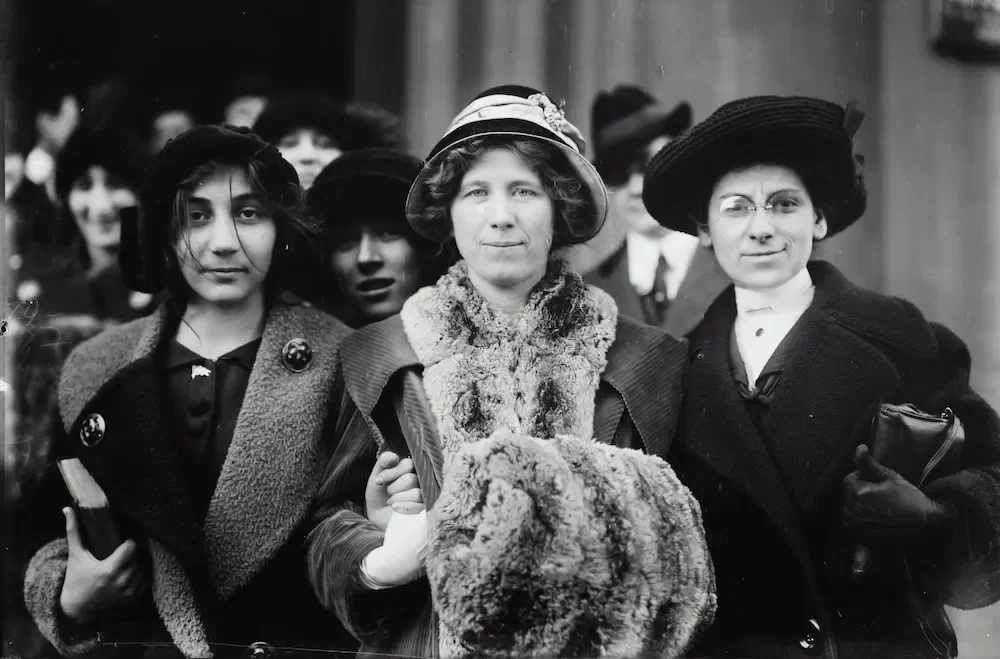
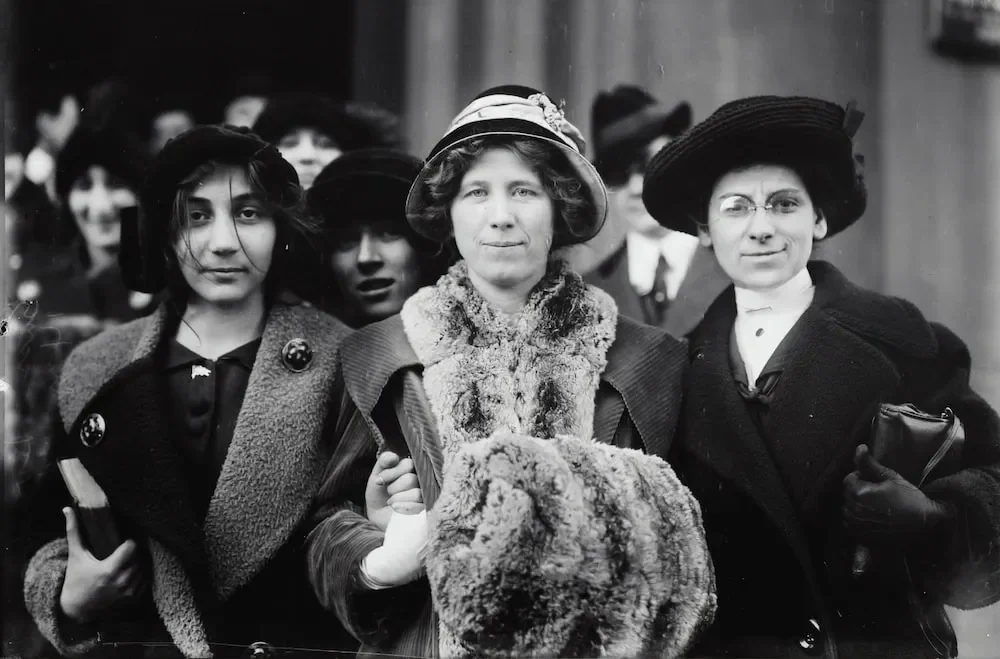
Women from around 1900. Photo from Unsplash
Women preachers are controversial now, and they were in the late 1800s and early 1900s when they shook the nation. They held revival services, preached the gospel, and changed the course of American Christianity and the culture itself.
They challenged the idea that a woman’s place is at home under the authority of her husband. They started the feminist movement and helped make Evangelical Christianity popular. Their influence on our culture cannot be overstated.
Evangelical Christianity and the feminist movement may seem at odds now, but it was Christian women preachers who started the feminist movement.
They led the suffrage movement to get the vote and many other social issues. They were significant in the rise of the Progressive Era, 1890–1917, and were involved in social activism, political reform, and battling corruption.
They managed to get a constitutional amendment to ban alcohol in America. That turned out to be a bad idea, but it shows just how powerful they were and what they were able to do.
The prohibition movement was closely related to women’s rights and suffrage. At the time a woman married to an abusive alcoholic man had no legal recourse to escape her situation.
The first right women needed was to be able to escape an abusive relationship. The right to vote was one strategy, and the other was to rid the nation of alcohol, which they felt caused most of the problems.
They preached the gospel and were part of the early Charismatic or Pentecostal movement. These women, armed with a bible and a loud voice, challenged gender norms and paved the way for future efforts.
They were denounced in many churches. The argument against women preachers then was much the same as it is now. There are some writings of St. Paul that talk about not allowing women to speak in church or have authority over men. There was also the idea that women were not capable of being pastors.
Most of them focused on the message of Salvation and offered the gospel message to give hope and peace. Suffrage and temperance were always part of the sermons. Supernatural healings were also often part of services.
Here are some of the women who did not accept “their place” and preached anyway. They changed America at the turn of the century.
Carry Nation, (1846–1911) was born in Kentucky and lived most of her life in Kansas. She was famous for using a hatchet to demolish barrooms.
Right or wrong, she felt that saloons were illegal and she should be able to destroy them without being charged with a crime. She went so far as to enter the governor’s house in Topeka, Kansas, and destroyed his alcohol stash. She made money from a lecture tour and sold hatchets as souvenirs. She was arrested many times and was physically assaulted many times.
The temperance movement itself did not embrace her because of her radical ideas and the destruction of property, but she was still significant in the movement. She also preached against tobacco, foreign foods, fraternal groups, short skirts, and any sort of suggestive or pornographic art.
Aimee Semple McPherson (1890–1944) was one of the first people to hold tent revivals, and she was more of a traditional evangelist.
She is credited with founding the Foursquare Gospel Church and was a key part of the development of the charismatic movement. She was one of the first to use radio and printed material to get her message out and had a flamboyant style of preaching that was unusual at the time.
During the 1920s she was more famous than Billy Sunday and was one of the best-known protestant evangelists in America. She conducted public faith healing services, and many claimed to have been healed of various illnesses by her.
She was denounced often by the church and male religious leaders. There were rumors and charges that she had extra-marital affairs and so forth. She did tear down barriers between the secular and religious, speaking in bars and other secular situations. She was also heavily involved in charity work and used her ministry to help those in need.
Maria Woodworth-Etter (1844–1924) was also a Pentecostal preacher and held large revival services in stadiums. She conducted faith healings and many claimed to be healed through her ministry. She saw evangelism and healing going together naturally, and both were major parts of her public services.
Early in her life, she was not allowed to preach in the Disciples of Christ church, but she found a platform in a local Quaker church. She began preaching about 1890, and people were known to fall on the floor while having religious experiences during her sermons. She was dismissed by the Church of God in 1904 and played a key role in the founding of the Assemblies of God Churches.
While she was not as flamboyant as some were, her services paved the way for much of what goes on in Pentecostal services today.
Katharine Bushnell (1855–1946) focused on women's rights and worked against prostitution and the sexual exploitation of women. She was a medical doctor, writer, bible scholar, and social activist. She is regarded as one of the pioneers in the feminist movement.
She was one of the first preachers to advocate the idea that women were equal to men, and she used the Bible to make her case. She was involved in the Women's Christian Temperance Movement in the early 1900s. She sought to abolish prostitution. In her efforts for sexual equality, she challenged men to raise their standards, instead of having women lower theirs. She helped get a law passed that made it a felony to abduct women and force them into prostitution, which she showed was happening even though it was denied by authorities.
While many used the bible to oppress women, she used the Bible to liberate women. Her book, God’s Word to Women, is regarded as a groundbreaking study about how the Bible treats women. She challenged the idea that women were inferior to men, that they should not preach, head coverings and polygamy. She was a highly educated Bible scholar and could read Biblical Greek and Hebrew texts.
Phoebe Palmer (1807–1874) was a bit before the golden age, but she had a big impact on the Christian religion of her day.
She was one of the founders of the Holiness movement, which is not the same thing as the Charismatic movement, though the two are related. The Holiness movement had the idea that by faith a person could depend on God to make them live above sin through sanctification. They advocated a second experience after salvation, and they were able to attain a level of holiness by the power of God.
She was not a social reformer, but she did help start the Holiness movement. Her book “The Way of Holiness” is one of the foundational books of the movement. Palmer was more concerned with the development of the spiritual life of believers but she did also advocate for women’s rights.
Hannah Whitall Smith (1832–1911) was active at the same time Palmer was preaching and they were similar. She also believed in Holness and the Higher Life movement, which taught that a person could live above sin if they were empowered by the Holy Spirit. She was also involved in women's suffrage and the temperance movement, but the holiness movement was her main focus.
Her book, The Christian’s Secret to a Happy Life, was written in 1875 and is popular among Christian mystics and the Holiness churches to this day. Her book The God of All Comfort is similar but explains the theology in more detail. She preached across America, England, New Zealand, and Australia.
In 1874 she helped start the Women’s Christian Temperance Union, which became one of the largest women's organizations in America at the time.
Mary Baker Eddy (1821–1910) is regarded as a heretic by many mainline Christians, but she was popular and active during this era.
Her work emphasized spiritual healing and prayer. She was more a teacher than a preacher and was one of the founders of the Christian Science Church. She was the founder of the Christian Science Monitor publication. She was also influenced by Spiritualism and Hinduism, which led her to some unorthodox Christian teaching.
Anna Howard Shaw (1847–1919) was one of the first women to be ordained in the Methodist Church.
She was a medical doctor, and very active in the women’s suffrage movement. She attended Boston University School of Theology and was the only woman student there. She worked with Susan B. Anthony on women’s issues. Anthony was a women’s rights activist, and a Quaker, but was never an evangelist or preacher.
Ida B. Robinson (1891–1946) started the Mount Sinai Holy Church and was the first African American woman to start a Christian denomination.
She was part of the Pentecostal movement that was heavily involved with healing and spiritual gifts. She started her church as a place where women preachers would be welcome. She died in 1946, and at that time there were 84 churches in her denomination, and 125 of the 160 ordained ministers were women.
Carrie Judd Montgomery (1858–1946) was an evangelist known for preaching the power of faith and prayer for healing, both mentally and physically.
She started the International Order of the Hephzibah faith. She claimed to have been healed by faith as a child, and that led her to ministry. She was a prolific writer of books and poetry. She wrote some of the first books that were written on faith healing.
Mary Lee Cagle (1864–1955) was a preacher in West Texas and is credited with starting the Nazarene church.
Two smaller organizations met in Pilot Point, Texas in 1904, and combined to form the Nazarene Church. Not all women preachers were nationally famous. Many were more regional, like Cagle. She preached the Holiness doctrine and helped form 28 churches. Her first husband was also an evangelist.
There were many other women like these around 1900, who would not be quiet. They spoke out for women's rights, and they did change the nation. There were a lot more preachers traveling around giving speeches, and some secular women giving speeches about women’s rights.
This list does not include Susan B. Anthony. She was active at this time and a key part of the early women’s movement. She was a Quaker, but never considered herself an evangelist or preacher.