I thought I understood isolation until I went to Estancia Cristina
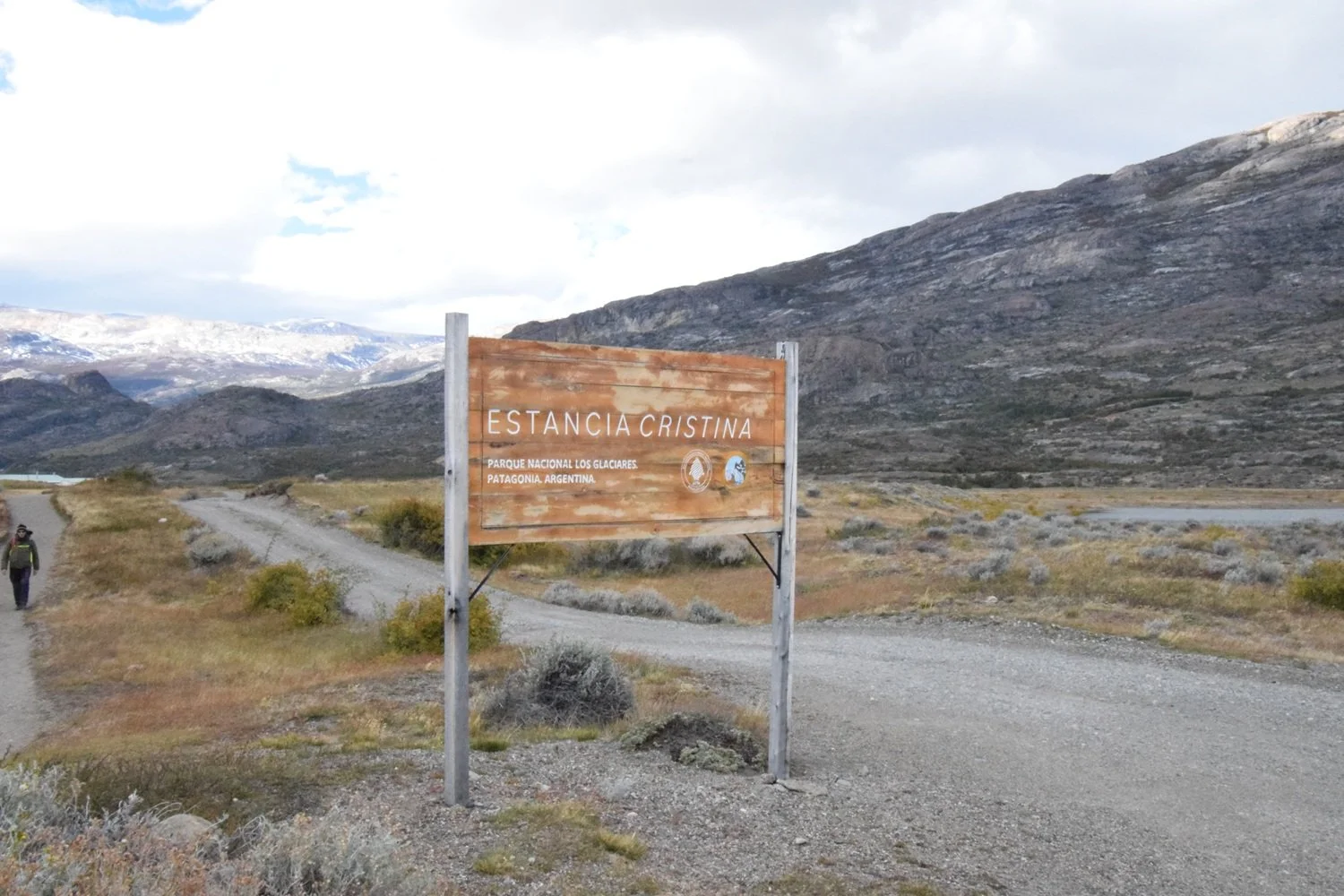
The entrance to the ranch Photos by James Jordan
The story of Herbert Masters showed me what it really means.
I went to Estancia Cristina, a sheep ranch in the back of Patagonia. I learned about Herbert Masters, a man born in the area and who spent most of his 82 years on that isolated ranch surrounded by sheep and mountains of ice.
I was already in El Calafate, which is remote enough: a three-hour flight from Buenos Aires, a small town on Lago Argentino, a lake cut by glaciers near the bottom of the continent. A southern cousin of Alaska.
From there we took a bus for an hour to a dock that is still not a town, and a boat for three hours to the Cristina shore. Huge chunks of a glacier floated in the water as we went by. The wind remained strong and cold against a bright blue sky. Strong wind off glacial ice swept away the warmth the bright sunlight tried to offer.
Percival and Jessie Masters had already spent a decade in Patagonia, working other ranches and learning the trade when they took up the valley in 1914 under a government lease of some fifty thousand acres. They had two children by then.
The three-hour boat ride seemed long, but then I found out that the same crossing was fourteen hours for them, and only when the weather allowed. The landing was a beach, not a village. From there it was two weeks by wagon to the Atlantic. The only way out was the lake. Ice and mountain shut the other three sides.
They could run the boat in summer, and not always then. In winter, the water stayed open, and the route closed. Groceries and letters came with the wool, a few times in the good months, and not at all from autumn to spring.
They lived in tents first, then a stone and mud hut. They eventually built a somewhat larger house. They say it is still there, but I don’t think I saw it.
The sheep shearing shed is now a museum with lots of artifacts and pictures of their lives in this remote area. The smell of wool, dust, and leather still stood strong among equipment that has not been used in 50 years. I stayed there a long time, reading each poster that explained their life.
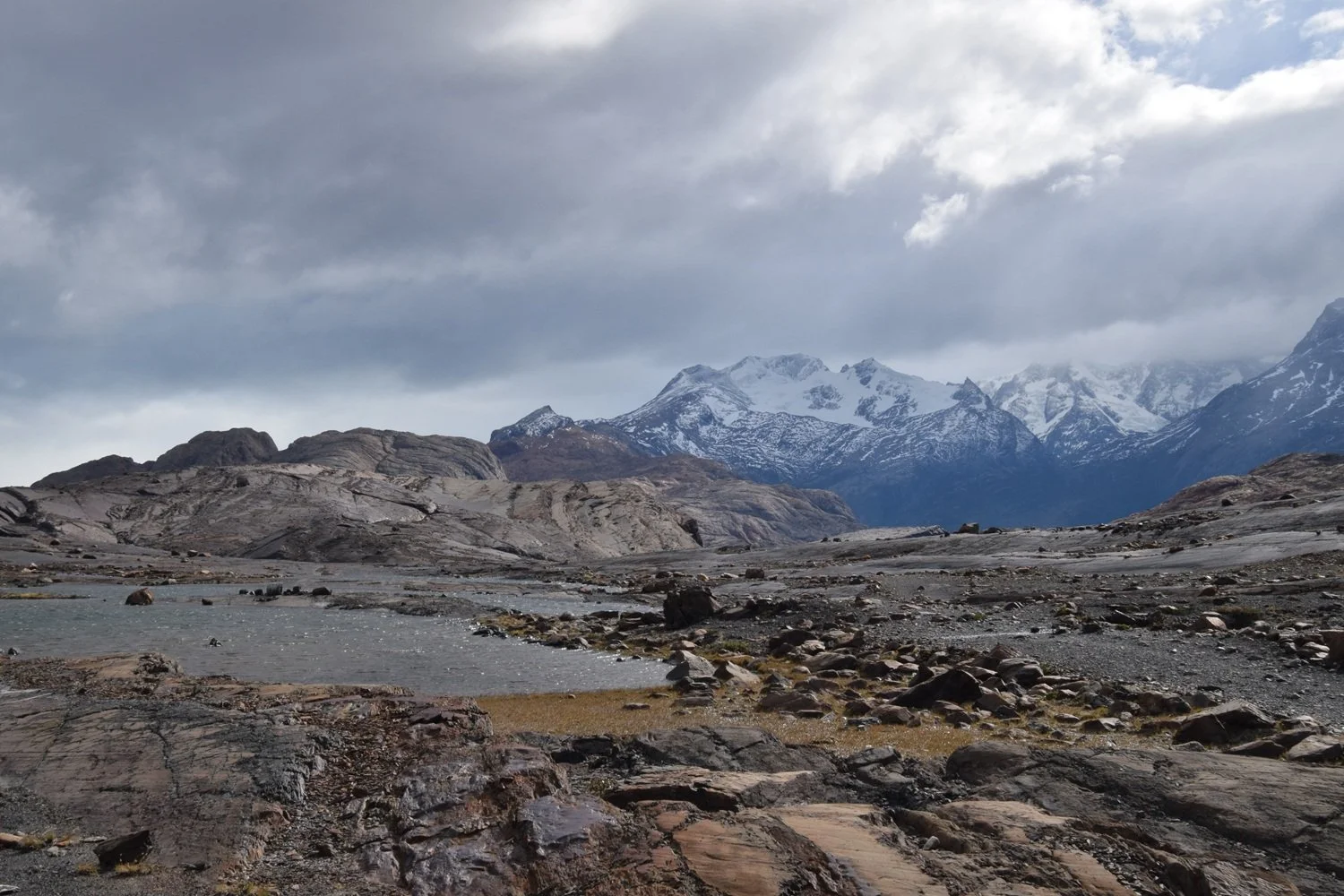
This desolated stretch was still a glacier when Herbert was a young man.
They had two children. Cristina, who died at age 20 from pneumonia. There were no doctors, and probably no medicine to help. Their son Herbert was sent to boarding school near Buenos Aires when he was 14. He returned some years later, never to leave again. The ranch was named after Cristina.
When the Masters took up the land, they would own it in 30 years. 25 years later, the government created a national park around them, and the deal changed. They were given grazing rights and could stay on the land as long as the family stayed there.
I looked through the information carefully, intrigued by Herbert and his boarding school years in Buenos Aires. Did he like it there, going from isolation to city life? Did he want to come home? Maybe he hated it there. All I could find out was he went and came back to stay.
Herbert had no children, so he was the end of the line. A woman, Janet Herminston, came to live with them to take care of the elder couple in their later years. Herbert married her so she could hang on to the land until she passed away.
It was a stark life, but they all lived to an old age. Percival Masters made it to 100.
There were rare visitors, mountain climbers and scientists, but most of their days were spent alone. Herbert became a Ham radio operator and had conversations with people around the world. But most days were spent working with sheep. Winters were particularly harsh, with only a few hours of daylight each day.
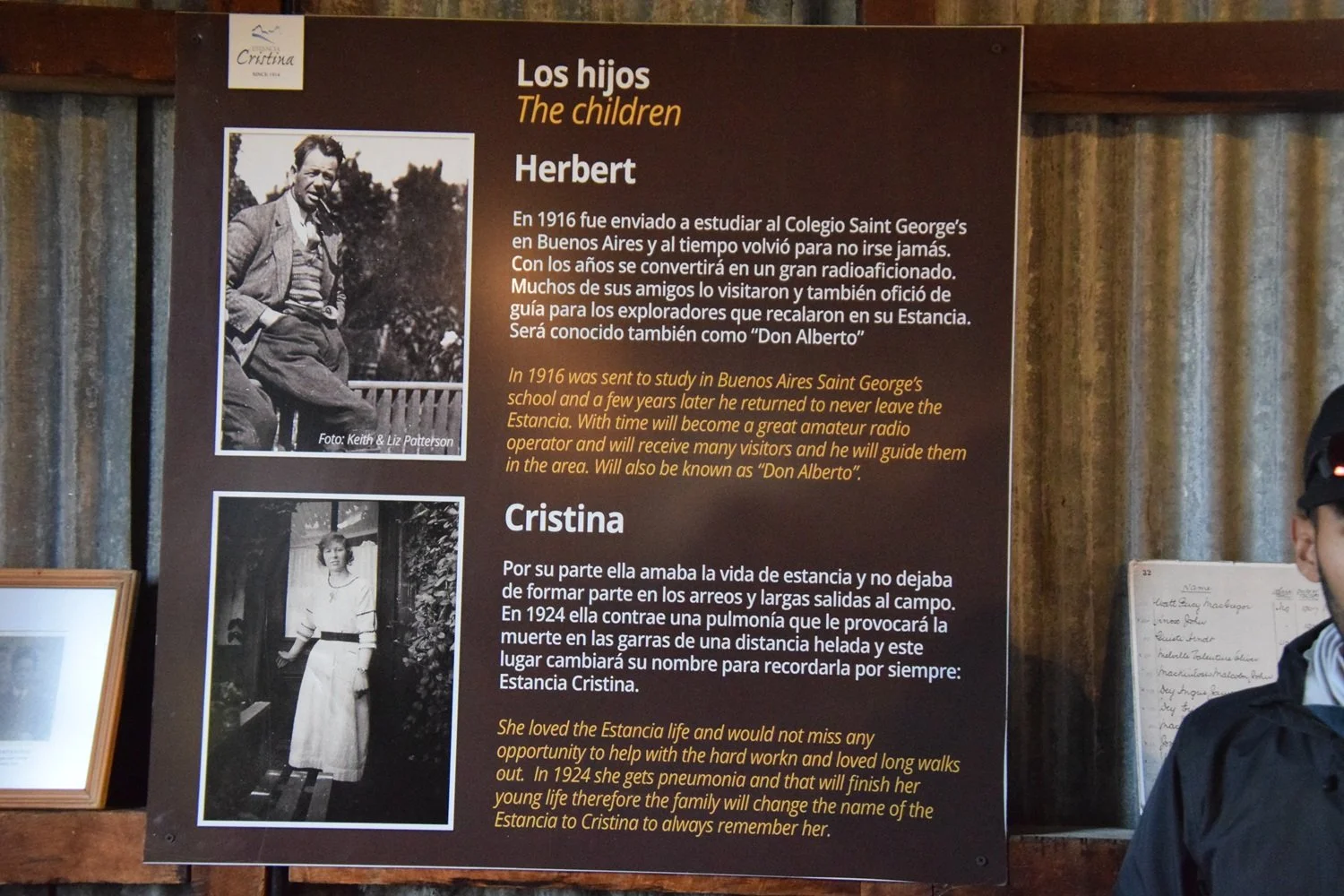
The glaciers were much bigger then. There are large areas now that are barren, scraped-off ice where glaciers were when Herbert was there as a young man.
I kept trying to imagine the ice fields as they were 100 years ago. What life would have been like in this remote area. If you needed anything, you had to figure out how to make it yourself or wait until the following summer and hope it would be there when you took your wool to the other end of the lake.
There was a lot of information about the ranch, about sheep raising and history. What was missing was Herbert’s actual story. He lived there for most of his 82 years, but I got back on the boat wondering about him.
What did he think about? What did he feel when he got on his boat for the 14-hour ride to the other side of the lake? Did he think about Buenos Aires?
Did he ever kiss a girl?
I don’t know. That question haunted me most of the ride back across the lake.
