
Living in the Mystery of God
Labels are useful for debate; they’re less useful for living.
What remains is simpler and harder at the same time: trust the character of God, hold the clear parts of Scripture firmly, and leave the rest in the mystery. The secret things belong to Him. I’m okay with that now.

An abandoned railroad tunnel. Photo by James Jordan
I’ve never been big on theological labels.
For a while I called myself a Calvinist, and I’m still no hater of the system. I can’t accept limited atonement. Christ died for all—that part seems clear. But once you say the provision is truly for everyone, another question rises up: if the gift is already there for every person, why does it matter whether someone accepts it or even knows about it? Shouldn’t “all” simply mean all?
That question used to bother me more than it does now.
I’ve come to see that the greater problem is our constant urge to explain the unexplainable. We keep trying to map out the mind of God, and none of us really has the ability to do that.
Take the harder questions that sit right behind free will and election. Why create people with a real capacity—and after the Fall, a strong propensity—to sin, then hold them accountable for it? Why give genuine freedom knowing most of us will choose poorly a good deal of the time?
If I were an atheist, I’d lean hard on that one. It’s a strong objection. But I’m not an atheist. I’m more the mystic type.
I’ve grown comfortable living in the not-knowing.
The same comfort applies to how God knows the future. Somehow—I don’t claim to understand the mechanics—He knows what is coming without determining it.
Knowledge isn’t the same as causation.
We live inside time, moment after moment. In the spirit world, or whatever dimension God fully inhabits, time doesn’t work the way it does for us. From that vantage, past, present, and future are simply present. He sees the whole without having to force every choice that unfolds inside our timeline.
Arminianism never sat right because of the lack of eternal security. Calvinism lost me on limited atonement. The newer term “Provisionist” probably fits the leftover pieces—God provides for all, people can respond, and once you’re in you’re secure—but I don’t feel any need to wear the label.
Labels are useful for debate; they’re less useful for living.
What remains is simpler and harder at the same time: trust the character of God, hold the clear parts of Scripture firmly, and leave the rest in the mystery. The secret things belong to Him. I’m okay with that now. Not every question needs an answer I can fully explain. Some just need room to breathe.
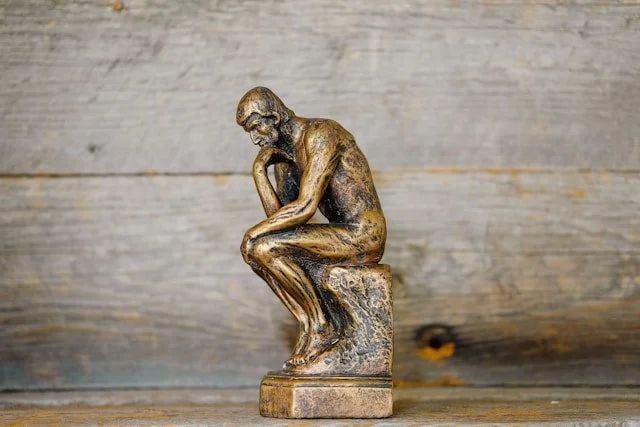
How Faith and Belief are Different
Faith and belief are words thrown around, and they become interchangeable, but they are not the same thing.
Belief is your opinion, and that’s all it is. I like this flavor more than that flavor. Faith is acting on your beliefs, or acting like your belief is really true.
Most people “believe” exercise is good for you. Most people don’t actually do it, though.
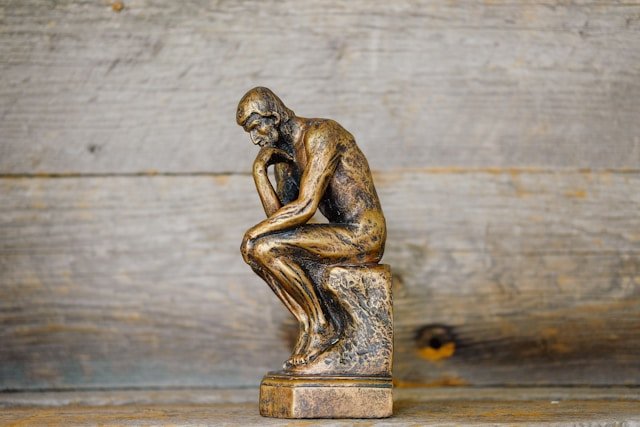
Unsplash photo
This could solve the works vs faith argument
Faith and belief are words we throw around so casually that they’ve become interchangeable. But they are not the same thing.
Belief is your opinion, and that’s all it is. I like this flavor more than that one. Faith is acting on your beliefs—or acting as if your belief is really true.
Most people “believe” exercise is good for you. Most people don’t actually do it, though.
First, you get the “belief” that exercise is a good thing that will benefit you. The next step is to learn about your body and what makes it healthy. Then you can exercise your “faith” in a way that will truly bear fruit.
According to national health statistics, only about 47 percent of the population gets the recommended amount of exercise—roughly 30 minutes a day, five days a week. And only about 30 percent get both aerobic and muscle-toning activity. A much higher percentage “believes” this is good for you. A much smaller percentage has faith in the benefits of exercise and follows through with the right kind of action.
But here’s the catch: you could walk around 30 minutes a day while smoking cigarettes, drinking soda pop, and eating Cheetos, then conclude that exercise didn’t do you much good. Belief is the starting point. Education keeps you from wasting your effort. Faith is what produces real fruit.
The same gap exists in matters of the spirit.
Plenty of people believe in God. They hold the opinion that He exists, that Scripture has wisdom in it, that prayer might help in a crisis. It’s a comfortable mental note, like believing kale is healthy or that climate change is real. It costs nothing and changes nothing.
Faith is different. Faith is lacing up your boots when the trail looks steep. It’s showing up for the relationship even when you don’t feel the spark. It’s choosing honesty over self-protection, generosity when it pinches, stillness when every instinct screams to scroll or fix or run. Faith is acting like the belief is true—long enough, consistently enough, that the reality of it begins to shape you.
This is why James could write that “faith without works is dead.” A belief that never moves your feet is just a flattering opinion about yourself. Real faith, like real exercise, leaves evidence behind.
And this faith is born and nourished in a particular way. As the apostle Paul wrote, “So faith comes from hearing, and hearing through the word of Christ” (Romans 10:17). It’s not primarily a matter of working up stronger feelings or collecting better arguments. It comes through repeated exposure to God’s Word—the message about Christ. That’s the education that keeps us from sabotaging our own faith with spiritual junk food.
I’ve felt the difference in my own life. There were long seasons when I believed all the right things about God. Then came the days I started acting like they were true—trusting when it didn’t make sense, forgiving when I wanted to keep score, stepping into discomfort because the still small voice said “this way.” That’s when belief stopped being an opinion and became a living path.
So the question isn’t really “Do you believe?” Most of us do, at least on some level. The sharper question is: Are you willing to listen to the Word, learn from it, and then live as though it’s true? That’s where belief becomes faith. And faith, practiced over time and fed by the Word, becomes the kind of knowing that no argument can shake and no circumstance can fully undo.

You’re a New Christian … Now What?
It’s a great journey, but it's a long journey and there are lots of sights to see and things to experience along the way. Don’t feel like you have to have the answers or do everything just right.
It is good to know about Jesus; it’s better to know Jesus.

Photo from Unsplash
Are you a “new” Christian, or looking seriously into this Jesus thing? It can be overwhelming — too many cooks in the kitchen, and every one of them is certain they are right.
One bad habit we Christians have is fighting over the details. My first piece of advice is not to sweat the details. You can fight over those things with the rest of us later, once you get settled and know your way around.
Here is the thing. Belief, or faith, in the resurrection of Jesus is what makes you a Christian.
Everything else is commentary.
But that is where it gets interesting and complicated.
It can seem like the Wild West with all the chaos. Anyone can indeed start a whole denomination, but there’s no need to get into that fracas just yet.
Which church to attend?
Which translation of the Bible is best?
How much money to give to the church?
What kind of music to listen to?
Pray standing, seated, on your knees?
What color should the carpet in the foyer be?
The list could be endless. These are all things that matter, but that isn’t where your focus should be.
God has invited you into a relationship. That is the most important thing. Despite what some may say, that looks a little different for every believer.
It’s like learning to drive a car. You need to figure out how to turn the car on and make it go first. And you have people wanting to tell you which make and model to drive, or whether gas or electric engines are better. They might even want to argue over which color car to drive, or whether it’s cool to have a truck or not.
Those things matter, but you need to learn how to keep it on the road first.
It’s the same with your spiritual life
People may mean well, but they want you to get into their variety of Christianity, and they may judge you for not doing so. That’s just noise. Don’t listen to anyone who tells you that you are doing something the wrong way.
For instance, I don’t like to mark in my Bible or underline verses. Most people do, and I have my reasons. It’s respect for the text and wanting it to be fresh every time I see it. But that is my journey. No one should judge me for that, and I don’t care if you want to underline and color-code every word. I’m not going to start a no-marking denomination. But new churches have been started over less.
Those who have started churches and denominations think their flavor is best, and that they have bottled the secret sauce to the cool kids cloud in the heavenlies. The truth is, no one has perfect theology.
The relationship is the thing
Your personal relationship with Christ Jesus is the most important thing. I’d say it’s the only thing that ultimately matters.
In one of his letters — Philippians — the Apostle Paul listed his impressive credentials. Outwardly, he was the best of the best. But then he said that was garbage compared to knowing Jesus.
I would say the same.
I have been a Christian for 50-plus years. I have a master’s degree in New Testament studies. I have studied original languages and have translated a fair amount of the New Testament. That’s all good stuff, but it has not made me more spiritual. It has not made me love people who don’t deserve it.
What has then?
Here is what you need to focus on
That personal walk with Jesus helps me do that, at least when I can get out of the way and let the Spirit of God do its work inside of me. We all struggle. Even knowing this, I fail more often than I succeed.
That’s another point. No one is perfect, and you won’t be the first one to be perfect. God is not sitting up there with a checklist to make sure you did everything right, or believed everything right.
God has also not handed out checklists to other people so they can check up on you. We have the Bible as our guide, and we also have the Holy Spirit that whispers to us and changes us from the inside.
What to do instead
Instead of getting involved in debates, focus on your personal relationship with God. This is spiritual. Supernatural even.
Be patient. It’s ok to listen to people and consider what they say, but understand they are just pilgrims too, and still figuring it out themselves.
Pray a lot. Do things that make you feel more spiritual — whatever that may be. It’s a new thing, so explore your new reality with patience.
Find some other believers who are not judgmental about everything. If they hand you a list of stuff, find some other people.
It is good to read your bible daily. At first, just read a few verses in the New Testament — the Gospel of John is a great place to start. Meditate on that, listen to what the Spirit is telling you.
Go to some different churches — and again, watch out for legalism. I’ve found church is more about the people anyway.
It’s a great journey, but it's a long journey and there are lots of sights to see and things to experience along the way. Don’t feel like you have to have the answers or do everything just right.
It is good to know about Jesus; it’s better to know Jesus.