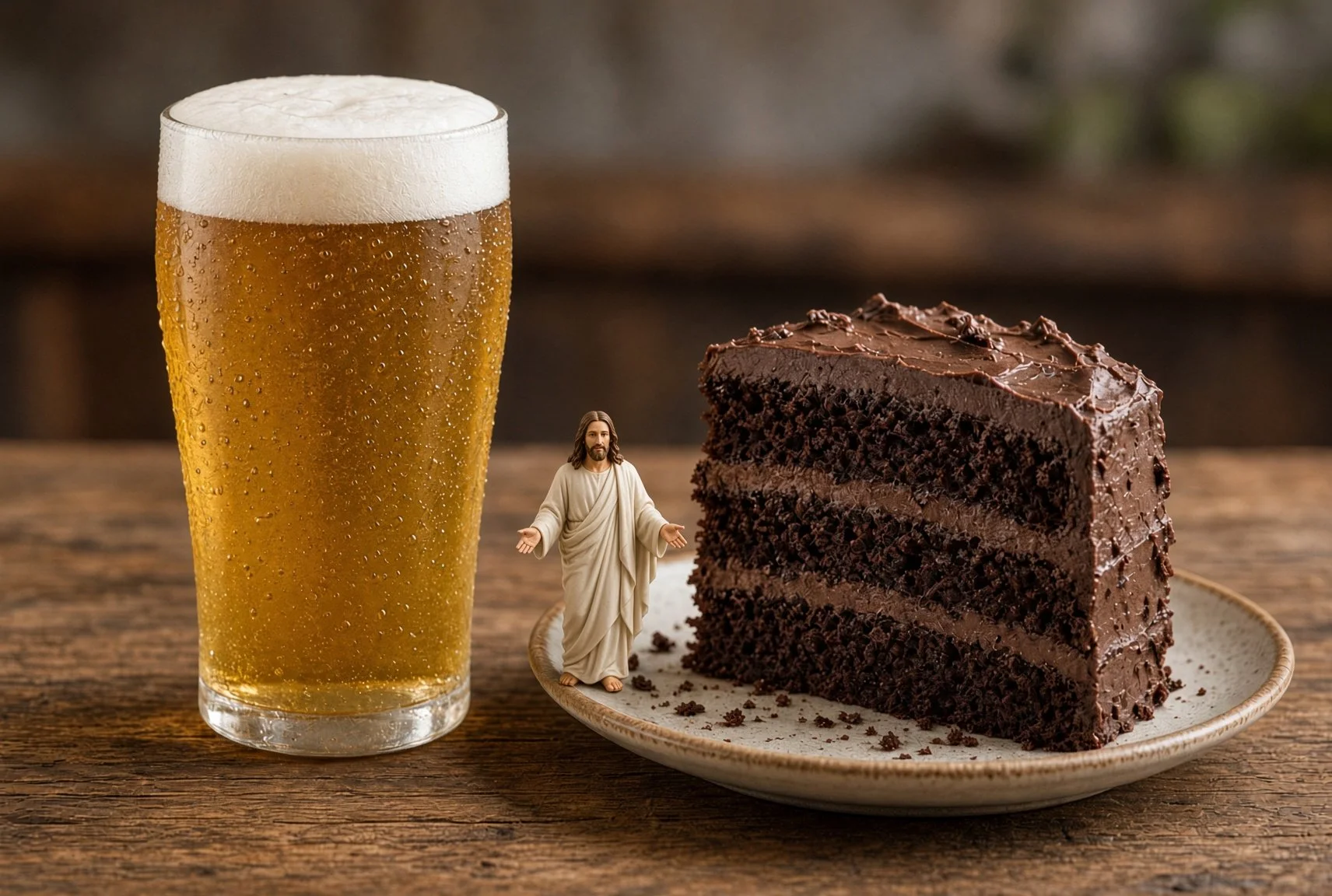
Would Jesus have a beer with his cake?
Drinking alcohol to excess—drunkenness—is clearly condemned in the Bible. Gluttony is, too. But I don't think I've ever heard a sermon about its evils.
There are plenty of overweight Christians willing to look down on a fellow believer who likes to have a beer after a hard day's work.
Somewhere along the line, though, drunkenness got changed to any drinking of alcohol at all.
The same thing didn't happen with food.
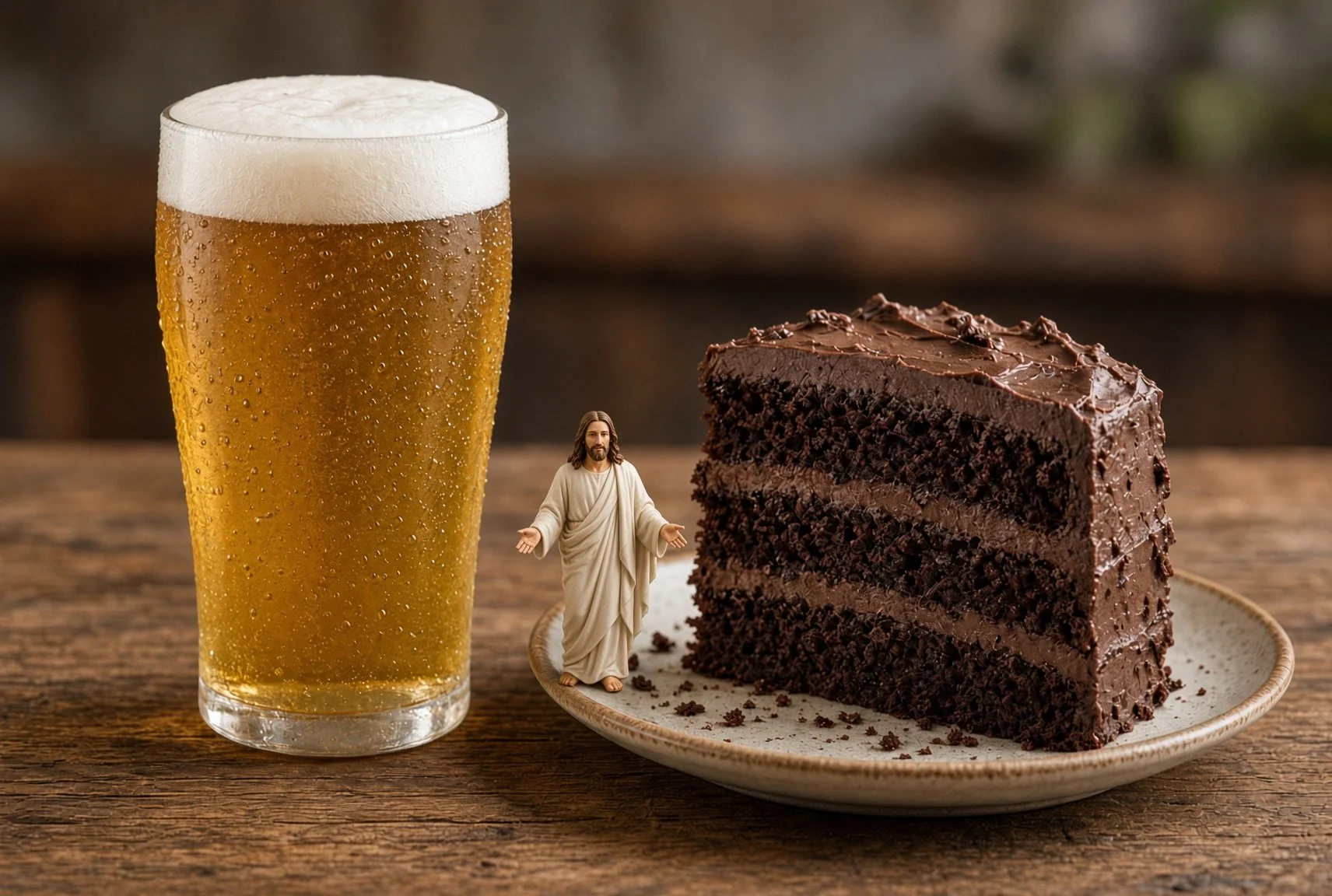
Both have their place, but both are still wrong when taken to excess. Photo is AI.
Some sins are more socially acceptable than others.
Take beer and cake.
Wait a minute, you might say. I get the beer, but how is cake wrong? Nobody ever got kicked out of church for eating too much cake.
And I would say that is the point.
Neither one is wrong in itself. But in excess, both are wrong, according to the Bible. Proverbs even puts them in the same sentence.
Proverbs 23:20–21 says:
Do not join those who drink too much wine
or gorge themselves on meat,
for drunkards and gluttons become poor,
and drowsiness clothes them in rags.
Drinking alcohol to excess—drunkenness—is clearly condemned in the Bible. Gluttony is, too. But I don’t remember when I’ve heard a sermon about its evils.
I’ve known plenty of Christians who would look down on a fellow believer for having a beer after a hard day’s work, while thinking nothing of their own excesses at the dinner table. One man gets a quiet lecture about “the appearance of evil.” The other gets a second helping and a compliment on the cobbler.
Somewhere along the line, drunkenness got changed to any drinking of alcohol at all. The same thing didn’t happen with food.
That shift did not come from the text. It came from culture, from temperance movements, from family stories that went badly, from a reasonable fear of drunkenness that slowly hardened into a ban on the thing itself.
Jesus turned water into wine at Cana, his first miracle. He didn’t just make a little wine. He made six large stone jars full of it, using water that had been set aside for Jewish purification. The steward at the wedding called it good wine—better than what they had been drinking before. Some argue that Jesus didn’t make fermented wine. There is nothing in the text that says that.
Another time, Jesus got accused of being both.
“The Son of Man came eating and drinking, and they say, ‘Look at him! A glutton and a drunkard, a friend of tax collectors and sinners!’” — Matthew 11:19
Just before that, Jesus notes the double bind. John the Baptist came neither eating nor drinking, and they said he had a demon. Jesus came eating and drinking, and they called him a glutton and a drunkard. You cannot win with people who have already decided the verdict.
Jesus was neither a glutton nor a drunkard, of course. But the accusation itself tells us something about the way he lived. He ate and drank in ordinary social settings.
You could say cake is neutral, but excessive eating of cake is not neutral—just as excessive drinking is not neutral. The problem is not the plate or the glass. The problem is when appetite starts running the house.
There are sermons about drunkenness, and there should be. A man who cannot stop at one drink is not being set free. He is being owned.
The problem is when drunkenness gets conflated with drinking at all.
Maybe there should be more sermons on gluttony, too. Not the cheap kind that only scolds fat people. The honest kind that talks about using food to fill a hole that it was never meant to fill.
But let’s not conflate that with no cake at all.