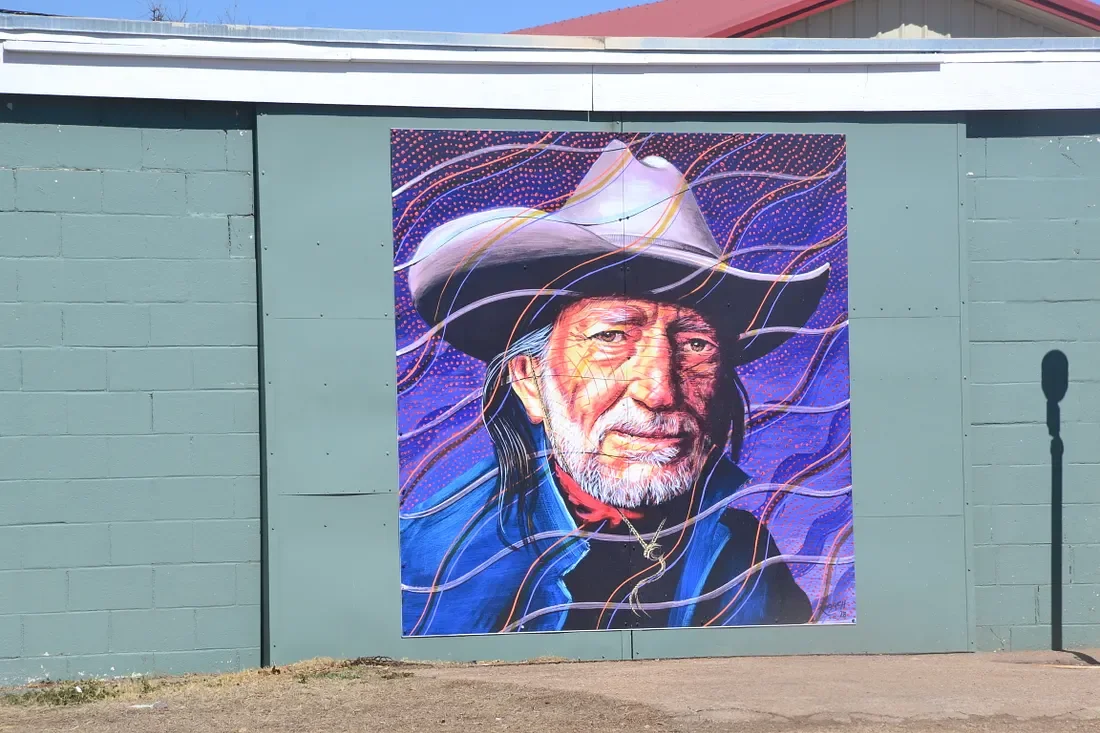
The Mythical American Cowboy
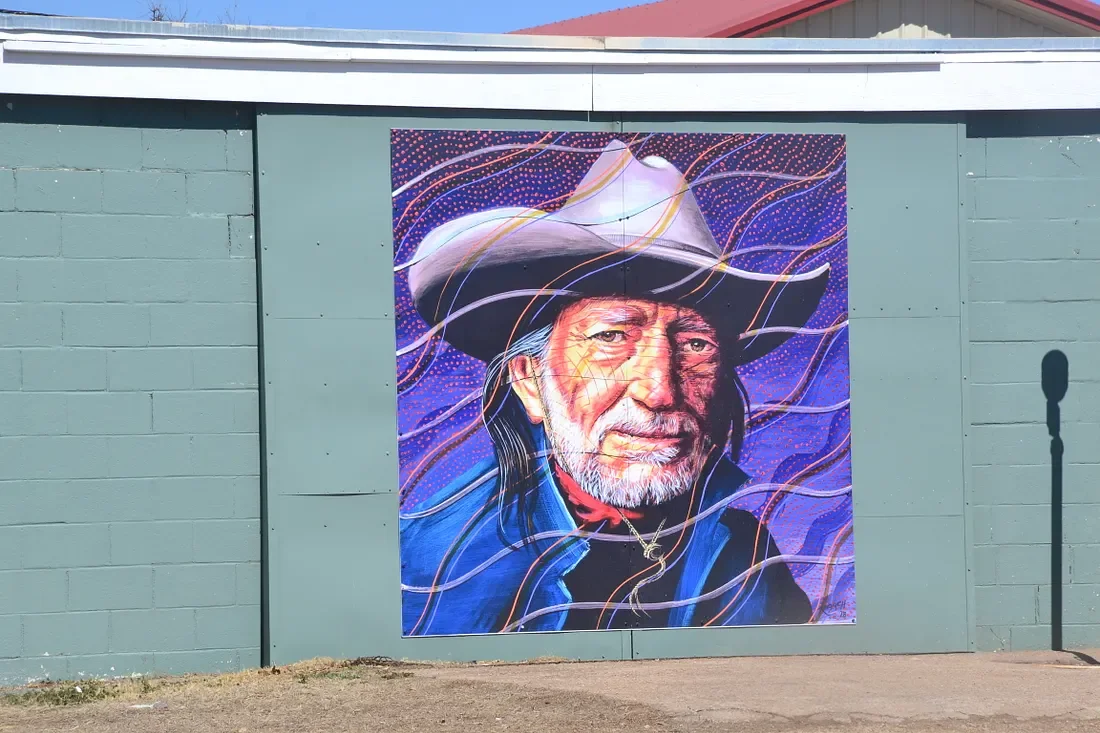
The Museum of the Frontier in Abilene was a great place to get a glimpse of the history of this part of Texas. It was a hostile land for many reasons when the first white settlers arrived. There was a harsh environment with very little water, heat, snakes, and other natural dangers. There were Indians who would attack, and there were bandits.
The legend of the cowboy is pretty much just a legend. As many as half of the real cowboys were black or Hispanics, and even a few Indians. The first cowboys were anything but glamorous. It was a hard dangerous job, driving cattle hundreds of miles from south Texas to the railroads in Kansas.
The cattle drives started in 1866 and by 1880 the railroad reached Texas, barbed wire was going up on ranches, and the cowboy era ended as fast as it started.
There were also some former slaves who went west, and their stories have not been told as much. When they were freed they took advantage of the opportunity to head west and try to settle the harsh land. Many became what we now call cowboys. Some got involved in rodeo, and the sport of steer wrestling was invented by William Pickett.
Even at the end of trail you were not safe. There were lots of swindlers, gamblers, prostitutes, and others more than eager to take your hard-earned money. Probably a lot of cowboys lost their money at the end of the trail.
This was a wild area. It was noted that one person might be an outlaw in one town and a sheriff in another town. I also got the idea that race was not all that important unless you were an Indian. Some who had been slaves became business owners and ranchers.
If you had some money you could become a landowner regardless of race. If you did not have money were a common laborer, you could be a cowboy.
The Comanche and African Americans
There were also Indians who were not pleased with all these settlers arriving. They attacked and killed a lot of settlers, and of course, a lot of them were killed. The Comanche was one of the last tribes to be conquered. They were great horsemen and were fierce warriors with bows and arrows.
The Comanche warriors also had a nasty side. When they attacked a group of settlers they would kill the old and very young, and take the rest captive. They used cruel means of torture at times as well.
Those that were not too old or too young were not killed. They were kept, or sold, as slaves. Indians also had some slavery going on. Especially early in the settlement period attacks by Indians were common. There are a lot of stories of people who were captured and held as slaves by the Comanche or other tribes.
There was a story of a black man — Britt Johnson — who had his family kidnapped by Comanches. He was legally a slave but was treated more like an employee by Moses Johnson, the white man who technically owned him. Lines were blurred on just about everything in West Texas in those days.
During a Comanche raid, some of Moses Johnson’s family were killed, and Britt Johnson’s wife and two children were kidnapped.
Britt Johnson was given his freedom, and some money, so he could go find his family. He found them and somehow got them back from the Comanche.
He was a cowboy for a time, and then drove freight. On one of his trips, the wagon train was attacked by Comanches, and Johnson was killed in the fight.
There was another story Cynthia Ann Parker whose story has been told many times. She was a white woman who had been taken prisoner by the Comanche as a young girl. She was returned to her original family against her will because she had become a Comanche herself. Her son Quanah Parker became the last great Comanche chief.
There were lots of stories of people who were kidnapped and later were released by the Comanche.
The era of the cowboy, and the era of battles with the Comanche, ended about the same time in West Texas.
Then came the oil discoveries and life changed drastically for many.