Everything is Bigger in Texas
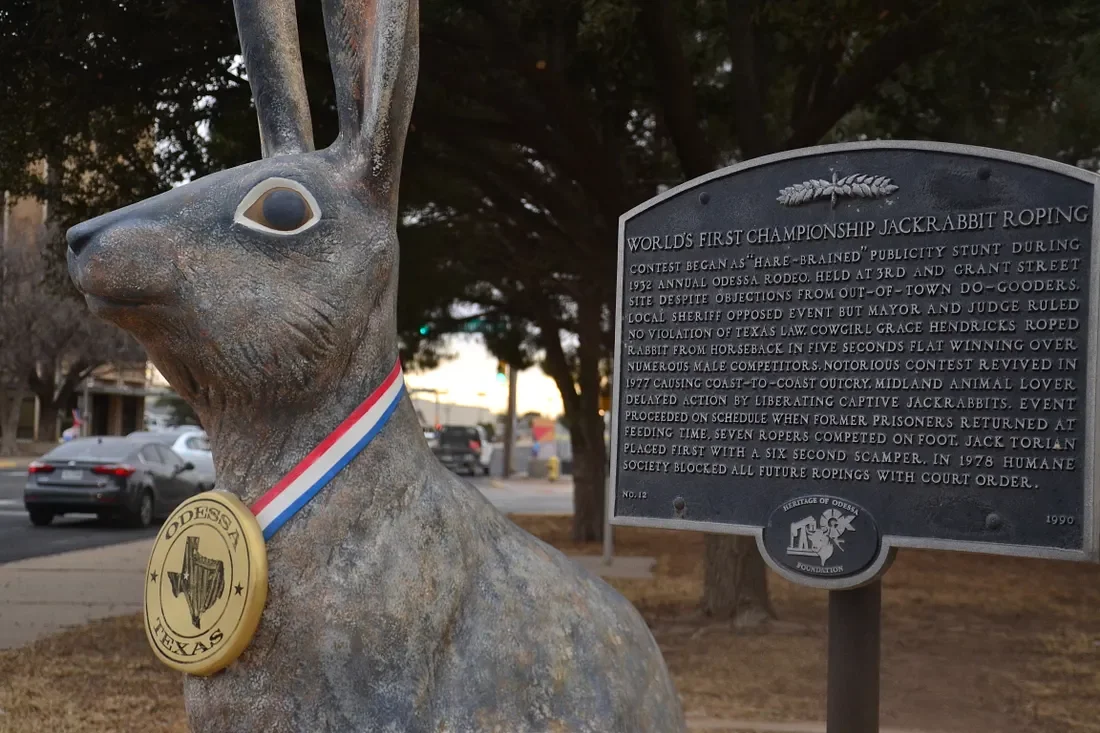
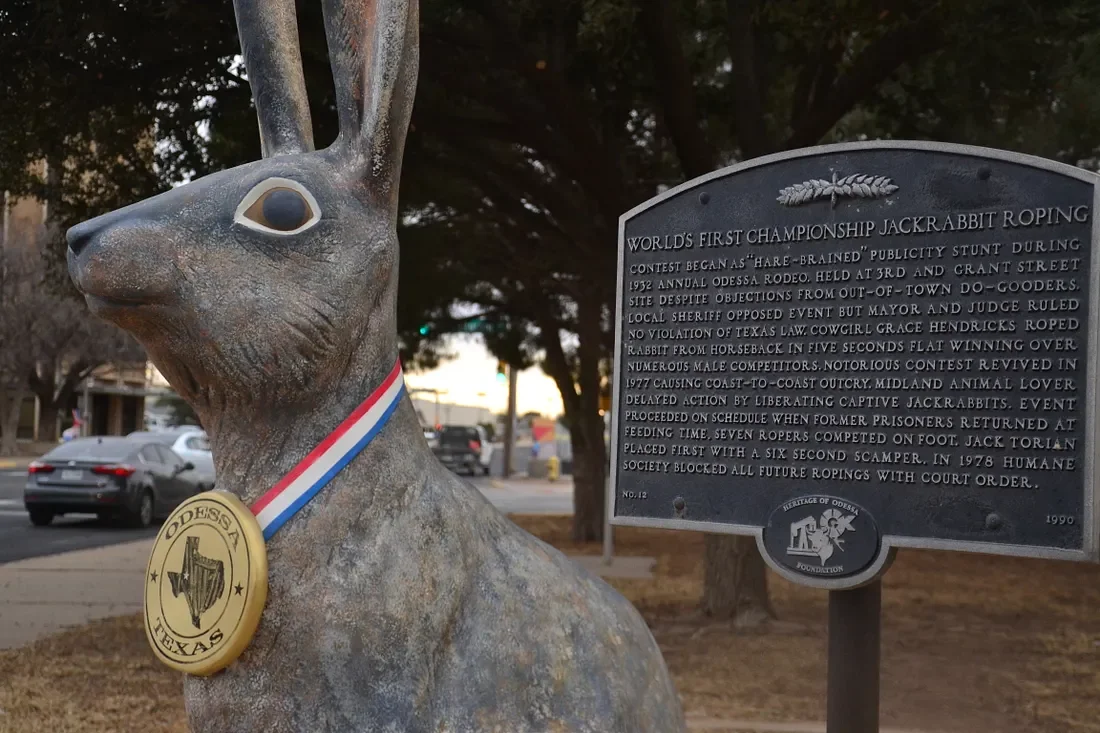
Everything is bigger in Texas, they say. It might be true. Odessa has a bunch of jackrabbit statues that are about four feet tall, spread around town. In the West Texas desert, there is not a lot of scenery, so folks create their own entertainment.
A lot of towns have things like the jackrabbits. In Amarillo, they have the Jackalope, which is said to be a mythical being. But in Odessa, it was bigger-than-life jackrabbits.
A real jackrabbit is about two feet tall. These statues are around four feet, and all are painted.
They tried to have jackrabbit roping, just like they do competitive cattle roping at a Rodeo. This was in 1932, and even then animal rights activists were opposing the event, “out of town do-gooders,” they were called.
Anyway, Grace Hendricks, a young cowgirl, won the event by roping a jackrabbit in five seconds on horseback, beating all the men and boys who competed.
The event was revived in 1977, and it gained national attention — or should we say national opposition from animal rights groups. Local legend has it that someone kidnapped the jackrabbits to try to stop the event. The jackrabbits escaped and came home at feeding time.
The event was held with competitors roping jackrabbits on foot. In 1978, the Humane Society managed to get a court order banning the event from happening again.
Maybe it was revenge, or maybe it's because there are a lot of them around here; someone came up with the idea of statues. There are about 40 of them, and you can get a list from the chamber of commerce. We found most of them.
At Big Bend
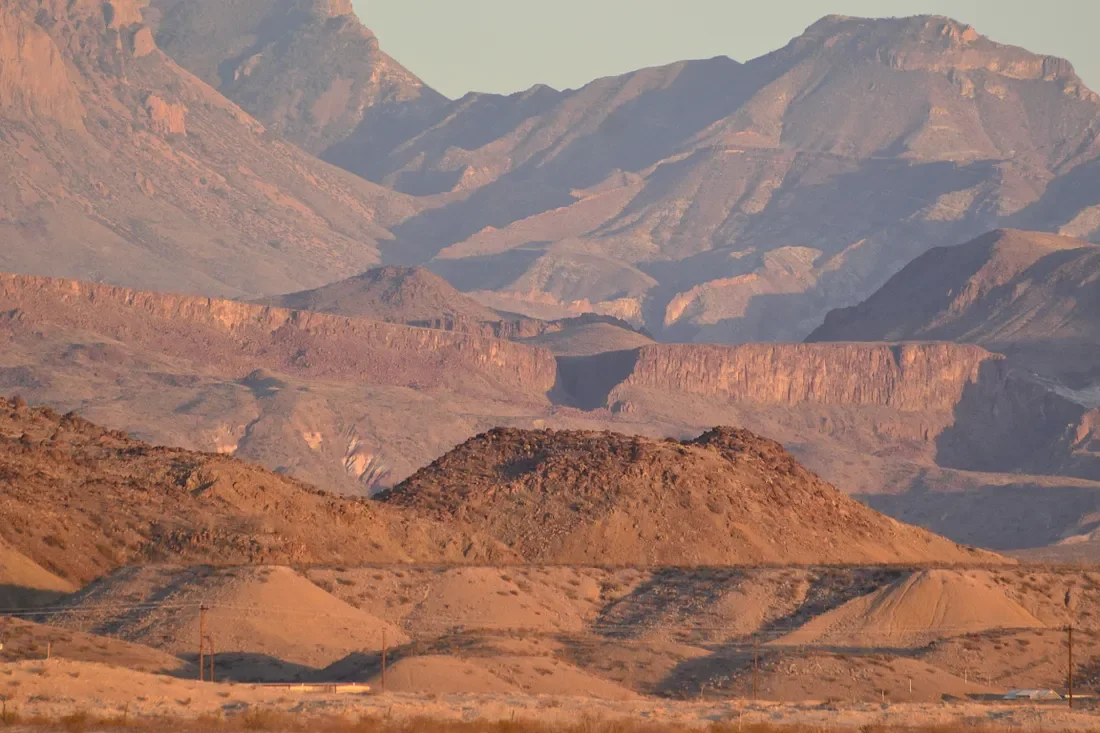
We made it to Big Bend National Park a little before dark. Planning some hiking and roads to drive through the park.
We drove through a lot of deserts today. The weather was nice, around 70, but I could imagine how hot it gets in July or August.
I am still pretty amazed that people were able to live here before modern conveniences came along.
Small Texas Towns on the Way to Big Bend
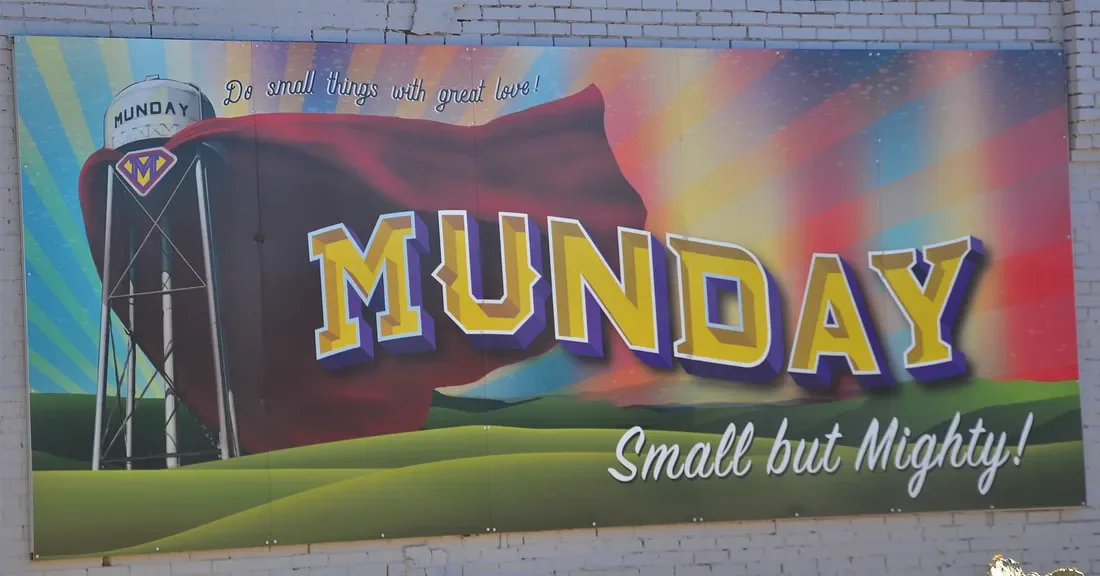
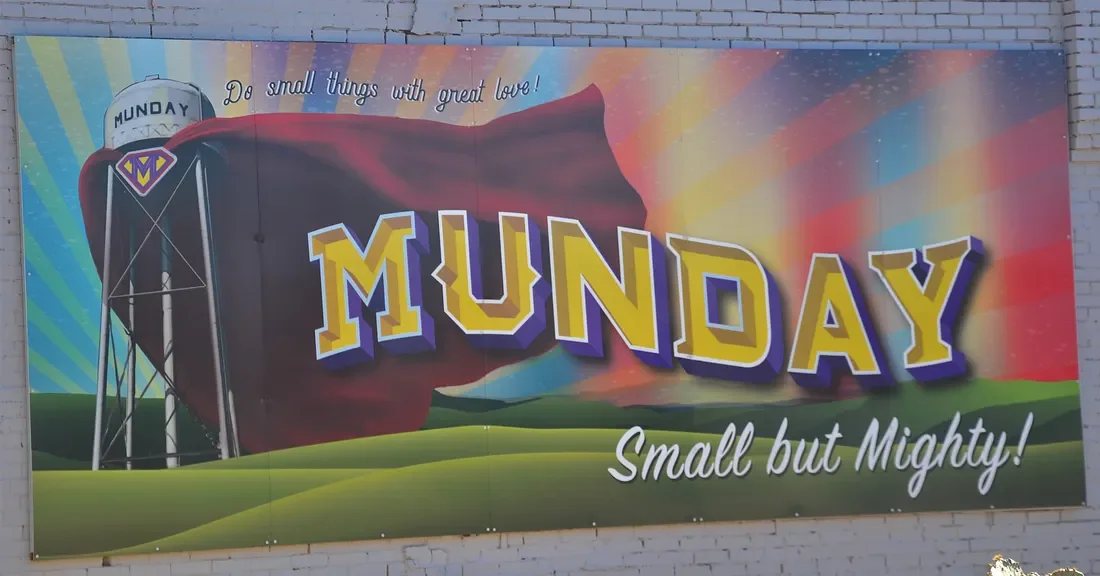
A mural welcomes us to Munday, Texas.
We got off to a slow start Saturday and only made it as far as Wichita Falls, Texas, on our way to Big Bend National Park. Sunday we managed 155 miles from Wichita Falls to Abilene.
Part of the adventure is discovering small towns, and part is finding a place to sleep on the way. That is the biggest reason it has taken us a day and a half to go 155 miles.
We spent nights in Wichita Falls and Abilene. Those are big towns by our standards, and oddly perhaps, it can be harder to find quality cheap accommodations in bigger towns. Often those places are not in the best parts of town, and sometimes the motels are used for … things other than sleeping.
A new trend we found was charging a deposit when you rent the room. One place wanted $100 and another wanted $50, along with the price of the room. They said if I paid cash, I could get the deposit back in the morning if nothing was damaged.
I declined both offers. I was born at night, but it wasn’t last night.
We found a cheap place in Wichita Falls that didn't have a refrigerator. It was cold outside, so we left our cooler outside our door. It was fine in the morning. The room was not really warm, but otherwise fine.
Abilene has a plethora of murals and a lot of statues. One place had statues that were scenes from children’s books — like the Three Little Pigs, the Three Bears, and the Three Kittens — and some I had not heard of.
There was a lot to see and we kept exploring until it was too dark to take any more pictures. We started looking for a place to stay then. We were tired and that isn’t the best way to go about finding a motel for the night.
In Abilene we went for a budget chain motel on the Interstate. That was the first time we had been on an Interstate highway this trip. This one is a bit isolated with no restaurants around. Nice room though.
The best cheap hotels are in the small towns. They are usually owned by local people and the quality is just better. Some businesses take more pride in their product than others. Chains are cookie-cutter operations that often have the bare minimum of standards.
We will likely end up at a smaller town tonight. We have reservations at Big Bend, but since we don’t know where we will be when night falls, we have to find rooms as we go along.
Small towns
We came across the little town of Munday, Texas, named after a postmaster. We were going to pass it by, but we happened to see a mural from the highway and stopped to take a look. It has three or four blocks of downtown.
We were surprised to find a lot of murals and outdoor art in this town. For a town of 1100 people, it seemed to have a lot going on. We stopped at another small town, Haskins, that had murals and a cool-looking courthouse.
A lot of these towns sprang up with whatever was going on at the time. The arrival of the railroad, an outpost for the army, the oil boom. Some of them sprung up overnight and disappeared almost as quickly when their reason for existence faded away.
Some towns survived, and some are hanging on by a thread today. Some of those towns have murals and other interesting things to see. Some do not.
The Frontier Museum
The Frontier Museum in Abilene gives a great look into the history of the area. It has been a hostile land for many years from an environmental standpoint — hot dry summers, storms, snakes, make it dangerous even today. When the white settlers were arriving there was no medicine and no law. You were literally on your own and only the fittest survived.
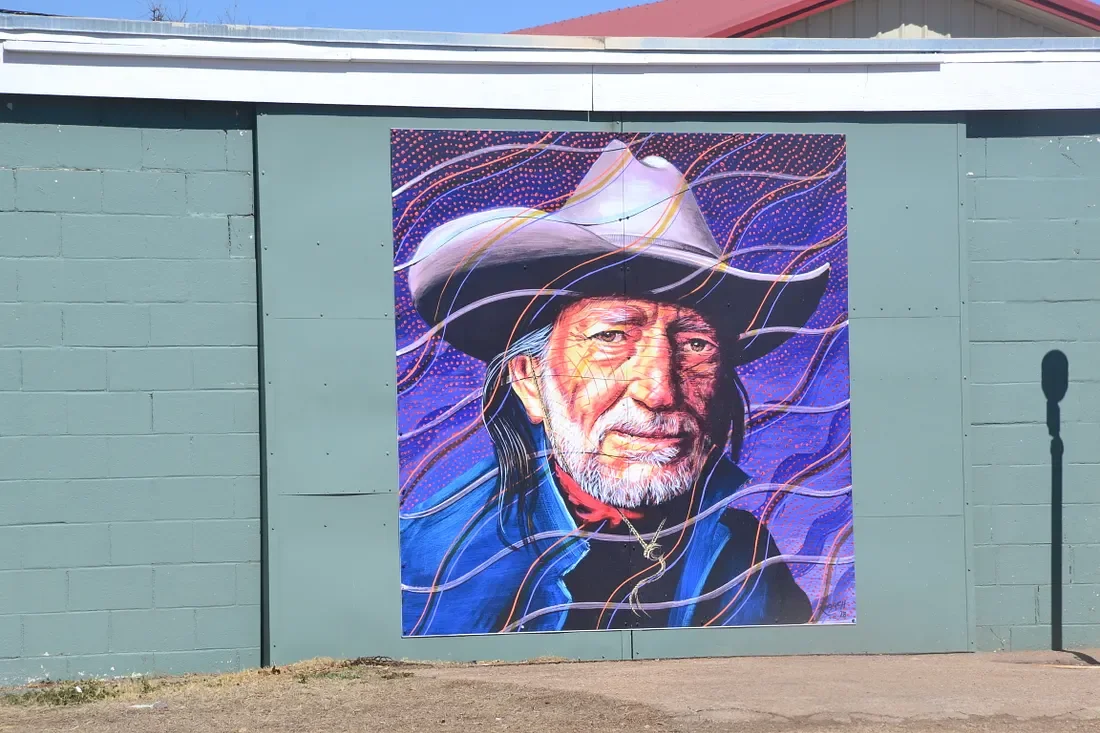
The Mythical American Cowboy
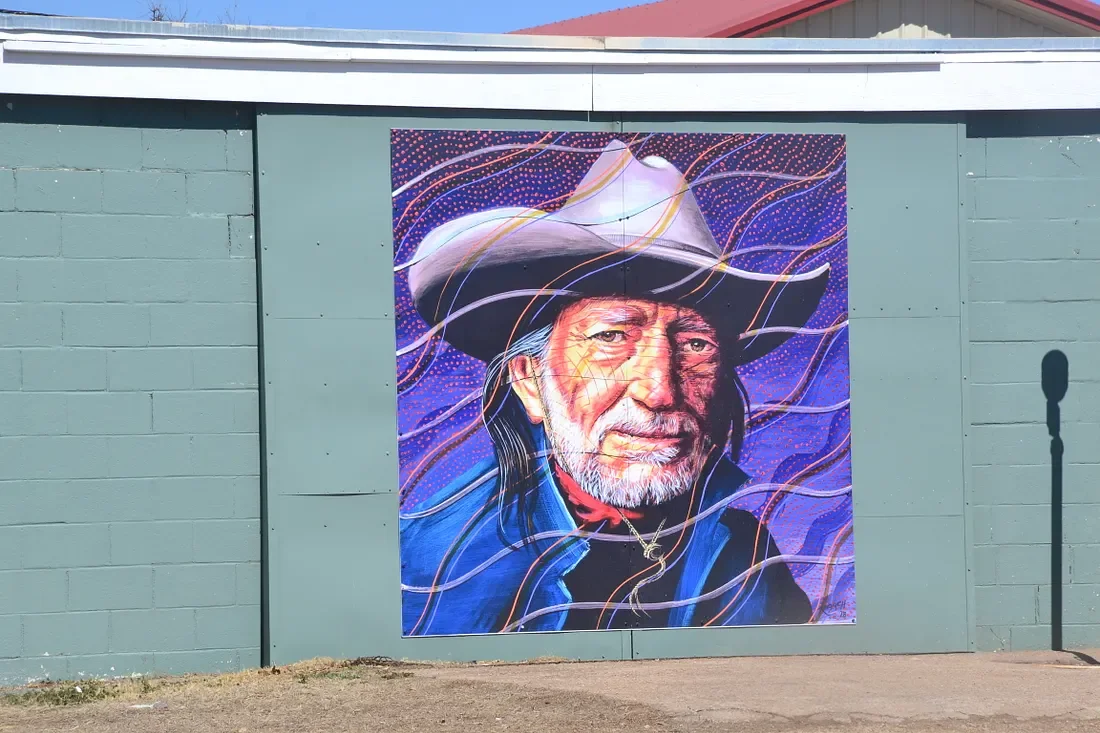
The Museum of the Frontier in Abilene was a great place to get a glimpse of the history of this part of Texas. It was a hostile land for many reasons when the first white settlers arrived. There was a harsh environment with very little water, heat, snakes, and other natural dangers. There were Indians who would attack, and there were bandits.
The legend of the cowboy is pretty much just a legend. As many as half of the real cowboys were black or Hispanics, and even a few Indians. The first cowboys were anything but glamorous. It was a hard dangerous job, driving cattle hundreds of miles from south Texas to the railroads in Kansas.
The cattle drives started in 1866 and by 1880 the railroad reached Texas, barbed wire was going up on ranches, and the cowboy era ended as fast as it started.
There were also some former slaves who went west, and their stories have not been told as much. When they were freed they took advantage of the opportunity to head west and try to settle the harsh land. Many became what we now call cowboys. Some got involved in rodeo, and the sport of steer wrestling was invented by William Pickett.
Even at the end of trail you were not safe. There were lots of swindlers, gamblers, prostitutes, and others more than eager to take your hard-earned money. Probably a lot of cowboys lost their money at the end of the trail.
This was a wild area. It was noted that one person might be an outlaw in one town and a sheriff in another town. I also got the idea that race was not all that important unless you were an Indian. Some who had been slaves became business owners and ranchers.
If you had some money you could become a landowner regardless of race. If you did not have money were a common laborer, you could be a cowboy.
The Comanche and African Americans
There were also Indians who were not pleased with all these settlers arriving. They attacked and killed a lot of settlers, and of course, a lot of them were killed. The Comanche was one of the last tribes to be conquered. They were great horsemen and were fierce warriors with bows and arrows.
The Comanche warriors also had a nasty side. When they attacked a group of settlers they would kill the old and very young, and take the rest captive. They used cruel means of torture at times as well.
Those that were not too old or too young were not killed. They were kept, or sold, as slaves. Indians also had some slavery going on. Especially early in the settlement period attacks by Indians were common. There are a lot of stories of people who were captured and held as slaves by the Comanche or other tribes.
There was a story of a black man — Britt Johnson — who had his family kidnapped by Comanches. He was legally a slave but was treated more like an employee by Moses Johnson, the white man who technically owned him. Lines were blurred on just about everything in West Texas in those days.
During a Comanche raid, some of Moses Johnson’s family were killed, and Britt Johnson’s wife and two children were kidnapped.
Britt Johnson was given his freedom, and some money, so he could go find his family. He found them and somehow got them back from the Comanche.
He was a cowboy for a time, and then drove freight. On one of his trips, the wagon train was attacked by Comanches, and Johnson was killed in the fight.
There was another story Cynthia Ann Parker whose story has been told many times. She was a white woman who had been taken prisoner by the Comanche as a young girl. She was returned to her original family against her will because she had become a Comanche herself. Her son Quanah Parker became the last great Comanche chief.
There were lots of stories of people who were kidnapped and later were released by the Comanche.
The era of the cowboy, and the era of battles with the Comanche, ended about the same time in West Texas.
Then came the oil discoveries and life changed drastically for many.
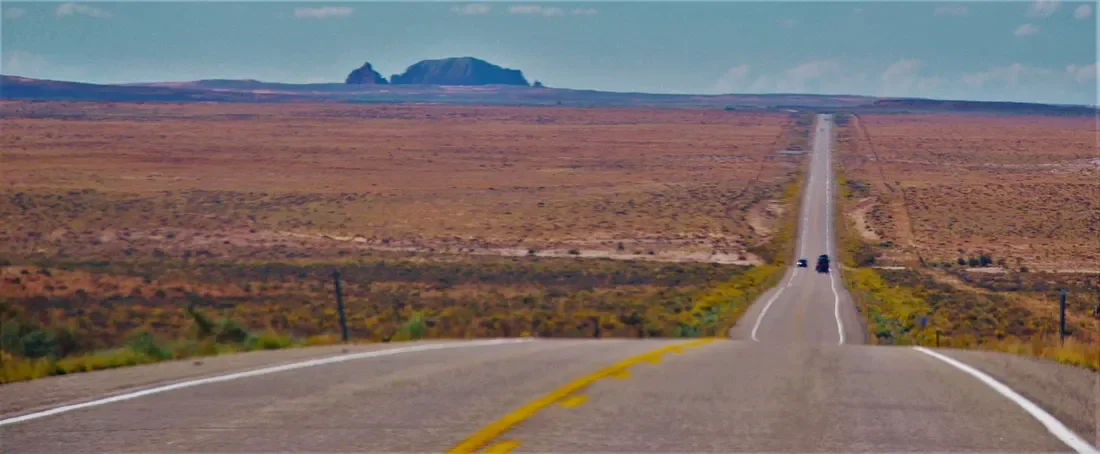
Headed to Texas, Cheap Travels
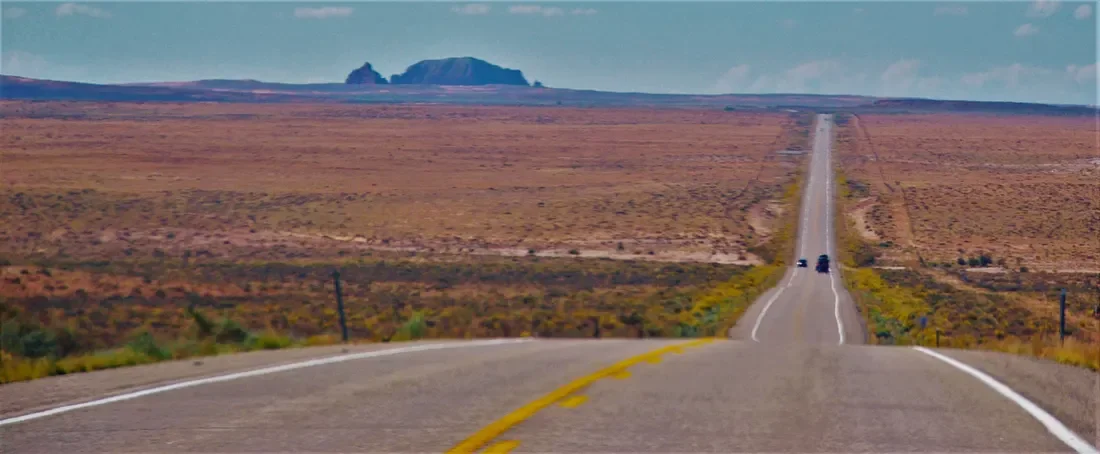
Getting ready to hit the road again. This time we are headed south to Big Bend National Park in southwest Texas. Where we are now is cold. We got to 30 today and that was as warm as it’s been all week. Should be warm, if not hot, in southwest Texas.
One of my dreams once I retired was to travel a lot. We like to travel in a car on the back roads and see interesting things along the way. This will be our third trip since I retired last September, so the dream is going pretty well.
My goal is to not have a firm return date, just a vague idea of when it will be. I suppose this trip will be 10–14 days. So if we say 10 it will be 14 because that is how we roll.
I did a travelogue when we went to Utah last October. I may do one again for this trip. Maybe not every day, but often.
There will be no albatross of a camper behind us this time. I much prefer going by car and finding places to stay along the way. We have found some places that were interesting, and we always look for the cheapest thing we can find for lodging. The roaches are clean. What more do you want?
The roaches are clean.
What more do you want from a cheap hotel?
We both like to travel cheap, which is a good thing. We take some food with us, and often it’s just a sandwich and some fruit as we drive down the highway. We stay away from typical tourist traps and try to spend money on things we really want to see, instead of popular attractions.
We have several money-saving tricks, like filling up your water bottles in the hotel room in the morning. We make our own coffee with our own coffee pot that goes with us. Some little things like that save you a few bucks and it adds up, and you can afford to stay longer.
I am not as into the trip this time for some reason. My depression has been acting up even though I am remembering to take my pills most of the time. I think it's just the wintertime blues. Once we get on the road I will be fine.A
First Day at Big Bend National Park
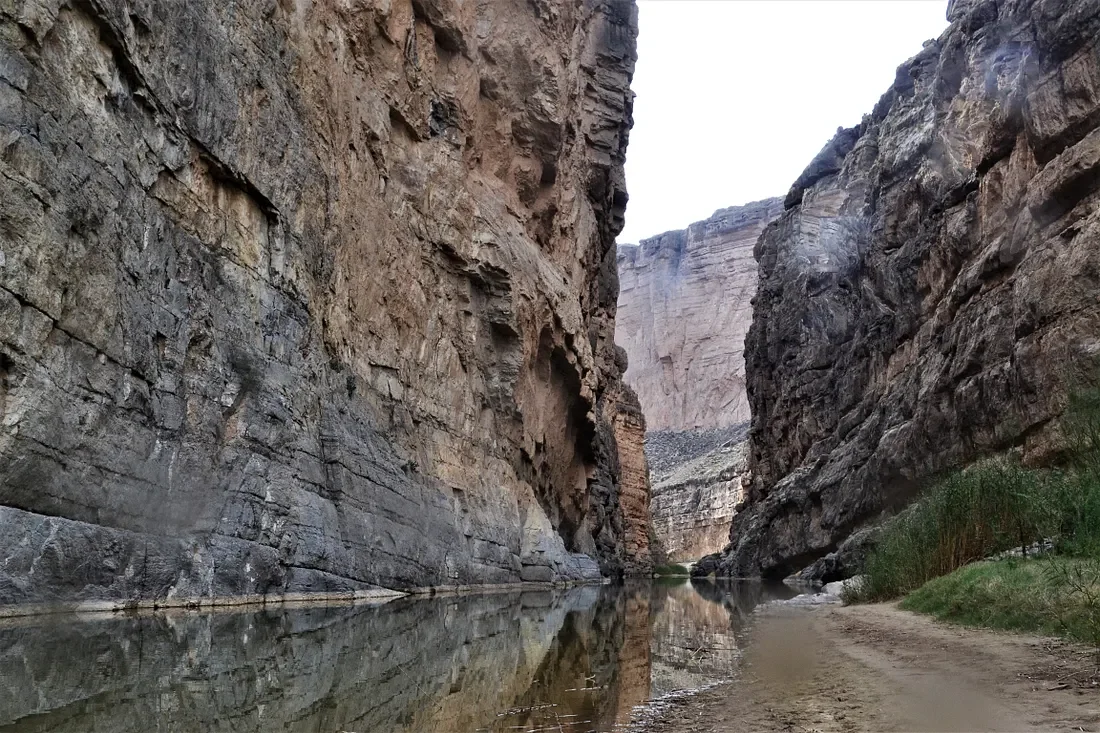
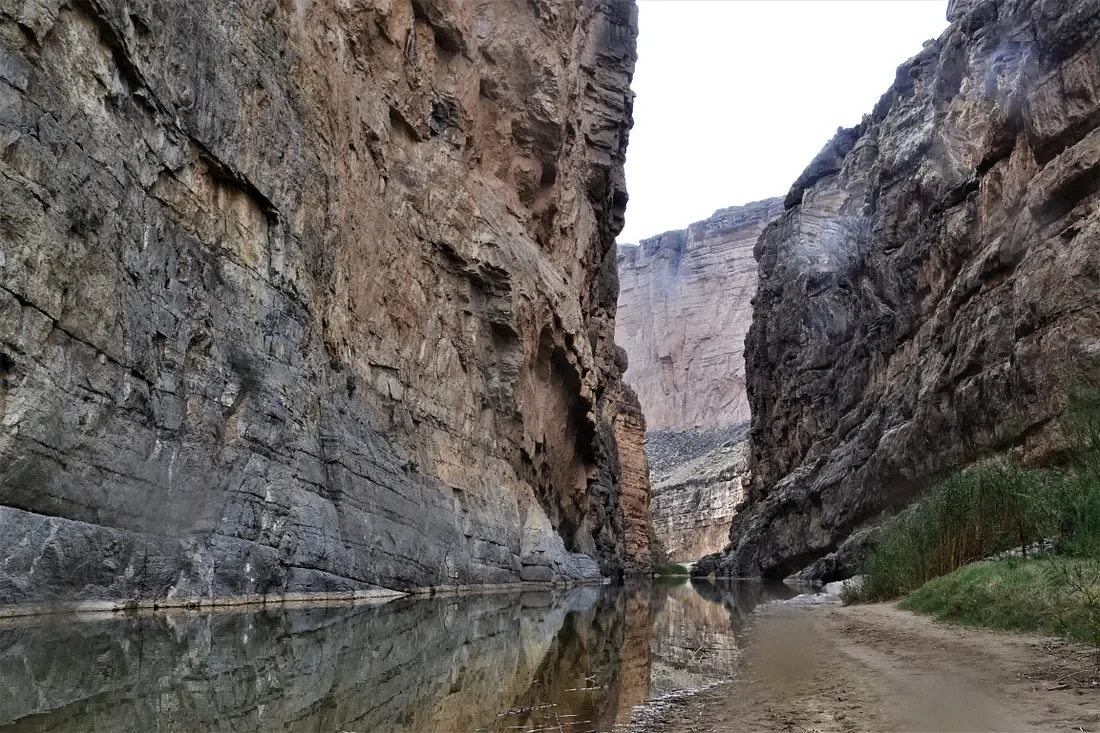
Our first day in Big Bend was mostly driving around, but I managed to get some hiking in. We are staying in Terlingua, which is on the west side. To get anywhere inside the park will be a little drive.
The weather is great for hiking, low 70s, and a slight breeze now and then. This is desert, so there isn’t much chance of rain. They get about 10 inches a year here, which is not much at all.
I made the climb to this canyon. I hiked down to the Terlingua Creek, which the tour paper assured was most likely dry. It was not today and had a pretty good stream running through.
I waded across in water that was up to my knees, so I was fairly wet. There were quite a few people around, and most were taking their shoes off. I thought about turning back, but I was already wet and saw no real reason to stop.
There was a fairly steep climb up one side of a hill, and then a climb down the other side that was not as steep. At the bottom was the canyon in the picture above.
From the creek, over the hill, and down to the canyon was a little more than four miles round trip. It went pretty well, and having wet feet was not a problem. I thought it was well worth the effort. I was a little surprised at how easy the hike was. Maybe it was the dry air or stopping to drink some water every 10 minutes or so, but I was not tired at all.
I was surprised at the level of vegetation in the desert. We are a little early to see cactus blooming, and before most plants get into summer mode. Cactus, yucca, and many other plants were still growing all around.
There is a central basin at Big Bend. The road snakes its way through the desert floor in the picture above. Mountains on each side. We had to drive up and down the mountain at each end, which was an adventure but nothing too scary.
Winked out by Roy Orbison
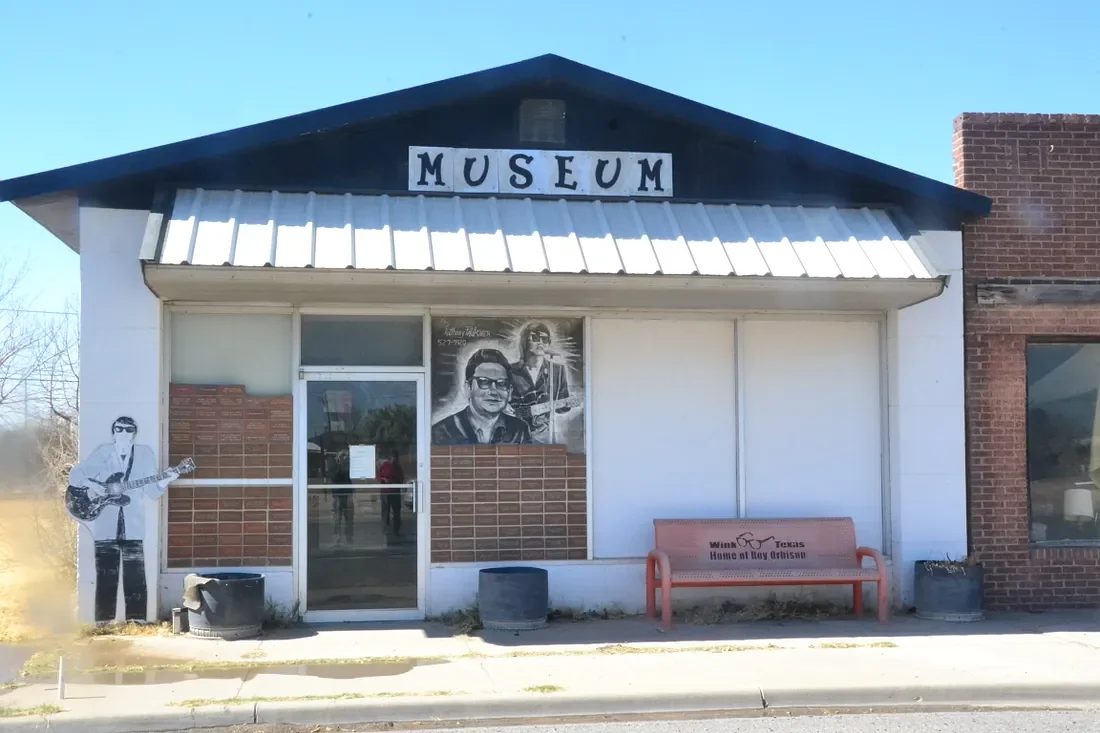
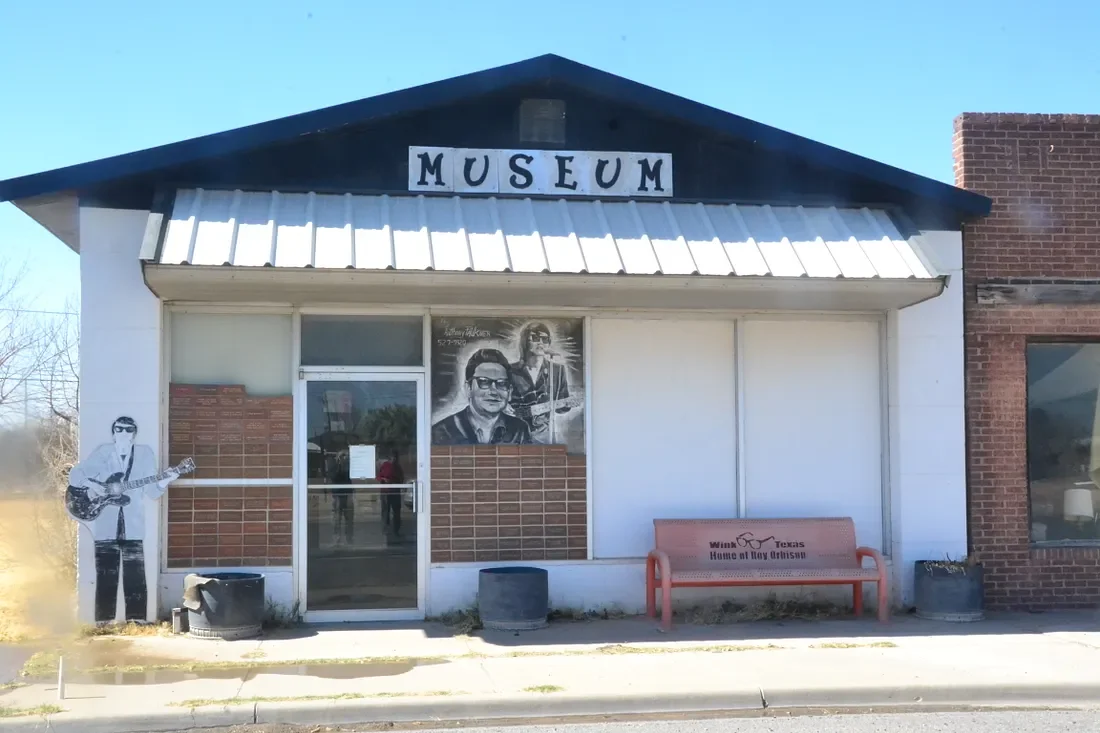
They say the town was so small if you wink you will miss it. That’s pretty much what happened when we made a detour to Wink, Texas, to see the town where Roy Orbison grew up.
I was aghast at a young man who did not know who I was talking about when we were about to leave Big Bend National Park. He didn’t know the Traveling Wilburys either. Oh my.
We were 150 miles south at Big Bend National Park, where there are no phone signals and no Internet. Wink is a town of fewer than 1,000 people, and it is an old oil town that has about dried up. The museum that bears his name is a one-room building and is by appointment only.
I tried calling on the way, and once we got there. There were more phone numbers on the door at the museum, and I tried them all.
No one was available to give us a tour. I looked through the door and saw a few things. I listened to some Roy Orbison as we drove down the highway. That will have to do I guess.
The Reality of the Mexican Border
If someone did walk from a remote Mexican town, cross the Rio Grande, and make his or her way into Big Bend National Park and onward, that would be a super-human feat. That person would have to have someone pick them up, or they would have to walk as many as 100 more miles to a town of any size in the U.S.
If a person did that they should be given citizenship and a medal of some kind — not deported.
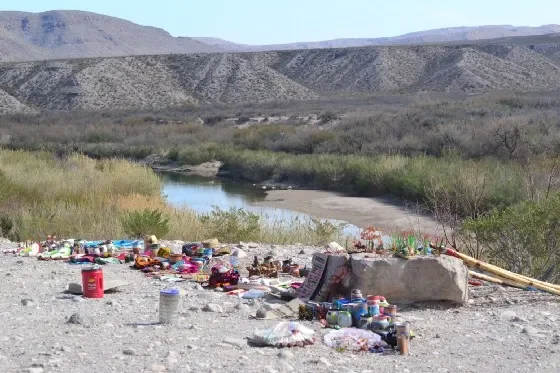
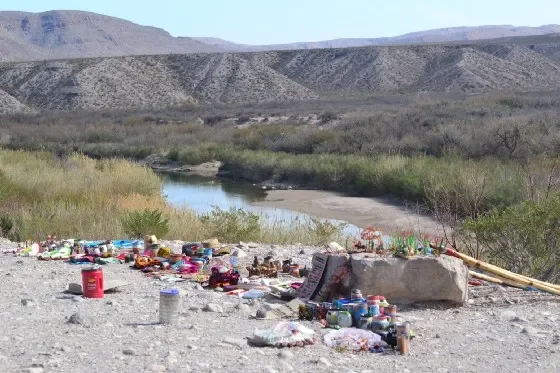
Trinkets and crafts left for sale on the U.S. side of the Rio Grande. Photo by James Jordan
The desert at Big Bend is a bigger obstacle than a wall would have been
It would be easy to wade across the Rio Grande, from Mexico into Texas, without any problem in the remote desert of Big Bend National Park.
There is a lot of border between the U.S. and Mexico, and there is a lot of remote wilderness that is largely desert and untamed. I never knew for sure just what the border was like until we visited it at Big Bend National Park. It’s even wilder and more remote than I had imagined. The other side of the border is also a national park and just as much desert.
I hiked a few trails that went down to the river, and could easily see across to the Mexican side of the river. It is the dry season and water levels are very low.
For centuries people that lived in these parts didn’t worry too much about borders. They did business together and helped each other at times. It’s only become more of an issue in recent years. But even at Big Bend National Park, there are border patrol agents around.
There are no towns of any size to speak of on either side of the border. This is a remote desert on both sides for many miles. Most of the border areas I saw were desert, but there were some ranches and some signs of life.
If someone did walk from a remote Mexican town, cross the Rio Grande, and make his or her way into the park and onward, that would be a super-human feat. That person would have to have someone pick them up, or they would have to walk as many as 100 more miles to a town of any size in the U.S.
If a person did that they should be given citizenship and a medal of some kind — not deported.
Once you crossed the river in either direction you would have at least 30 miles to go before you got to even a convenience store and 100 miles to a town that probably does not have 1000 people. Imagine doing that on foot in intense heat with no water available. It would probably be 300 miles in either direction to get to public transportation.
Trump talked about building a wall. I can’t think of anything that would be uglier than that in this wild area. A few hundred miles or more of dry desert is more of an obstacle than any wall could be.
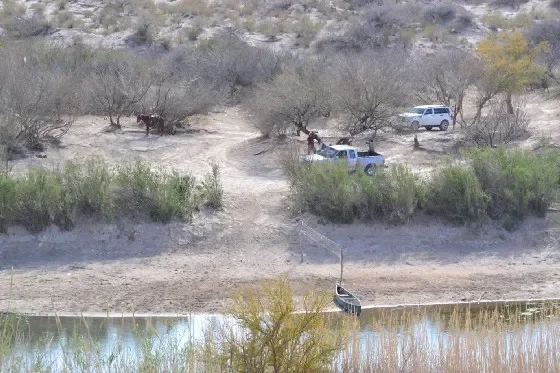
Just across the border, there were people with trucks and horses — and canoes. There are still operating ranches on both sides of the border.
But there is one thing that does happen.
At various spots, there are trinkets, walking sticks, and such, set up for sale. There is a can with a note saying to put your money into the can to support families on the other side of the border.
It is on the honor system, and some of them had what looked like a decent amount of cash in them. I saw several of these setups, and at times they were in very remote areas along a trail near the border. I half expected someone to jump out of the bushes and give me a sales pitch.
No one ever did.
There are warnings posted not to do business with these people. Our government says it encourages illegal entry, and that we should not do so.
The trinkets looked like handmade crafts. I could not tell if they were real handmade art or if they were cheap Chinese knockoffs. I didn’t care really. I stuffed a few dollars into one of the cans and maybe that helped someone a little bit. I didn’t take any of the trinkets.
These people do sneak across the border and put up these things before daylight, and come back in the evening to collect whatever money was made and the stuff that did not sell.
If you are already there, crossing the border is not a big deal. Getting anywhere once you cross the border — in either direction — would be quite a feat.