First Day at Big Bend National Park
Our first day in Big Bend was mostly driving around, but I managed to get some hiking in. We are staying in Terlingua, which is on the west side. To get anywhere inside the park will be a little drive.
The weather is great for hiking, low 70s, and a slight breeze now and then. This is desert, so there isn’t much chance of rain. They get about 10 inches a year here, which is not much at all.
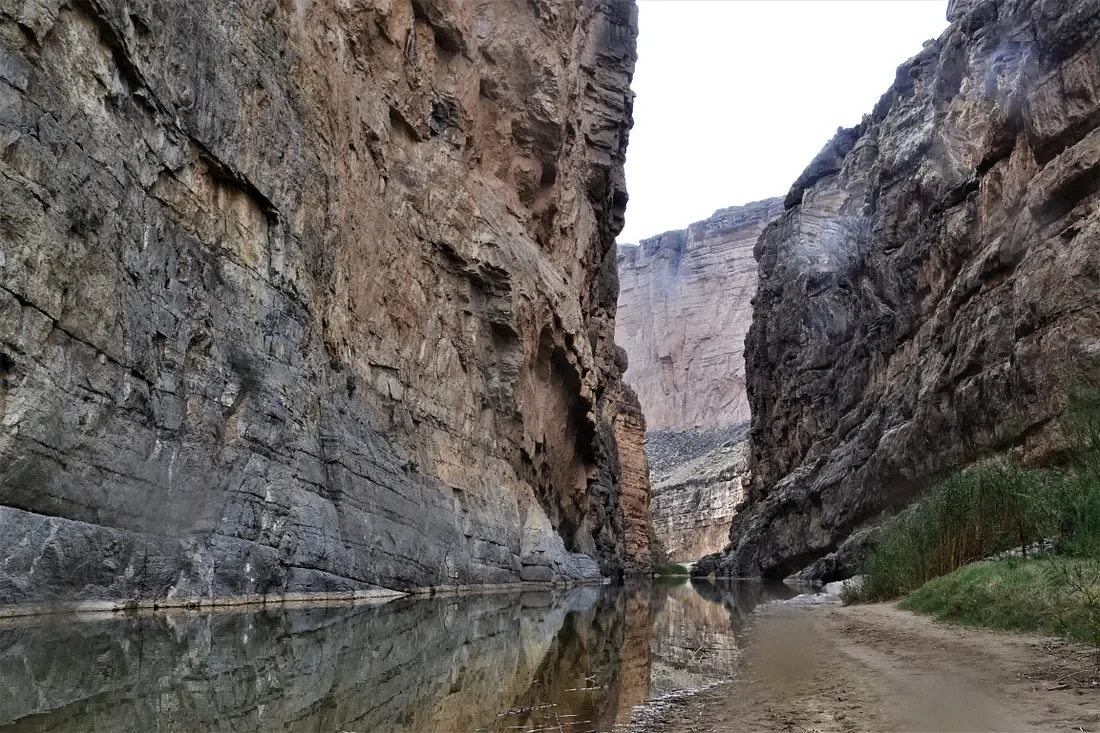
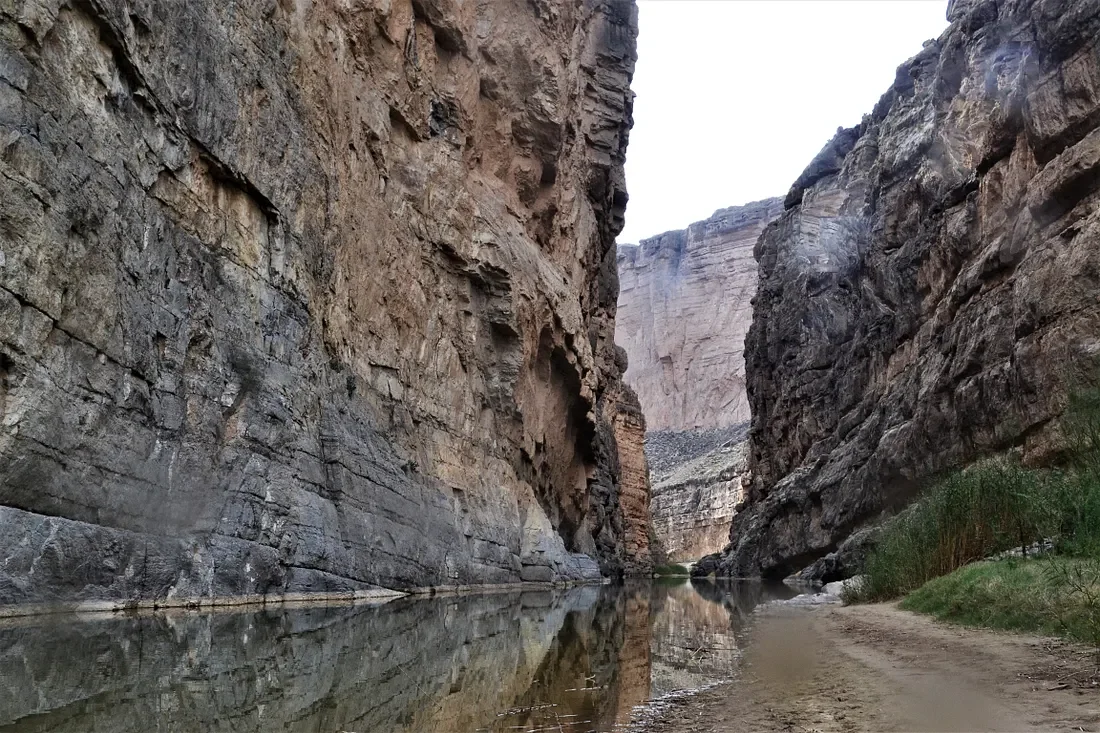
I made the climb to this canyon. I hiked down to the Terlingua Creek, which the tour paper assured was most likely dry. It was not today and had a pretty good stream running through.
I waded across in water that was up to my knees, so I was fairly wet. There were quite a few people around, and most were taking their shoes off. I thought about turning back, but I was already wet and saw no real reason to stop.
There was a fairly steep climb up one side of a hill, and then a climb down the other side that was not as steep. At the bottom was the canyon in the picture above.
From the creek, over the hill, and down to the canyon was a little more than four miles round trip. It went pretty well, and having wet feet was not a problem. I thought it was well worth the effort. I was a little surprised at how easy the hike was. Maybe it was the dry air or stopping to drink some water every 10 minutes or so, but I was not tired at all.
I was surprised at the level of vegetation in the desert. We are a little early to see cactus blooming, and before most plants get into summer mode. Cactus, yucca, and many other plants were still growing all around.
There is a central basin at Big Bend. The road snakes its way through the desert floor in the picture above. Mountains on each side. We had to drive up and down the mountain at each end, which was an adventure but nothing too scary.
Lost on the Chisos Trail
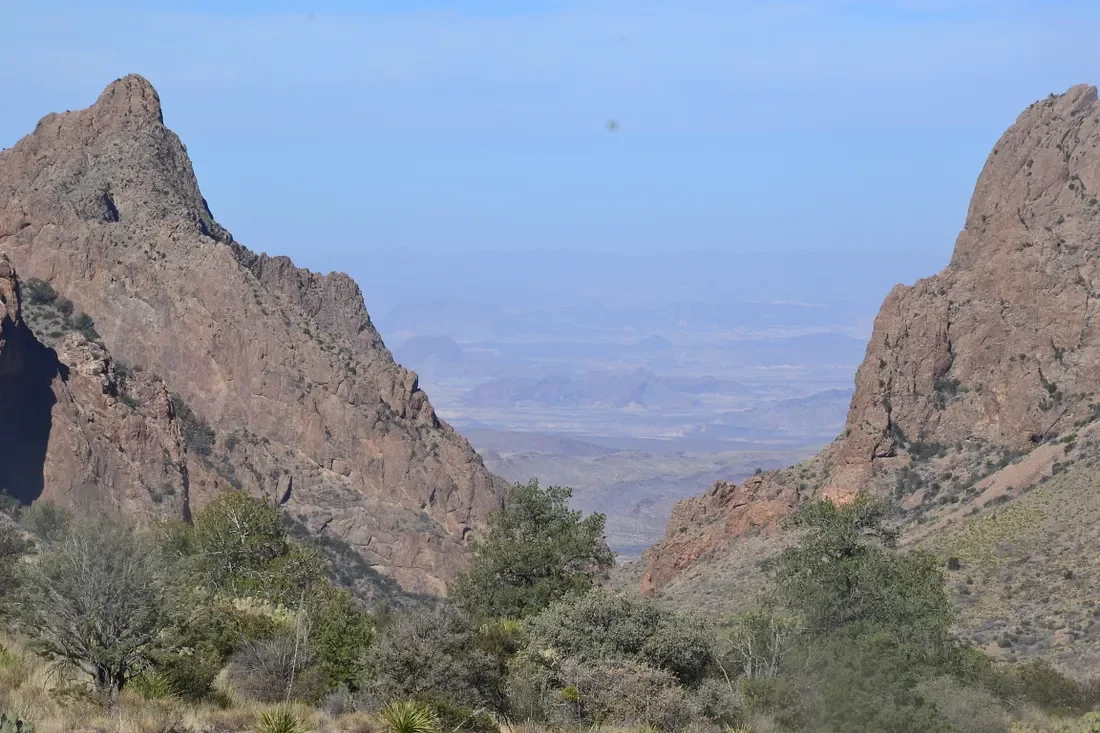
Chisos Basin area of Big Bend National Park. I wanted to do some hiking and got a bit more than I had bargained for.
I got lost.
The hike was the Chisos Basin Loop Trail, which was a 2-mile trail that was not supposed to be very hard. I took a wrong turn, and then took some bad advice, and found myself way off course on a trail I did not mean to be on.
I was at the Chisos Basin area of Big Bend National Park. I wanted to do some hiking and got a bit more than I had bargained for.
I got lost.
The hike was the Chisos Basin Loop Trail, which was a 2-mile trail that was not supposed to be very hard. I took a wrong turn, and then took some bad advice, and found myself way off course on a trail I did not mean to be on.
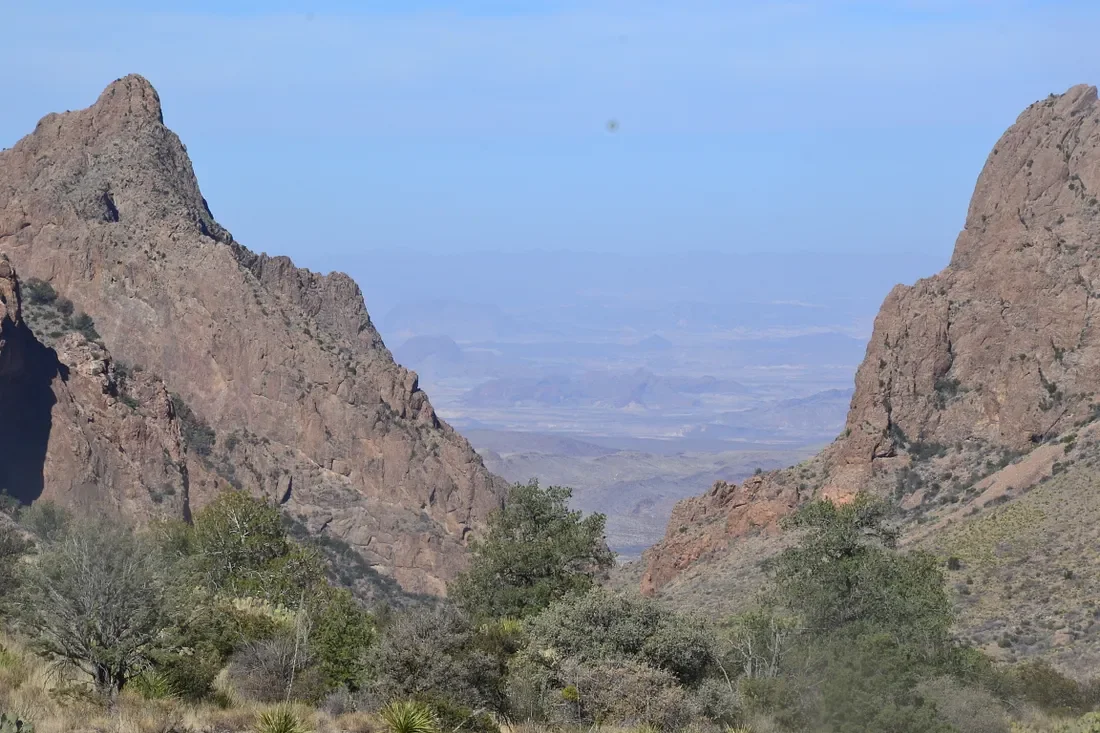
There is a place called the Window, where two mountain ranges form a frame that looks like a window. I could see it from the trailhead, and continued to see it as I hiked the trail.
I got to an intersection and the signage was not exactly clear, but I thought it was clear enough so I pushed onward. I started to think something was not right when I could no longer see the window. I had also been going downhill for a long time.
I passed by someone and asked them if this was the right trail. I did not say the name correctly, and they told me it was the right one, so I kept going. By then it was getting to be around noon and getting hotter by the minute. I looked at my step counter and I was at 3.3 miles and did not seem to be close to the end of the trail at all.
I was going back uphill though, and I took that as a positive sign.
I was running low on water and dreading the thought of having to backtrack. I thought I would feel bad if I was almost there and went all the way back. I ran into a man and a woman who were checking their map.
After talking with them and looking at their map, I saw that I was very far off track. I would indeed have to backtrack. By this time, it was 1 p.m., very hot, and I was out of water. They gave me some water. By the time I got back to the trailhead, I had been gone for almost five hours and hiked eight miles. My wife had gotten tired of waiting and went off exploring. She was upset, thinking I had changed my hiking plans without telling her. At least she felt some sympathy after realizing I had been through a pretty tough day.
There was no phone service available, so there was no way to contact each other.
I was worn out after that long hike. We drove around some more and got back to our room a little after dark.
The allergies are still hitting me hard, but I am recovered from the long hike as far as I can tell. They helped me recover to some degree.
They were headed back down the trail towards where I had started so we hiked together.
I was also having some heavy-duty allergies, which is ironic in the desert, but things are blooming everywhere. There must be some pollen I am not used to because I have not had an allergy attack like this in many years.
So I was hiking along, very hot and tired and having some bad allergies — sneezing, eyes burning and itching, and general misery.
The Reality of the Mexican Border
If someone did walk from a remote Mexican town, cross the Rio Grande, and make his or her way into Big Bend National Park and onward, that would be a super-human feat. That person would have to have someone pick them up, or they would have to walk as many as 100 more miles to a town of any size in the U.S.
If a person did that they should be given citizenship and a medal of some kind — not deported.
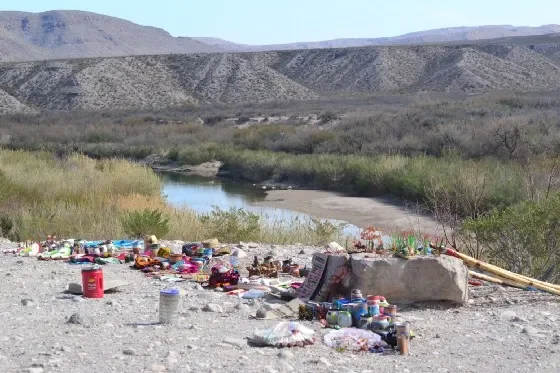
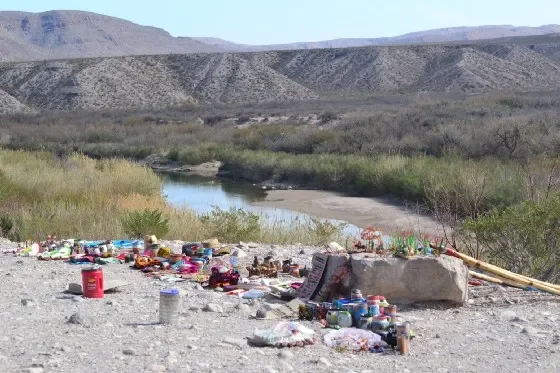
Trinkets and crafts left for sale on the U.S. side of the Rio Grande. Photo by James Jordan
The desert at Big Bend is a bigger obstacle than a wall would have been
It would be easy to wade across the Rio Grande, from Mexico into Texas, without any problem in the remote desert of Big Bend National Park.
There is a lot of border between the U.S. and Mexico, and there is a lot of remote wilderness that is largely desert and untamed. I never knew for sure just what the border was like until we visited it at Big Bend National Park. It’s even wilder and more remote than I had imagined. The other side of the border is also a national park and just as much desert.
I hiked a few trails that went down to the river, and could easily see across to the Mexican side of the river. It is the dry season and water levels are very low.
For centuries people that lived in these parts didn’t worry too much about borders. They did business together and helped each other at times. It’s only become more of an issue in recent years. But even at Big Bend National Park, there are border patrol agents around.
There are no towns of any size to speak of on either side of the border. This is a remote desert on both sides for many miles. Most of the border areas I saw were desert, but there were some ranches and some signs of life.
If someone did walk from a remote Mexican town, cross the Rio Grande, and make his or her way into the park and onward, that would be a super-human feat. That person would have to have someone pick them up, or they would have to walk as many as 100 more miles to a town of any size in the U.S.
If a person did that they should be given citizenship and a medal of some kind — not deported.
Once you crossed the river in either direction you would have at least 30 miles to go before you got to even a convenience store and 100 miles to a town that probably does not have 1000 people. Imagine doing that on foot in intense heat with no water available. It would probably be 300 miles in either direction to get to public transportation.
Trump talked about building a wall. I can’t think of anything that would be uglier than that in this wild area. A few hundred miles or more of dry desert is more of an obstacle than any wall could be.
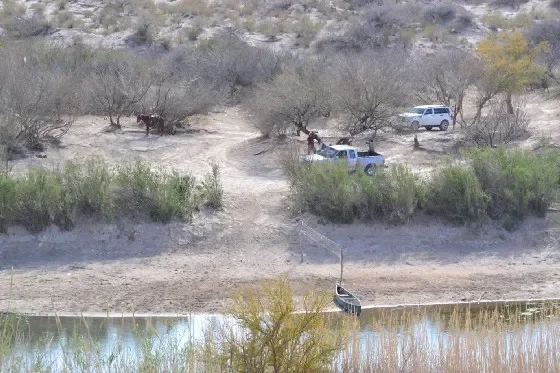
Just across the border, there were people with trucks and horses — and canoes. There are still operating ranches on both sides of the border.
But there is one thing that does happen.
At various spots, there are trinkets, walking sticks, and such, set up for sale. There is a can with a note saying to put your money into the can to support families on the other side of the border.
It is on the honor system, and some of them had what looked like a decent amount of cash in them. I saw several of these setups, and at times they were in very remote areas along a trail near the border. I half expected someone to jump out of the bushes and give me a sales pitch.
No one ever did.
There are warnings posted not to do business with these people. Our government says it encourages illegal entry, and that we should not do so.
The trinkets looked like handmade crafts. I could not tell if they were real handmade art or if they were cheap Chinese knockoffs. I didn’t care really. I stuffed a few dollars into one of the cans and maybe that helped someone a little bit. I didn’t take any of the trinkets.
These people do sneak across the border and put up these things before daylight, and come back in the evening to collect whatever money was made and the stuff that did not sell.
If you are already there, crossing the border is not a big deal. Getting anywhere once you cross the border — in either direction — would be quite a feat.