
Bible Study vs. Spirituality
I have a section on this site for spirituality, and another one for biblical studies. I do see those as separate things, and I’m seeing that even more clearly recently.
Biblical studies are important, but they are still the study of a book. It is a spiritual exercise, but knowledge doesn’t make you more spiritual. Paul says knowledge puffs up, but love edifies. Knowledge can lead to pride and even arrogance. Spirituality smooths out that edge.

The written words are still spiritual in nature. Photo from Unsplash
Here is why I am separating the two things
I have a section on this site for spirituality, and another one for biblical studies. I do see those as separate things, and I’m seeing that even more clearly recently.
Biblical studies are important, but they are still the study of a book. It is a spiritual exercise, but knowledge doesn’t make you more spiritual. Paul says knowledge puffs up, but love edifies. Knowledge can lead to pride and even arrogance. Spirituality smooths out that edge.
Biblical studies are more objective. There’s a long history of interpretation, translation, and even the development of theology itself. There are plenty of tools out there to help with biblical studies. It’s good to know when it was written, what the times were like, and how the original audience would have taken it. While truth is timeless, it was not written in our culture, and trying to understand it in light of our modern culture only misses much of the message. I’ll have a lot more on that in the biblical studies section of this site at some point.
Spirituality is actually living in the world. It is experiential knowledge. It involves things like prayer, knowing yourself, and relating to other people. It’s very subjective. When it comes to biblical studies, it’s easier to measure truth and reality.
When it comes to spirituality, it’s a lot messier, a lot more foggy. I’ll be writing about my own spiritual life and development. It’s not something that you just attain, and that’s the end of the story.
It’s like driving a car. You can drive fine without knowing how the transmission or engine works. You can also understand how engines and transmissions work, and still be a terrible driver.
When I write about biblical studies, I’ll be writing more from an academic perspective. When I write about spirituality, I’ll be writing more from a lived perspective.
There is a danger in both extremes. You could make the Bible into an idol, where it actually replaces God. The written words become all there is, and then you have to make your world fit in that box. I don’t think the writers of the Bible ever intended it to be taken that way. If you think it’s a rule book, you haven’t read it closely enough.
You can go too far the other way too.
If you take your spirituality and only go with your experience and internal knowledge, you can easily be led down some pretty bad paths. You still need the Bible as the anchor.
While they are separate, they come back together nicely.
The spiritual experience is measured against the Bible, and they should line up. If they don’t, then something is wrong, and you need to think it through more.
There is still disagreement at times over what the Bible means, or what it even says. There are also arguments over spiritual things. Paul says in Romans 14, “Let everyone be convinced in his own mind.” This is the journey, though, and you’re welcome to come along and comment as you like.
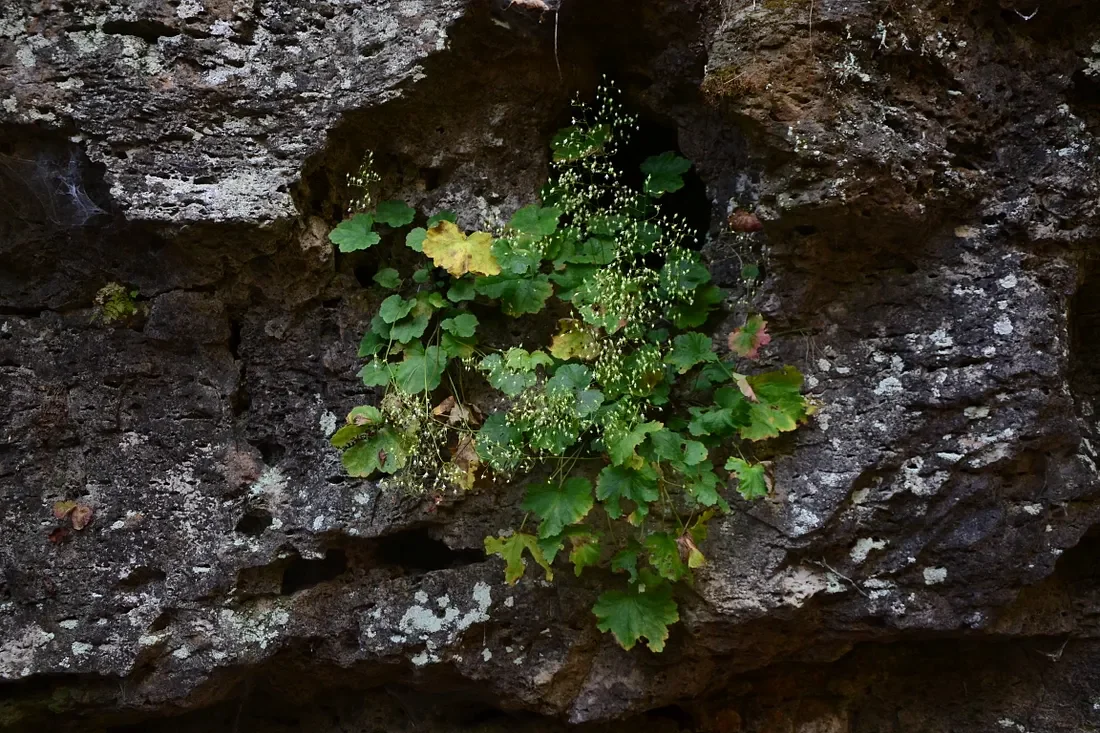
Exploring a State Park
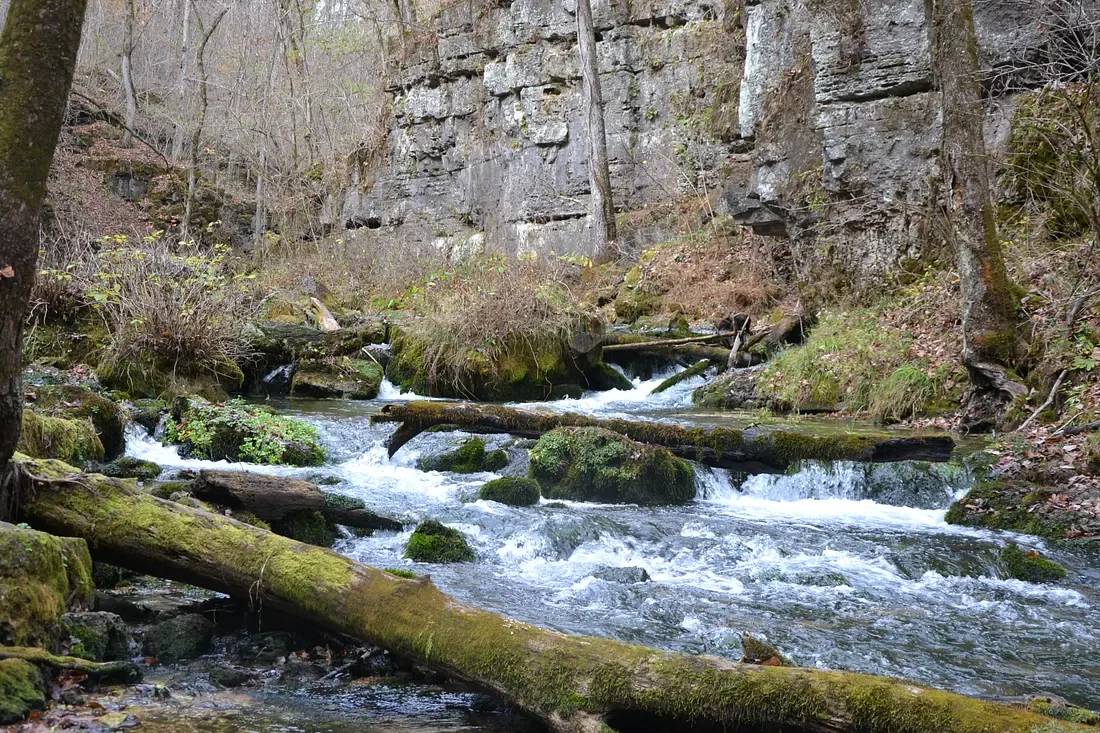
The climb down made the climb back up worth the trip
Last fall I was hiking around a state park in Missouri. The area was still green and teeming with life.
The trail down to a waterfall was about a mile and treacherous. I’ve been disappointed before on these trips to waterfalls. I had to work around and over boulders as I descended into the forest. I thought this had better be worth it. I laughed at the idea of such arrogance. What am I going to do about it, right?
Sometimes, at this time of year, streams dry up, and there is only a trickle where a waterfall should be.
Even after getting to the bottom, I had to balance on rocks and walk up the middle of the stream to see the best part of the stream. I was happy I had my walking sticks. Getting wet would make the steep climb back even more difficult.
I was pleasantly surprised when I reached the stream at the bottom. It was running strong. It was not exactly what I pictured as a waterfall, but it was a rushing stream in the wilderness and was spectacular. Moss covered most of the rocks, creating a green wonderland.
I sat by the stream for some time, soaking in the majesty of it all. The sound of the water drowned out any other thoughts I could have had.
I refilled my water bottle with the spring water and took a long drink. It’s probably more pure than what I started with that day. I washed my face with the spring water as well.
In many ways, going down a steep incline is harder than going up. While going down, you have to pay more attention to where you step, or what you grab hold of for balance. The trip down had been just steep enough that you had to pay a lot of attention.
Soon I would start the journey back to the top.
The scene filled my senses. I felt the power and presence of God. I was renewed.
The climb back up seemed almost effortless.
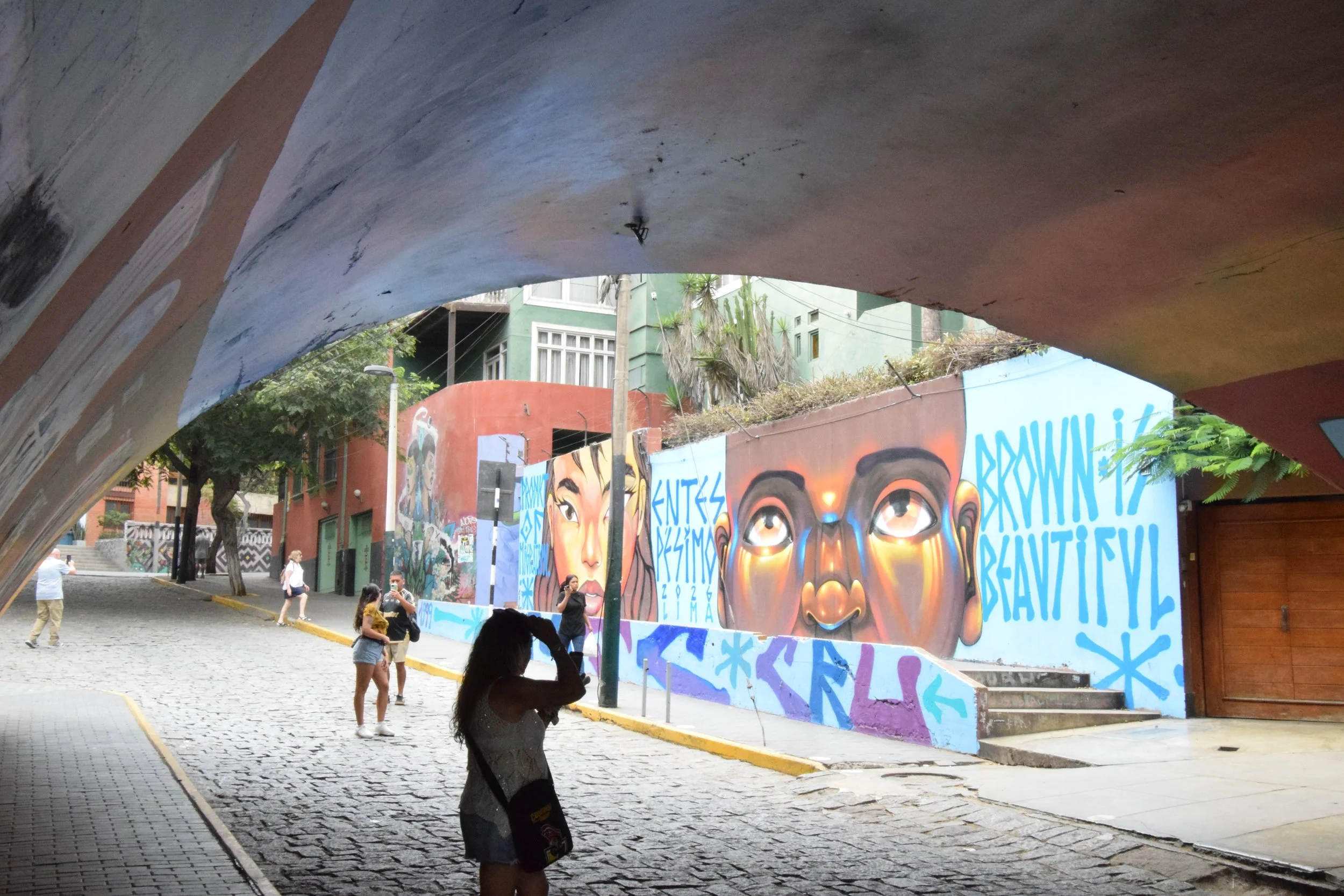
The Spirit of Place: Peru and Argentina
My trip finished in Lima, Peru. I loved that city. It has 10 million people, but it didn’t feel like a big city the way Buenos Aires did. The biggest thing I noticed was the difference between how Buenos Aires and Lima felt.
I loved Buenos Aires, and the city let me admire its charm all I wanted. I loved Lima too; it has its own charm, but it felt like Lima loved me back or at least gave me a small hug. Buenos Aires was the sexy woman, not minding you looking at her. Lima was the very pretty girl smiling because you were looking.
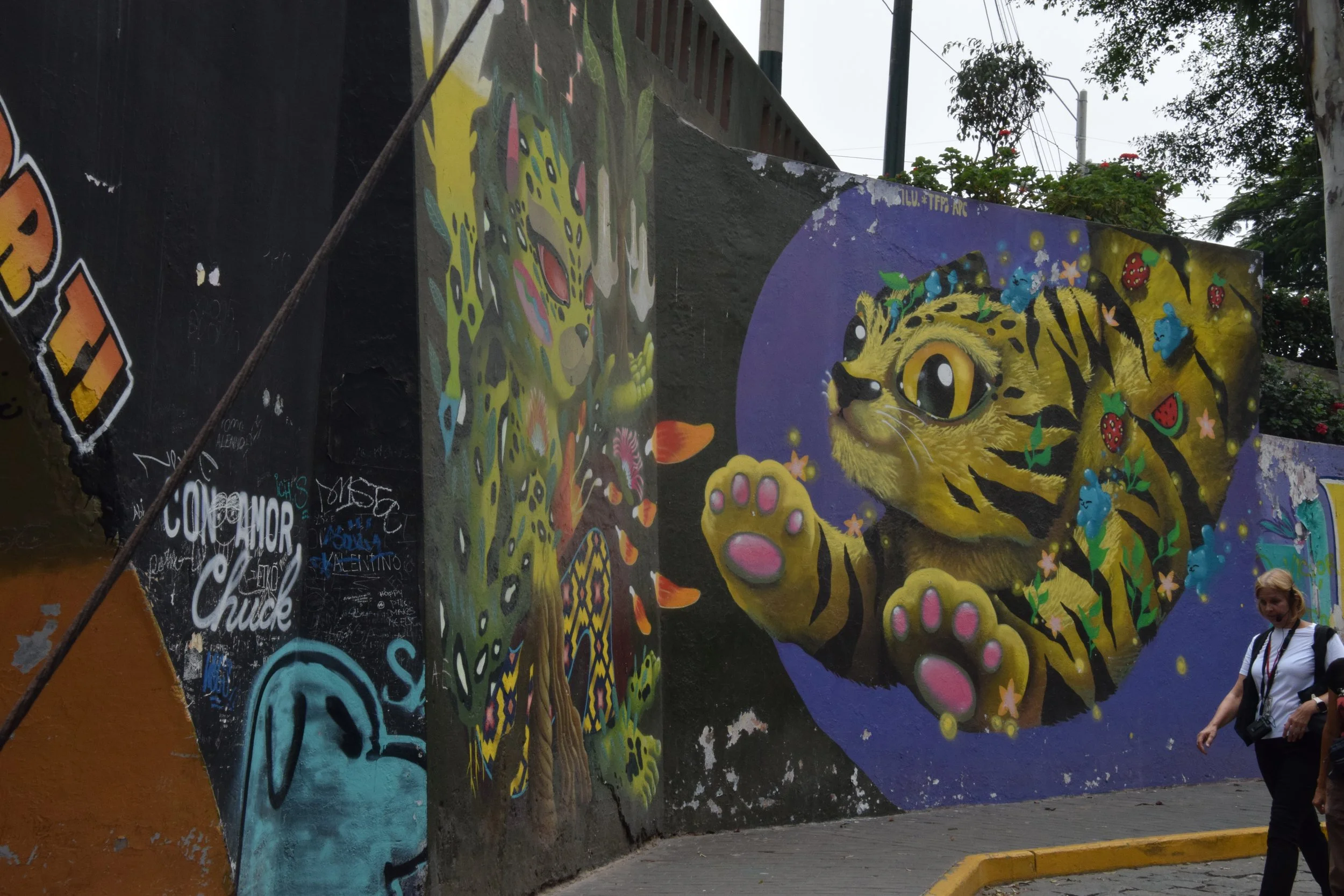
In Lima, a wall along a sidewalk is a great place for an artist to make a statement.
Last spring in South America, two countries taught me that place has a personality.
Argentina moved with a precise, almost European efficiency—grand, polished, and slightly reserved. Peru felt warmer, more colorful, and quietly generous, as if the country itself was glad you’d come.
I went for Patagonia’s glaciers and trails, but it was Peru that surprised me most.
I started in Buenos Aires, Argentina, but hundreds of miles from Patagonia. The city is called the Paris of South America, and it seems right. There are grand buildings with classic architecture. There are large parks and public areas that are beautiful and functional. People are out all hours of the day and night.
I was only there for a couple of days, but I felt that bright urban spirit right away. It’s a serious city that demands to be taken seriously—but it also rewards you when you do so.
There’s a European efficiency that seems to go against the usual laid-back Latin stereotype.
There is an openness, but it’s an openness to their structured system.
I stayed in Buenos Aires for two nights before my tour began. On the day I was to join the tour, I had to check out of my room, join my tour group, and check in again with the group: same hotel but a different room. Orderly, but I had to pack up and unpack again anyway. That night at an Argentine steakhouse, they brought me a liter bottle of beer. I asked if they had a smaller bottle. The waiter said no, as though it was a silly question I should not be asking.
In both instances, the system was clear and precise. They were helpful, friendly even, but there wasn’t much room to wiggle.
Patagonia was much the same. That is a very remote area, but the same spirit was there. There was a no-nonsense system in place that worked. I had no complaints, but I was always on the outside looking in.
Peru was different from the start.
I was in my hotel room for two days before the Peru part of the tour started. I asked if I would have to check out and back in. The person at the desk shrugged, “No, no you don’t have to do that,” he said. “We will take care of it.” They did take care of it, and it was that simple. I joined the tour group and stayed in the same room.
Things like that felt more normal in Peru. There was a warmth added to the efficiency that wasn’t there in Argentina.
At times it didn’t look efficient, but it still was. One time, we had to pack a few things into a small bag for a one-night stay, and then we went to another hotel. That’s a train wreck waiting to happen, but it didn’t. When we got to the next hotel the next day, we were already checked in, and our bags were waiting in our rooms.
It wasn’t a production, no formalities, just a quiet, friendly competence.
Peru was also more colorful. There were more murals, more decorated things. Argentina was beautiful, but in a more formal, historical way. Argentina felt a little more sophisticated, but Peru was friendlier and warmer.
All big cities have their street musicians. Buenos Aires had its share, and they put on performances worth stopping for. But I won't forget the older man in Lima playing a pan flute, strumming a guitar, and singing all at the same time. When I dropped a sol into his hat, he looked up, smiled, and gave me a little nod. It was a tiny gesture, but somehow it felt perfectly Peruvian.
My trip finished in Lima, Peru. I loved that city. It has 10 million people, but it didn’t feel like a big city the way Buenos Aires did. The biggest thing I noticed was the difference between how Buenos Aires and Lima felt.
I loved Buenos Aires, and the city let me admire its charm all I wanted. I loved Lima too; it has its own charm, but it felt like Lima loved me back or at least gave me a small hug. Buenos Aires was the sexy woman, not minding you looking at her. Lima was the very pretty girl smiling because you were looking.