
What I Learned From a Teenage Scottie Pippen
I was taking in all the sights and sounds of the dimly lit, rickety gym in Hamburg, Arkansas that was quickly filling. The sounds, smells, and visuals were overwhelming.
A voice suddenly broke through the din and haze.
The wake-up call
“Hey Mister Newspaper, take my picture?” a young Scottie Pippen said.
I looked at him and smiled. We made eye contact, and he grinned at me. We both laughed.

Photo by Markus Spiske on Unsplash
I was leaning against the wall at the end of the basketball court, camera and notepad in hand. These gyms in these small towns are small. There’s only a few feet between the wall and the court.
I watched the teams warm up, feeling nervous as I entered a new world. I was from the mountains in East Tennessee where there are few black people. Here I was one of the few white people. Because I was from the newspaper, they were polite, but didn’t say much.
I was taking in all the sights and sounds of the dimly lit, rickety gym in Hamburg, Arkansas that was quickly filling. The sounds, smells, and visuals were overwhelming.
A voice suddenly broke through the din and haze.
The wake-up call
“Hey Mister Newspaper, take my picture?” a young Scottie Pippen said.
I looked at him and smiled. We made eye contact, and he grinned at me. We both laughed.
At that time, he was barely a starter on his basketball team. Just a good-natured happy kid interacting with his world. It was unusual for a newspaper reporter to be there, and he was the one brave enough to interact.
Something clicked in me at that moment. I didn’t know what it was, but I knew my life had changed.
It was my first job out of college, and I was 1,000 miles from home. I was out of place doing a sports story as a news reporter. I was around people who were different than me. I was a bit nervous, but it was not uncomfortable.
I started working there toward the end of football season, and I helped by covering Friday night football games. My pictures came out better than I expected, and it was fun.
But when basketball season rolled around, it got a lot more personal. Covering basketball is much different than football. There is a distance in football, but not in basketball. The players are just a few feet away.
In an enclosed area like this, the sound is multiplied. It was a deep sensory experience, but Pippen brought it into the real world for me.
He stood out because he was real. He was loud but not obnoxious. He had no fear or preconceived ideas about me. I was just a new person in his world, and he said hello in a way only he could do it.
What it meant
When he said “Hey Mister Newspaper,” he recognized me and welcomed me into his world. I was not some white guy with a notepad, and he was not some black kid on the court — we were just two people caught up in the moment.
It was my first honest interaction with a person darker than me. My first time to “get” what sports are really about and how they transcend things like race or age. My desire to become a sportswriter was born.
That is the reason I remembered Pippen. At that time, he was a decent player but nothing special. The star on that team was Myron Jackson, who also went on to the NBA.
Pippen did not blossom until he got to college. He started college as a walk-on and was one of the best players in the world when he was done. I was very happy for him when I saw him get drafted in the NBA and win championships alongside Michael Jordan.
I too moved on. I became a sports writer and won a lot of awards in different states for my sports reporting and photography.
Still, it’s that “Hey Mister Newspaper,” that sticks with me.
A deeper lesson
I was very naive about racial relations and did not even know racist lingo. The Pippen thing was fun, but there were serious lessons as well.
Some time later, I approached the coach after a game to get a quote for my story.
“Your boys looked good out there tonight, didn’t they?” Asking a leading question, figuring he would take that as a cue to give me some coach-speak.
He glared, one eyebrow up like I’d lit a fuse. “What you mean, boys?” he said, voice rising.
“Uh, your team?” I stammered, totally lost.
His frown broke into a smile. “You really don’t know, do you, son?” He chuckled, shaking his head.
“No sir,” I said, still baffled.
We would laugh about it later over lunch. He enjoyed ribbing me by saying “boy” a lot.
That too was part of my education about racism in the Arkansas side of the Mississippi Delta.
“Mister Newspaper” had welcomed me, but the coach showed me I had things to learn.
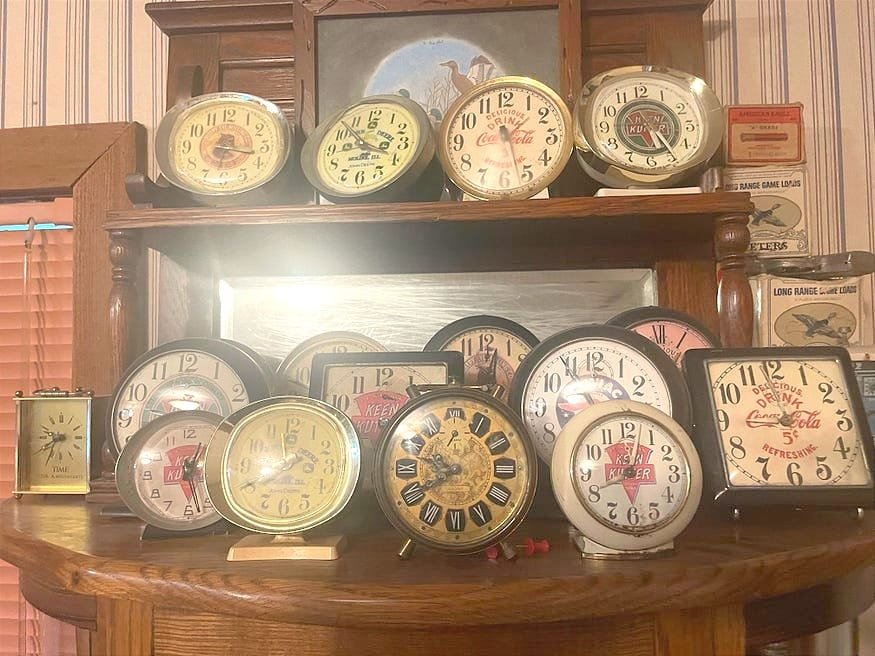
My Brother’s Collections Filled a House
Sorting through my brother’s things taught me to enjoy life now, because our treasures won’t stay with us. I don’t see that as dark — it’s just the rhythm of life.
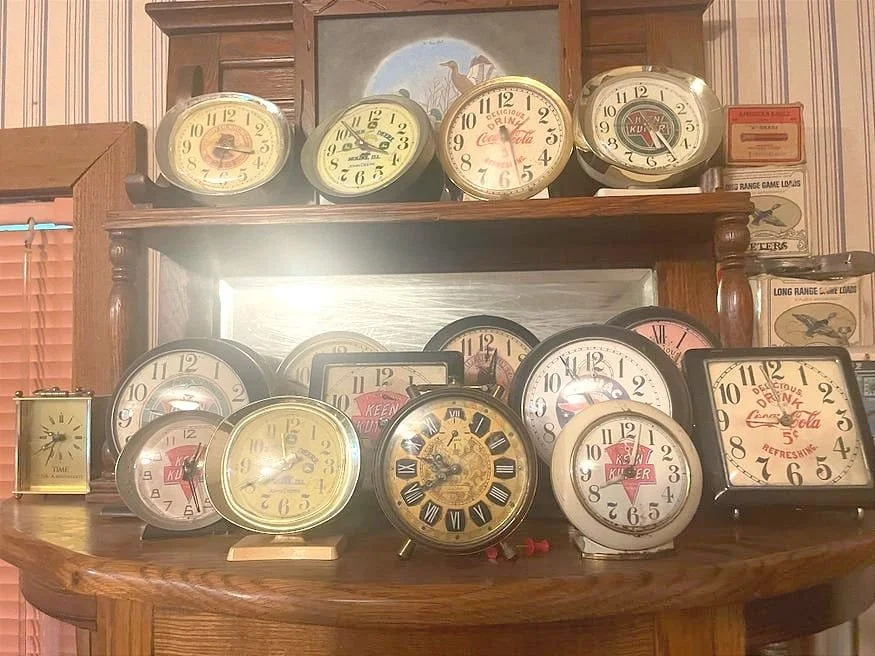
A collection of clocks shows how time passes on regardless of anything else. Photo by James Jordan
I’m alone in my brother’s big house on a lake, sorting his estate.
The sports memorabilia around the TV in the den reminds me that I won’t get to talk with him about our favorite sports team anymore.
Looking at his favorite chair and remembering him sitting there, turning a two-minute story into an hour-long seminar with footnotes. He had the talent to make it interesting.
Then there are the several collections that even this big house couldn’t hold. And now I am the one entrusted to dispose of it all.
Brothers but different
We were brothers, but very different. He was 10 years older than me and had a much more disciplined upbringing. Our father died when I was a year old. I was a child of a single mom and had minimal discipline or direction growing up.
We were very different politically, but we were brothers first, and neither of us ever forgot that.
He was a solid success story, showing that hard work and persistence pay off.
It also shows the meaninglessness of life. All he worked for, all he had, will be given to others who did not work for it. Some see that as a dark thought, but I see it as just the nature of how life works.
An unwanted job fell to me
The job of deciding what happens to his estate falls on me. A technicality — not enough witnesses signed — rendered his will invalid, and as next of kin, it’s up to me.
I wanted to follow the will as written. Family members balked, wanting various things. Some flashes of greed as well. Even so, I want to be generous with everyone. It’s not a job I wanted, but it is a last act of care for him.
An entitled niece called and announced she is coming with a truck to get “what I want.” I wanted to slap back, but didn’t. She might have sounded greedy, but I knew it was from a point of need. These things would improve her family’s lives.
A collecting obsession
My brother and his wife became serious collectors of antiques and art.
They were a perfect match. He, with the long drawn-out stories, and her quick quips and humorous sarcasm, made every visit memorable. She was a dental hygienist and told me I only needed to floss the teeth I wanted to keep.
I was never sure what inspired their obsession with collecting. I never knew which one of them pushed the other. But I did see the obsession grow steadily.
They had booths in antique malls and sold things on eBay. It was not about making money, though; it was a justification for obsessing over auctions, estate sales, and flea markets. It funded their collecting, and the pursuit of the next great find was always the point.
The game of haggling
My brother loved to haggle; no matter what the price was, he would try to get it cheaper.
He would lean over the table, closer to the seller, point out a flaw, and offer half the asking price. It was a game, not about the money. He always started at half the asking price.
It wasn’t all about winning, though. One time, I saw him tell a woman, “You should not be selling that here, it’s worth a lot of money.” But more often than not, he was trying to get whatever it was as cheaply as possible.
A collection of collections
They had a lot of collections. There was Native American art and pottery, antique jewelry, Ducks Unlimited wildlife prints, antique glassware, and handmade quilts to name a few. As I worked through the clutter, I made more discoveries like glass marbles, Civil War era cannonballs, and enough guns to outfit a small militia.
I was with them almost 40 years ago when they moved into this house. It was big and empty then. I saw it gradually fill up as they became serious collectors of many things.
At some point, it overwhelmed them.
The house became a museum, and then a crowded museum.
Near the end, it was hard to walk through. Chairs became heavily laden, and there was no place to sit.
The end of collecting
My brother’s wife passed away several months ago, and he deteriorated rapidly after her.
I was with him during his last three weeks, and the end was near. I grieved more then than after his death.
His passion for treasure hunting never faded. He was talking about upcoming auctions the day before he died.
One could criticize his obsession with collecting. But I say it was his money, and it made him happy.
It was the pursuit that he loved, and he enjoyed having all those collections.
Now he is gone. His collections, as well as his money, will go to others who didn’t earn it. He enjoyed those things while he was here. He doesn’t care now.
The lesson
But the lesson to me is clear. Enjoy your life now, and the things you value now. Someday you will be gone, and your treasures will be sold at bargain prices.
He had the hope of a better life after this one ends, and I do as well. Even so, the things we value down here won’t mean anything up there.
Sorting through my brother’s things taught me to enjoy life now, because our treasures won’t stay with us. I don’t see that as dark — it’s just the rhythm of life. What do you value while it’s yours?”